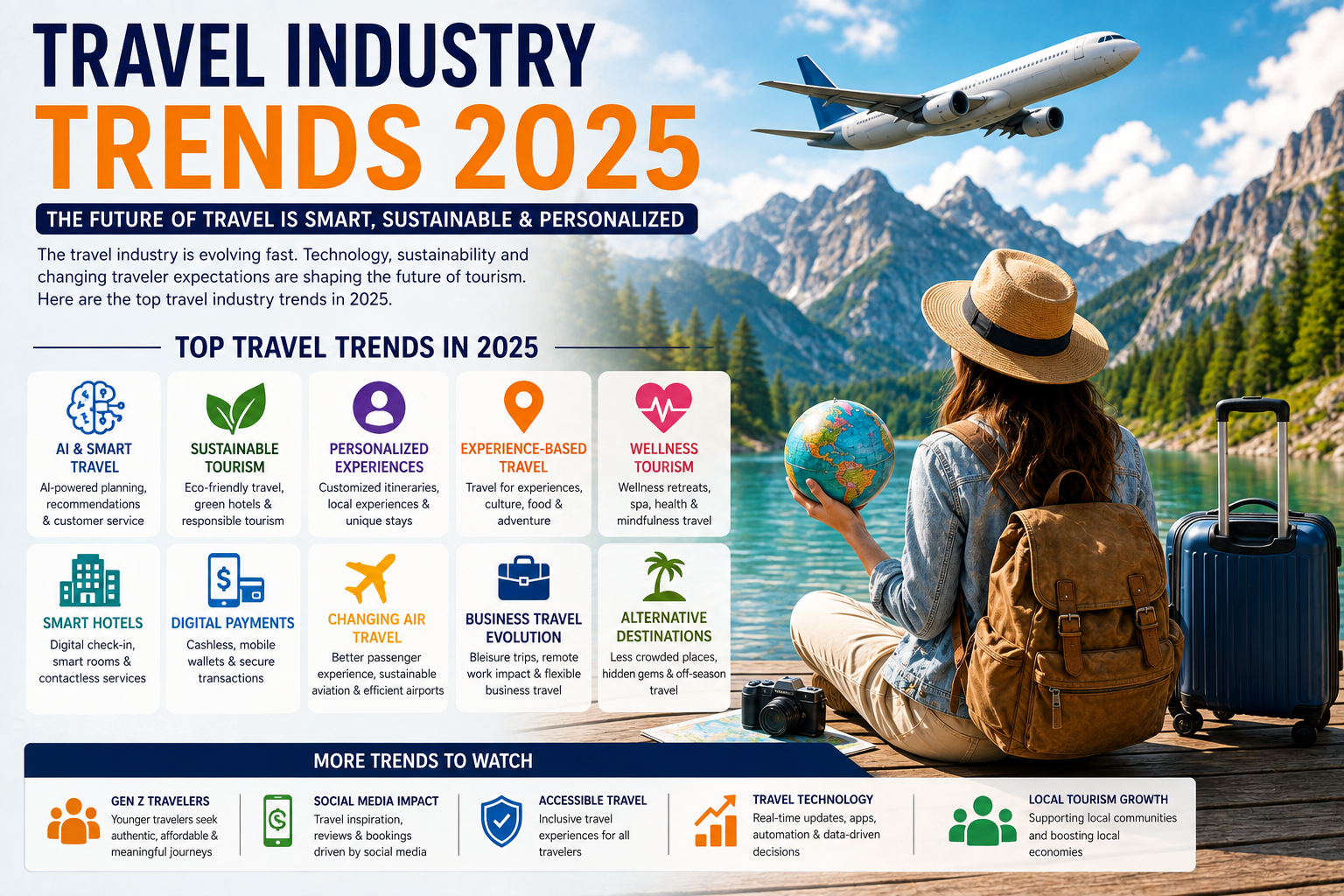
The Travel Industry Trends 2025 are changing the way people plan, book, experience, and remember their trips. Travel is no longer based only on flights, hotels, tour packages, and traditional travel agencies. Technology, artificial intelligence, sustainability, social media, changing customer needs, and new travel habits are creating a more modern travel industry. In 2025, travelers want more than a simple holiday. They want easy planning, flexible bookings, personalized recommendations, meaningful experiences, better digital services, and greater value for their money. Many travelers are also paying more attention to sustainability and the effect tourism has on local communities and the environment US Travel
Travel Industry Trends 2025 at a Glance
The travel industry is experiencing several changes at the same time. Some trends are driven by technology, while others are connected to changing lifestyles and environmental concerns.
| Travel Trend | How It Is Changing Travel |
|---|---|
| Artificial Intelligence | Makes planning and recommendations easier |
| Sustainable Tourism | Encourages responsible travel choices |
| Personalized Travel | Creates trips around individual interests |
| Experience Tourism | Focuses on meaningful local activities |
| Wellness Travel | Combines travel with health and relaxation |
| Smart Hotels | Uses digital systems to improve hotel stays |
| Digital Payments | Makes payments faster and easier |
| Business Travel | Becomes more flexible and connected to remote work |
| Alternative Destinations | Gives travelers options beyond crowded locations |
| Social Media | Influences destination discovery |
| Accessibility | Makes travel more inclusive |
| Digital Transformation | Connects different parts of the travel journey |
These Travel Industry Trends 2025 are not separate from one another. AI can support personalized travel, digital technology can improve sustainable tourism, and social media can increase interest in smaller destinations.
Artificial Intelligence in Travel
Artificial intelligence is one of the strongest Travel Industry Trends 2025. AI is changing the way travelers search for information and make decisions.
In the past, travelers often had to visit many websites to compare flights, hotels, activities, and destinations. AI tools can make this process easier by understanding a traveler’s needs and creating suggestions based on those needs.
A traveler may provide information such as:
- Destination
- Travel dates
- Budget
- Number of travelers
- Preferred hotel type
- Favorite activities
- Food preferences
- Transportation preferences
An AI-powered travel service can use this information to suggest destinations, hotels, activities, and possible itineraries.
AI can also help after the booking is completed. Travelers may use AI-based services to receive information about flight changes, hotel details, transportation, local attractions, and other travel questions.
Travel companies can use AI for:
- Customer service
- Travel recommendations
- Booking support
- Personalized marketing
- Demand forecasting
- Fraud detection
- Pricing analysis
- Language translation
- Trip planning
- Customer communication
AI does not mean that human employees will become unnecessary. Many travelers still want human assistance when they face a difficult booking problem or an unexpected situation. The likely direction is a combination of AI and human support.
AI-Powered Travel Planning
One of the most useful Travel Industry Trends 2025 is AI-assisted trip planning.
Planning a trip can take a lot of time. Travelers need to decide where to go, where to stay, how to move around, what to see, and how much money to spend.
AI can make this process simpler.
For example, a traveler could ask for a five-day trip with a specific budget, hotel preference, food interest, and list of activities. An AI system could organize the information into a possible travel plan.
AI can also help travelers adjust plans.
If the traveler decides to spend less money, the system may suggest cheaper accommodation or transportation. If the traveler wants more outdoor activities, the itinerary can be changed.
This makes travel planning more flexible and personal.
Sustainable Travel Becomes More Important
Sustainable tourism is another major part of the Travel Industry Trends 2025.
Travel can create jobs, support businesses, and help local economies. However, tourism can also put pressure on natural resources, create waste, increase emissions, and contribute to overcrowding in popular destinations.
Sustainable tourism focuses on reducing negative effects while keeping the economic and social benefits of travel.
Sustainable travel can include:
- Staying in environmentally responsible hotels
- Reducing unnecessary waste
- Supporting local businesses
- Choosing responsible tour operators
- Respecting wildlife
- Protecting natural areas
- Using public transportation when practical
- Reducing unnecessary plastic use
- Respecting local communities
- Traveling during less crowded periods
Hotels and other tourism businesses are also changing their operations.
They may use:
- Energy-efficient lighting
- Water-saving systems
- Renewable energy
- Recycling programs
- Reduced plastic packaging
- Local food products
- Environmentally responsible cleaning systems
Sustainability is becoming more than a marketing message. For many travelers, it is becoming part of the decision-making process.
Sustainable Hotels and Accommodation
Hotels play an important role in the Travel Industry Trends 2025 because accommodation can have a large effect on water use, energy use, waste, and local communities.
Future-focused hotels are increasingly looking at ways to reduce their environmental impact while maintaining comfort.
Sustainable hotel practices can include:
- Energy-efficient buildings
- Smart heating and cooling
- Reduced water consumption
- Reusable products
- Local food
- Recycling
- Reduced food waste
- Sustainable building materials
- Renewable energy
Travelers may also want clearer information about what a hotel’s sustainability claims actually mean.
This can encourage hotels to make real improvements instead of using general environmental language without meaningful action.
Personalized Travel Experiences
Personalization is another important part of the Travel Industry Trends 2025.
Travelers have different interests and expectations. A family with young children may want a completely different trip from a solo traveler interested in adventure.
A business traveler may care about fast internet and convenient transportation, while a wellness traveler may prefer quiet surroundings and healthy food.
Personalized travel can consider:
- Budget
- Age group
- Travel style
- Interests
- Food preferences
- Hotel preferences
- Previous trips
- Activity level
- Preferred transportation
- Trip length
Technology can help travel companies understand these preferences and provide better recommendations.
Personalization can make the travel experience feel more useful because travelers do not have to spend as much time looking through options that do not match their needs.
Experience-Based Tourism
Another major trend among the Travel Industry Trends 2025 is the growth of experience-based tourism.
Many travelers want to do more than take photographs at famous attractions. They want to understand the places they visit.
Experience tourism can include:
- Local cooking classes
- Traditional food tours
- Cultural events
- Art workshops
- Nature activities
- Hiking
- Local markets
- Historical experiences
- Community tourism
- Wildlife experiences
These activities can create stronger memories and give travelers a deeper connection with a destination.
Experience tourism can also support smaller local businesses. A local guide, restaurant, artist, farmer, or craft worker can benefit directly from visitors.
Wellness Tourism
Wellness travel is becoming an important part of the Travel Industry Trends 2025.
People are increasingly interested in using travel as a way to relax, improve their lifestyle, and spend time away from busy routines.
Wellness tourism can include:
- Spa trips
- Fitness retreats
- Yoga holidays
- Meditation programs
- Nature retreats
- Relaxation resorts
- Healthy food experiences
- Wellness programs
Some travelers may choose destinations based on quiet surroundings, natural beauty, outdoor activities, or access to wellness services.
Hotels and resorts are responding with services designed around relaxation and personal well-being.
Medical tourism is another area connected to health-related travel. People may travel to another country for medical treatment or specialized services. However, medical travelers should carefully research healthcare providers, costs, insurance, legal requirements, and follow-up care before making decisions.
Smart Hotels and Digital Hospitality
Smart hotels are another major area of the Travel Industry Trends 2025.
Traditional hotel services are becoming more digital. Travelers may be able to complete many steps through their phones instead of waiting at a reception desk.
Smart hotel services can include:
- Mobile check-in
- Digital room keys
- Contactless payments
- Smart room controls
- Digital concierge services
- Automated customer support
- Personalized room settings
- Mobile booking changes
These technologies can reduce waiting time and give travelers more control over their stay.
However, hotels still need human service. A guest with a complex problem may prefer speaking with a hotel employee rather than using an automated system.
The best smart hotels are likely to combine technology with personal hospitality.
Digital Transformation in Travel
Digital transformation is one of the broadest Travel Industry Trends 2025.
Almost every stage of travel can now involve digital technology.
A traveler may use a mobile device to:
- Search for a destination.
- Compare flights.
- Book accommodation.
- Purchase travel insurance.
- Store travel documents.
- Check in for a flight.
- Navigate the airport.
- Make payments.
- Find local attractions.
- Receive travel updates.
Digital technology can make travel more convenient, but it also creates a greater need for cybersecurity and privacy.
Travel companies collect sensitive customer information, including names, payment details, booking records, and sometimes passport information. Businesses must therefore protect customer data and maintain secure digital systems.
Changing Air Travel Trends
Air travel continues to be an important part of the Travel Industry Trends 2025.
Passengers want affordable flights, but they also want better service and easier airport experiences.
Airlines and airports are using technology to improve different parts of the journey.
Future-focused airport services can include:
- Digital check-in
- Automated baggage systems
- Digital identity verification
- Faster security procedures
- Mobile boarding
- Real-time gate updates
- Airport navigation
- Improved passenger information
Airlines are also looking at ways to improve efficiency and reduce environmental impact.
For travelers, price will remain important, but factors such as baggage charges, flight times, comfort, reliability, and additional services will continue to affect purchasing decisions.
Business Travel Trends 2025
Business travel is changing because of remote work and online meetings.
Some business meetings can now happen without physical travel. However, conferences, trade shows, important meetings, and relationship-building activities still create demand for business trips.
One important trend is the combination of business and leisure travel, often called bleisure travel.
A traveler may visit a destination for work and then stay for additional days to explore the area.
Business travelers may increasingly want:
- Flexible bookings
- Reliable internet
- Comfortable workspaces
- Easy airport transfers
- Flexible hotel stays
- Mobile travel services
- Digital expense management
The Travel Industry Trends 2025 show that business travel is becoming more flexible rather than simply disappearing.
Gen Z and Younger Travelers
Younger travelers are also influencing the Travel Industry Trends 2025.
Many younger travelers use smartphones and social media throughout the travel process.
They may discover destinations through:
- Short videos
- Social media posts
- Travel creators
- Online reviews
- User-generated content
- Travel communities
Younger travelers may also place high value on experiences, flexibility, affordability, and authenticity.
They may prefer a local food experience or unique destination over a traditional package holiday.
Travel businesses that understand younger customers can use digital platforms to communicate with them in a more direct and useful way.
Alternative and Less Crowded Destinations
Overcrowding is a growing concern in popular tourism locations.
As part of the Travel Industry Trends 2025, more travelers may look for alternative destinations that offer similar experiences with fewer visitors.
Instead of visiting only the most famous city or attraction, travelers may explore:
- Smaller cities
- Local towns
- Rural areas
- Nature destinations
- Lesser-known beaches
- Off-season destinations
- Nearby attractions
This trend can benefit smaller tourism businesses and local communities.
It can also reduce pressure on heavily visited locations when visitor numbers are distributed more evenly.
Social Media and Travel Discovery
Social media has become an important part of travel discovery.
A destination can become popular because of a short video, photograph, travel story, or recommendation.
This has changed the way people choose where to travel.
Travelers may use social media to find:
- Hotels
- Restaurants
- Beaches
- Hiking locations
- Attractions
- Local experiences
- Travel tips
The positive side is that travelers can discover places quickly. The negative side is that viral popularity can sometimes create overcrowding.
Travel businesses therefore need to balance promotion with responsible tourism.
Digital Payments and Cashless Travel
Digital payments are another important part of the Travel Industry Trends 2025.
Travelers increasingly expect convenient ways to pay for hotels, transportation, food, attractions, and other services.
Digital payment options can include:
- Mobile wallets
- Contactless cards
- Online banking
- Travel payment applications
- Digital currencies in some situations
- International payment platforms
Cash may still be useful in many destinations, especially for small businesses and local markets.
Travelers should ideally have more than one payment option available in case a card does not work or a payment system is unavailable.
Accessible and Inclusive Travel
Accessibility is becoming an important part of modern tourism.
Travelers with disabilities, older travelers, families with young children, and people with different needs should be able to find useful information and suitable services.
Accessible tourism can include:
- Accessible hotel rooms
- Wheelchair-friendly transportation
- Accessible attractions
- Clear travel information
- Sensory-friendly services
- Accessible airport facilities
- Better staff training
Technology can help travelers identify suitable services before booking.
Inclusive travel benefits more than one group. Clear information, easy transportation, and accessible facilities can improve the travel experience for many people.
Local Tourism and Community-Based Travel
The Travel Industry Trends 2025 also include greater interest in local tourism.
Travelers increasingly want to support local communities and experience local culture.
Community-based tourism can provide income for:
- Local guides
- Restaurants
- Farmers
- Artists
- Small hotels
- Transportation providers
- Craft businesses
This type of tourism can make trips more personal while keeping more tourism income within local communities.
Travelers can support local tourism by buying local products, eating at local restaurants, using local guides, and respecting community rules.
Travel Technology and Data
Data is becoming increasingly important to the travel industry.
Travel companies can use data to understand customer preferences, demand patterns, booking behavior, and service problems.
Data can help businesses:
- Improve recommendations
- Understand customer needs
- Manage prices
- Predict demand
- Reduce fraud
- Improve operations
- Create better services
However, the use of customer data also creates privacy responsibilities.
Companies should collect and use information responsibly and protect sensitive customer information.
Major Challenges for the Travel Industry in 2025
Although the Travel Industry Trends 2025 create many opportunities, the industry also faces challenges.
Rising Travel Costs Travel Industry Trends 2025
Flights, hotels, fuel, food, labor, and other costs can affect travel prices.
Travelers are therefore becoming more careful about value. Businesses must provide useful services while controlling costs.
Climate Change Travel Industry Trends 2025
Extreme weather can affect destinations and transportation.
Tourism businesses may need to improve planning and make infrastructure more resilient.
Over-Tourism Travel Industry Trends 2025
Too many visitors in one location can create pressure on local communities and natural areas.
Alternative destinations and better visitor management can help.
Cybersecurity Travel Industry Trends 2025
As more travel services move online, cyber risks become more important.
Travel businesses must protect customer information and digital systems.
Labor Shortages Travel Industry Trends 2025
Hotels, restaurants, airlines, airports, and tourism companies need skilled employees.
Technology can automate some tasks, but trained workers remain essential.
Changing Customer Expectations Travel Industry Trends 2025
Travelers now expect fast answers, flexible options, clear pricing, digital services, and personalized experiences.
Businesses that fail to adapt may struggle to compete.
Opportunities for Travel Industry Trends 2025 Businesses
The Travel Industry Trends 2025 provide many opportunities for companies willing to adapt.
Businesses can focus on:
- AI-powered travel services
- Personalized packages
- Sustainable accommodation
- Local experiences
- Wellness travel
- Smart hotels
- Digital customer service
- Accessible tourism
- Alternative destinations
- Flexible business travel
Small businesses can also benefit from digital platforms. A local tour operator or restaurant can reach travelers from around the world without needing a large physical marketing network.
Travel Industry Trends 2025 Compared With Earlier Travel
The changes become easier to understand when comparing older travel models with current trends.
| Area | Earlier Travel Model | Travel Industry Trends 2025 |
|---|---|---|
| Trip Planning | Travel agents and websites | AI-assisted planning |
| Hotel Check-In | Reception desk | Mobile and digital check-in |
| Travel Discovery | Travel guides | Social media and digital platforms |
| Tourism | Famous attractions | Local and unique experiences |
| Sustainability | Limited focus | Major consideration |
| Payments | Cash and cards | More contactless options |
| Customer Service | Phone and email | AI plus human support |
| Business Travel | Short work trips | Flexible and bleisure travel |
| Accommodation | Standard hotel rooms | Smart and personalized rooms |
| Destination Choice | Popular locations | More alternative destinations |
This comparison shows why the Travel Industry Trends 2025 are important. Travel is becoming more connected to technology while also becoming more focused on individual needs and responsible tourism.
What Travelers Can Expect Travel Industry Trends 2025
Travelers can expect more digital services throughout their journey.
Some travelers may experience:
- Faster travel planning
- More AI recommendations
- Easier mobile bookings
- Digital hotel check-in
- More contactless payments
- Better travel notifications
- More personalized experiences
- More sustainable travel choices
- More wellness options
- More alternative destinations
Travelers should still do their own research before making important decisions. Technology can make travel easier, but information can sometimes be incomplete or incorrect.
Checking official travel requirements is especially important for visas, immigration, health rules, and other legal requirements.
How Travel Businesses Can Prepare for the Future Travel Industry Trends 2025
Travel businesses need to understand what customers want while keeping their services reliable.
A strong strategy can include:
- Invest in useful technology.
- Improve mobile services.
- Use AI carefully.
- Protect customer data.
- Offer personalized experiences.
- Improve sustainability.
- Support local communities.
- Train employees.
- Provide flexible booking options.
- Listen to customer feedback.
Technology should solve real customer problems rather than being added simply because it is popular.
For example, a mobile check-in system is useful if it saves time. An AI chatbot is useful if it provides accurate answers quickly. A personalization system is useful if it helps customers find better options.
FAQs
What are the biggest Travel Industry Trends 2025?
The biggest Travel Industry Trends 2025 include artificial intelligence, sustainable tourism, personalized travel, experience-based tourism, wellness travel, smart hotels, digital payments, social media travel discovery, alternative destinations, and flexible business travel.
How is AI changing travel in 2025?
AI is helping travelers search for destinations, create itineraries, receive recommendations, compare travel options, translate languages, and get customer support.
Is sustainable travel growing in 2025?
Sustainable tourism is becoming an important consideration for both travelers and businesses. Hotels and tourism providers are working on waste reduction, energy efficiency, local sourcing, and responsible tourism practices.
What is personalized Travel Industry Trends 2025?
Personalized travel means creating recommendations and experiences based on an individual’s budget, interests, travel style, accommodation preferences, and other needs.
What are the latest hotel technology trends?
Important hotel technology trends include mobile check-in, digital room keys, contactless payments, smart room controls, automated customer support, and personalized services.
What are the major business travel trends in 2025?
Business travel is becoming more flexible because of remote work and digital meetings. Bleisure travel, flexible bookings, longer stays, and technology-assisted business trips are important trends.
Why are travelers choosing alternative destinations?
Some travelers want to avoid crowded tourist locations, reduce costs, discover new places, and enjoy more local experiences.
How is Gen Z changing travel?
Younger travelers often use social media and mobile technology for destination discovery. They may also value experiences, flexibility, affordability, and authentic local activities.
Will AI replace travel agents?
AI can automate many travel planning tasks, but human travel professionals can still provide valuable support for complex trips, special requirements, and difficult situations.
What is the future of sustainable tourism?
Sustainable tourism is likely to become more important as travelers, businesses, and destinations look for ways to reduce environmental impact while supporting local communities.
Conclusion
The show that tourism is entering a period of major change. Artificial intelligence is making travel planning faster and more personalized. Digital technology is changing airports, hotels, payments, and customer service. Social media is influencing destination discovery, while younger travelers are creating new expectations around flexibility and experiences. Sustainability is also becoming a central part of the industry. Travelers are becoming more aware of the impact of tourism, and businesses are looking for ways to reduce waste, save resources, protect natural areas, and support local communities.