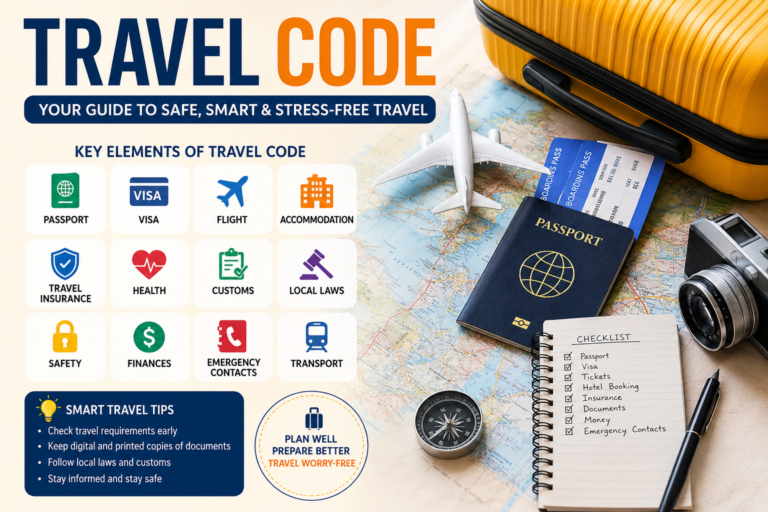
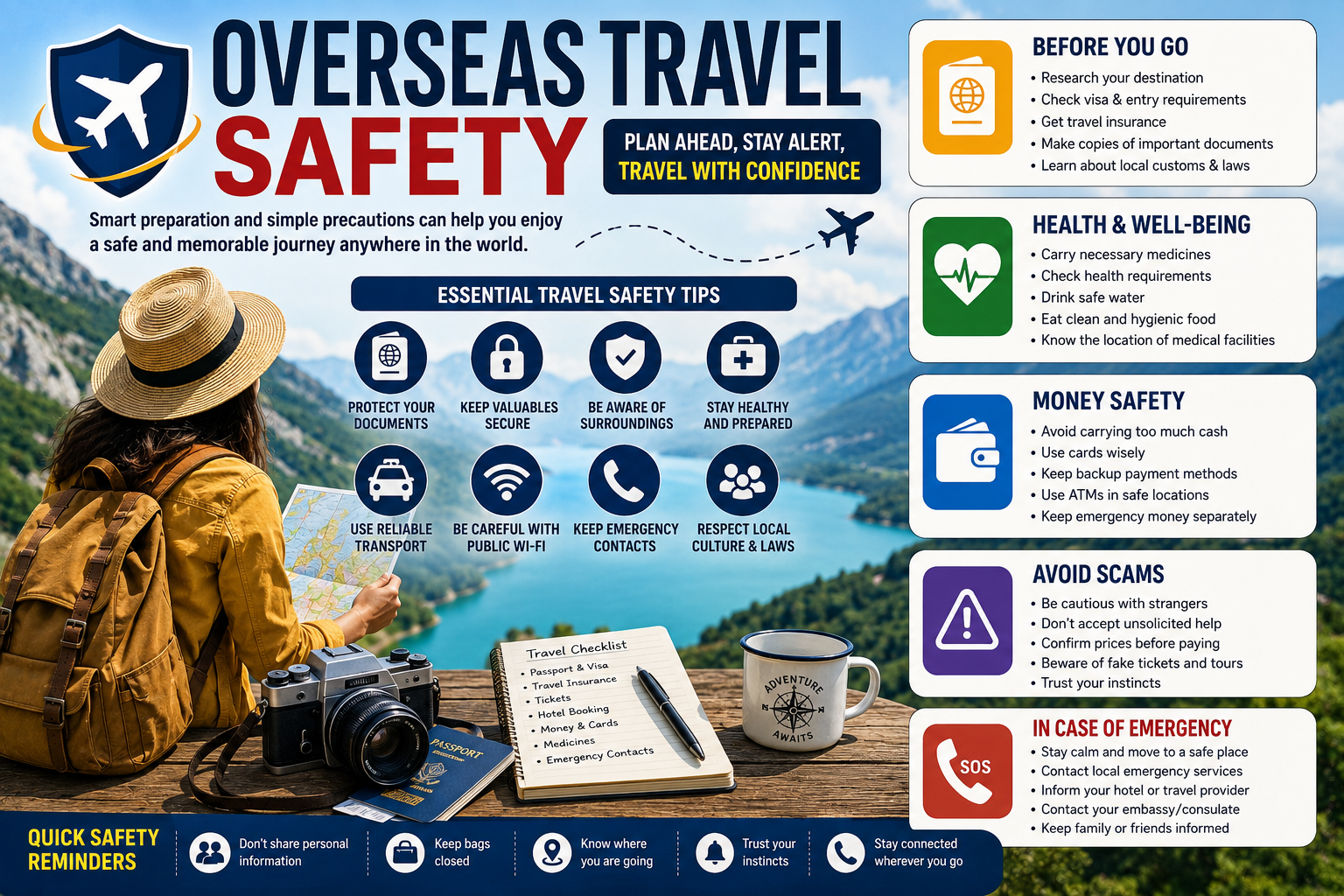
Overseas travel can be an exciting and rewarding experience. Visiting another country allows travelers to discover new places, meet different people, taste new foods, learn about different cultures, and see famous attractions. However, international travel also comes with responsibilities and risks that may not exist during travel at home. This is why overseas travel safety should be an important part of every international trip. Good overseas travel safety starts before leaving home. A traveler should research the destination, check passport and visa requirements, arrange suitable travel insurance, understand local laws, prepare important medicines, and make copies of important documents. These simple steps can reduce problems during a trip Traveling Tourist
What Is Overseas Travel Safety?
Overseas travel safety means taking sensible steps to protect yourself, your belongings, your health, your documents, and your personal information while traveling to another country.
Overseas travel safety includes many different areas, such as:
- Personal safety
- Health and medical preparation
- Passport protection
- Visa and entry requirements
- Money safety
- Transportation safety
- Accommodation safety
- Digital security
- Food and water safety
- Emergency preparation
- Cultural awareness
- Understanding local laws
International travel can be different from traveling within your own country. A traveler may not understand the local language or know which areas are safe. Local laws may also be different.
For this reason, overseas travel safety requires preparation before the trip and awareness during the journey.
Why Overseas Travel Safety Is Important
International travel can involve unfamiliar situations. A traveler may face delayed flights, lost luggage, language problems, transportation issues, illness, bad weather, theft, scams, or other unexpected events.
Most travelers complete their trips without major problems, but preparation is still important.
Good overseas travel safety can help travelers:
- Protect passports and other documents
- Reduce the risk of theft
- Avoid common tourist scams
- Manage unexpected situations
- Protect personal information
- Find medical help when needed
- Understand local rules
- Travel more confidently
- Protect family members
- Respond more calmly during emergencies
The goal is not to worry about every possible problem. The goal is to be prepared enough to handle common situations.
Research Your Destination Before Traveling
One of the first steps in overseas travel safety is learning about your destination before you leave.
Do not depend only on photographs, travel videos, or social media posts. Research practical information that can affect your safety and comfort.
Learn about:
- Local laws
- Local customs
- Weather
- Transportation
- Common tourist scams
- Currency
- Language
- Safe areas
- Areas that may require extra caution
- Local emergency services
- Medical facilities
- Entry requirements
It is also useful to understand how people normally move around the destination. Some cities may have excellent public transportation, while others may require taxis or private vehicles.
Knowing basic information before arrival can prevent confusion.
Learn About Local Customs
Different countries have different cultural expectations. Clothing, greetings, photography, eating habits, public behavior, and religious practices can vary.
A respectful traveler should learn these customs before visiting.
For example, some religious locations may require specific clothing. Some places may not allow photography. Certain gestures that seem normal in one country may be considered rude in another.
Respecting local culture is an important part of overseas travel safety because it can prevent unnecessary misunderstandings.
Check Passport and Visa Requirements
Your passport is one of the most important documents during international travel.
Before departure, check:
- Passport validity
- Visa requirements
- Entry rules
- Exit rules
- Transit requirements
- Required permits
- Passport condition
- Name and date details on travel bookings
Do not assume that a passport automatically gives you the right to enter another country. Entry requirements can vary according to nationality, destination, travel purpose, and length of stay.
Make secure copies of your passport and important travel documents. Keep the copies separate from the original documents.
Digital copies can also be useful, but they should be stored securely.
Protect Your Passport
Never leave your passport in an obvious or unsecured place.
When exploring a destination, carry it according to the local requirements and your travel circumstances. If the original passport is not needed for a particular activity, secure it properly rather than leaving it openly in a bag or vehicle.
If your passport is lost or stolen, contact the appropriate authorities and your embassy or consulate as soon as possible.
Passport protection is a basic but important part of overseas travel safety.
Get Travel Insurance
Travel insurance can provide useful protection against certain unexpected problems, depending on the policy.
Coverage can vary, so travelers should read the policy before buying it.
A travel insurance policy may include some types of protection for:
- Emergency medical treatment
- Trip cancellation
- Trip interruption
- Lost baggage
- Delayed baggage
- Travel delays
- Emergency assistance
Do not assume that every policy covers every situation.
Before traveling, understand:
- What is covered
- What is not covered
- Deductibles
- Claim requirements
- Emergency contact methods
- Policy limits
- Special exclusions
Travel insurance should be considered an important part of overseas travel safety, especially for international trips where medical or transportation costs may be difficult to manage.
Health and Medical Safety Abroad
Health preparation is another important part of overseas travel safety.
Before traveling, consider your destination, the length of your trip, the weather, planned activities, and any medicines you normally need.
Carry necessary medicines in suitable packaging and keep important medical information available.
Depending on the destination, travelers may also need to consider local health requirements.
Food and Water Safety
Food and water conditions can differ from one country to another.
Travelers should learn about local conditions and use reasonable precautions.
Useful habits include:
- Wash your hands regularly.
- Choose clean and reputable food locations.
- Be careful with unfamiliar food when necessary.
- Understand local drinking-water conditions.
- Keep yourself hydrated.
- Carry basic health supplies when appropriate.
If you become seriously ill during overseas travel, seek appropriate medical assistance.
Airport and Flight Safety
Airports can be crowded and busy, making awareness important.
During international travel, keep your important documents and valuable belongings secure.
At the airport:
- Keep your passport accessible but protected.
- Watch your luggage.
- Avoid leaving bags unattended.
- Follow airport security instructions.
- Check flight information regularly.
- Confirm the correct gate.
- Be careful with personal information.
- Keep valuable electronics secure.
During connecting flights, pay attention to airport signs and instructions. International connections may involve security checks, immigration procedures, or changes between terminals.
Good airport habits support overall overseas travel safety.
Accommodation Safety
Where you stay can have a major effect on your travel experience.
Before booking accommodation, consider:
- Location
- Reviews
- Transportation access
- Security features
- Reception availability
- Nearby facilities
- Emergency exits
- Check-in procedures
After arriving, become familiar with the emergency exit and the basic layout of the property.
Keep valuable items secure and do not openly display expensive belongings.
Avoid sharing your room number unnecessarily with strangers.
If something about your accommodation feels unsafe, contact the property staff or move to a safer location when possible.
Transportation Safety Overseas
Transportation systems can be very different in another country.
Before using transportation, learn how the system works.
Public Transportation
Public transportation can be convenient and affordable, but travelers should remain aware of their belongings in crowded areas.
Be especially careful with:
- Passport
- Wallet
- Phone
- Bank cards
- Camera
- Small bags
Avoid displaying valuable items unnecessarily.
Taxis and Ride Services
Use reliable transportation services where possible.
Before entering a taxi, understand how fares are calculated. If using an app-based service, check the vehicle and driver information carefully.
Avoid accepting transportation from people who approach you aggressively at airports or tourist attractions without a clear reason.
Rental Cars
If renting a car, learn the local driving rules before getting behind the wheel.
Check:
- Driving side
- Speed limits
- Road signs
- Parking rules
- License requirements
- Insurance
- Road conditions
Driving in an unfamiliar country can be challenging. If you are not comfortable with the local road system, consider another transportation option.
Money and Payment Safety
Money management is an important part of overseas travel safety.
Avoid carrying all your money in one place.
Consider keeping:
- Some local currency
- A primary payment card
- A backup payment card
- Emergency funds
- Secure digital payment options when available
Do not share your PIN or banking information with strangers.
When using an ATM, choose a safe and reputable location. Be aware of people standing unusually close to you.
Understand the local currency before shopping. Confusion between currencies can sometimes lead to accidental overspending.
Protect Your Bank Cards
Before traveling, inform yourself about how your bank handles international transactions and understand possible fees.
If a bank card is lost or stolen, contact the card provider as quickly as possible.
Never give your card details to someone who does not have a legitimate reason to receive them.
Protect Important Documents
Documents are essential during international travel.
Important documents may include:
- Passport
- Visa
- Identification
- Travel insurance details
- Flight tickets
- Hotel reservations
- Driving license
- Emergency contacts
- Important medical information
Keep original documents secure and maintain secure copies.
A useful practice is to have access to important information even if your phone is lost or your internet connection stops working.
Document protection should always be included in an overseas travel safety plan.
Personal Safety While Exploring
Tourists may be unfamiliar with local neighborhoods and can sometimes attract attention because of luggage, cameras, or unfamiliar behavior.
Stay aware when visiting busy places.
Useful habits include:
- Keep valuables out of sight.
- Avoid isolated areas.
- Stay alert at night.
- Do not display large amounts of cash.
- Be careful in crowded tourist areas.
- Avoid sharing too much personal information.
- Keep your phone secure.
- Use reliable transportation.
- Stay aware of your surroundings.
You do not need to be suspicious of everyone. Simply use normal caution and trust your judgment.
Common Tourist Scams to Avoid
Tourist scams can happen in many destinations. The methods can vary, but some general patterns are common.
Possible scams can include:
- Fake taxi charges
- Unofficial tour guides
- Fake tickets
- Currency exchange tricks
- Distraction theft
- Unwanted services
- Overcharging
- Fake charity requests
- ATM-related tricks
- Fake booking websites
Be careful when strangers offer unexpected services or deals that seem unusually attractive.
If something feels rushed or confusing, step away and verify the information independently.
Learning about common scams before travel can significantly improve overseas travel safety.
Digital and Cybersecurity While Traveling
Modern travelers often carry smartphones, laptops, tablets, and other connected devices.
These devices contain valuable personal information, including photographs, banking information, emails, documents, and account details.
Digital security is therefore an important part of overseas travel safety.
Protect Your Phone
Use a strong screen lock and keep your device updated.
Useful steps include:
- Use a strong password or PIN.
- Enable device security features.
- Keep software updated.
- Back up important information.
- Avoid installing unknown applications.
- Keep your phone with you.
- Enable tracking features where appropriate.
Be Careful With Public Wi-Fi
Public Wi-Fi can be convenient, but travelers should be careful when accessing sensitive accounts.
Avoid entering highly sensitive information on networks you do not trust. Use secure connections and follow good account security practices.
Protect Online Banking
Do not share banking passwords or security codes.
If you receive a suspicious message asking for financial information, verify it through an official channel instead of clicking unknown links.
Communication and Emergency Planning
Every international traveler should have a simple emergency plan.
Before leaving home, save:
- Local emergency numbers
- Accommodation contact details
- Travel insurance contact information
- Airline or transportation contact details
- Embassy or consulate information
- Trusted family contacts
Share your basic itinerary with someone you trust, especially if traveling alone.
Your emergency plan does not need to be complicated. It should simply help you know who to contact and what to do if something goes wrong.
Local Laws and Cultural Safety
Following local laws is one of the most important rules of international travel.
Travelers are responsible for understanding and following the laws of the country they visit.
Rules may differ regarding:
- Photography
- Public behavior
- Driving
- Alcohol
- Medicines
- Drugs
- Clothing
- Religious locations
- Protected areas
- Electronic devices
Do not assume that something legal in your home country is also legal overseas.
When unsure, research the rule through reliable official information.
Respecting local laws is a key part of overseas travel safety.
Food and Water Safety Overseas
Food is often one of the most enjoyable parts of international travel, but travelers should still pay attention to hygiene.
Choose food establishments that appear clean and well managed.
When conditions require extra care:
- Drink safe water.
- Wash your hands.
- Be careful with raw food.
- Keep food properly stored.
- Avoid food that appears unsafe.
- Learn about local food conditions.
If you have a serious reaction or become very sick, seek medical assistance.
Overseas Travel Safety for Solo Travelers
Solo travel can provide freedom and independence, but it requires additional planning.
A solo traveler should:
- Share their itinerary with someone trusted.
- Choose suitable accommodation.
- Keep documents secure.
- Carry emergency contact information.
- Plan transportation in advance.
- Avoid unnecessary risks.
- Stay connected.
- Be careful when meeting unfamiliar people.
- Keep backup money available.
A solo traveler should also avoid telling strangers too much about their accommodation, finances, or detailed travel plans.
Being friendly is good, but personal boundaries are important.
Overseas Travel Safety for Families
Family travel requires additional planning because children may need more supervision and support.
Parents or guardians should:
- Keep children close in crowded areas.
- Carry important family documents.
- Prepare necessary medicines.
- Choose suitable accommodation.
- Plan child-friendly activities.
- Create a family meeting point.
- Teach children basic safety rules.
- Keep emergency contact details available.
Children should know what to do if they become separated from their family.
Simple instructions can be more useful than complicated explanations.
What to Do During an Emergency Abroad
An emergency can be stressful, but having a plan can make the situation easier to manage.
If an emergency occurs:
- Stay calm.
- Move to a safer location if possible.
- Contact local emergency services when necessary.
- Contact your accommodation if appropriate.
- Contact your travel insurance provider when relevant.
- Contact your embassy or consulate when appropriate.
- Inform family or a trusted person.
- Follow instructions from local authorities.
Do not put yourself in greater danger while trying to recover lost belongings.
Personal safety should come before money or property.
Overseas Travel Safety Checklist
Before leaving home, review your preparations.
- Check passport validity.
- Confirm visa requirements.
- Check entry and transit rules.
- Arrange travel insurance.
- Make secure copies of documents.
- Prepare required medicines.
- Check destination weather.
- Research local laws.
- Learn basic local customs.
- Save emergency contacts.
- Confirm accommodation.
- Confirm transportation.
- Prepare payment cards.
- Keep emergency funds.
- Secure your phone.
- Back up important information.
- Share your itinerary with a trusted person.
A simple checklist can reduce last-minute mistakes.
Overseas Travel Safety Planning Table
| Area | Important Safety Action |
|---|---|
| Documents | Protect your passport, visa, tickets, and copies |
| Health | Prepare medicines and learn about local health conditions |
| Money | Carry secure payment methods and emergency funds |
| Transportation | Use reliable services and understand local rules |
| Accommodation | Choose a suitable location and learn emergency exits |
| Personal safety | Stay aware and avoid unnecessary risks |
| Digital security | Protect devices, passwords, and financial accounts |
| Local laws | Research and follow the laws of the destination |
| Communication | Save emergency and accommodation contacts |
| Food and water | Learn local conditions and use reasonable precautions |
Common Overseas Travel Safety Mistakes
Even careful travelers can make mistakes. Avoiding common errors can make international travel easier.
Traveling Without Research
Arriving without knowing basic information can create unnecessary problems.
Research the destination before departure.
Carrying Everything Together
Do not keep all your money, cards, documents, and valuables in one place.
If that location is lost or stolen, you could lose access to everything.
Ignoring Local Laws
Never assume that local rules are the same as those at home.
Sharing Too Much Information
Avoid publicly sharing sensitive information such as your exact accommodation details, financial information, or complete travel plans.
Using Unreliable Transportation
Choose recognized and reliable transportation whenever possible.
Not Having Emergency Contacts Overseas travel safety
A traveler should know who to contact if something goes wrong.
Ignoring Travel Insurance Overseas travel safety
International medical care and unexpected travel problems can become expensive. Understand whether travel insurance is suitable for your trip.
Not Preparing for Communication Problems Overseas travel safety
A phone may lose signal, a battery may run out, or internet access may become unavailable.
Keep important information available in a form you can access when offline.
How to Stay Safe Without Worrying Too Much Overseas travel safety
Overseas travel safetyGood overseas travel safety should make travel more comfortable, not more stressful.
It is impossible to prepare for every possible event. The goal is to prepare for reasonable and common situations.
A balanced traveler:
- Plans ahead.
- Stays aware.
- Respects local rules.
- Protects important belongings.
- Uses common sense.
- Avoids unnecessary risks.
- Remains flexible.
Do not spend the entire trip worrying about what could go wrong. Once basic preparations are complete, enjoy the destination.
Travel is meant to provide new experiences. Safety planning simply gives you a stronger foundation for those experiences.
How Technology Can Improve Overseas Travel Safety
Overseas travel safety Technology can be useful during international travel when used carefully.
A smartphone can help with:
- Maps
- Translation
- Transportation
- Hotel information
- Emergency contacts
- Digital tickets
- Weather updates
- Communication
- Travel bookings
However, technology should not be your only backup.
Keep important information accessible offline and maintain enough battery power for emergencies.
A portable charger can be useful during long travel days.
Preparing for Weather and Natural Conditions
Overseas travel safety Weather can affect overseas travel in many ways.
Before traveling, research the typical conditions for your destination and travel dates.
Prepare appropriate clothing and equipment.
Overseas travel safety Depending on the location, travelers may need to consider:
- Extreme heat
- Cold weather
- Heavy rain
- Snow
- Strong winds
- Flooding
- Storms
- High-altitude conditions
If weather conditions become dangerous, follow instructions from local authorities and avoid unnecessary travel.
Weather preparation is another useful part of overseas travel safety.
Safety at Tourist Attractions
Overseas travel safety Popular attractions can become crowded, especially during busy travel periods.
In crowded areas:
- Keep bags closed.
- Protect your phone.
- Keep wallets secure.
- Stay aware of people around you.
- Follow attraction rules.
- Do not cross barriers.
- Avoid dangerous photography positions.
- Keep children close.
Do not risk your safety to take a photograph.
A good travel memory is not worth an unnecessary injury.
Overseas Travel Safety for First-Time International Travelers
First-time international travelers may feel nervous, but preparation can make the experience much easier.
Start by choosing a destination that is suitable for your experience level and budget.
Before leaving:
- Learn about the destination.
- Check documents.
- Understand transportation.
- Confirm accommodation.
- Prepare money.
- Save emergency contacts.
- Learn basic local phrases.
- Make copies of important documents.
During the trip, take your time. You do not need to understand everything immediately.
Ask reliable staff for help when needed and avoid making rushed decisions.
How to Handle Lost or Stolen Belongings
Losing something overseas can be stressful, but remaining calm is important.
If your belongings are lost or stolen:
- Move to a safe location.
- Identify what is missing.
- Contact the relevant local authority when appropriate.
- Contact your bank if cards are missing.
- Contact your accommodation if necessary.
- Contact your insurance provider if relevant.
- Contact your embassy or consulate if your passport is missing.
- Inform a trusted person.
Keep records of important account numbers and document information in a secure location so that you can take action quickly.
FAQs
What is overseas travel safety?
Overseas travel safety means taking practical steps to protect your health, personal belongings, documents, money, personal information, and overall well-being while traveling in another country.
How can I stay safe when traveling overseas?
Research your destination, follow local laws, protect your passport and valuables, use reliable transportation, choose suitable accommodation, stay aware of your surroundings, and keep emergency contacts available.
Do I need travel insurance for overseas travel?
Travel insurance can provide protection against certain unexpected situations, such as eligible medical emergencies, trip cancellations, delays, or lost baggage. Coverage depends on the policy, so read the terms before purchasing.
How can I protect my passport while traveling?
Keep your passport in a secure place and avoid leaving it unattended. Carry secure copies of important documents and know what to do if your passport is lost or stolen.
How can I avoid tourist scams?
Learn about common scams before visiting your destination, be careful with unexpected offers, verify prices before accepting services, use reliable transportation, and avoid giving personal or financial information to strangers.
How should I protect my money overseas?
Carry only the cash you need, protect your payment cards, keep a backup payment method, use ATMs in suitable locations, and avoid displaying large amounts of money in public.
Conclusion
Overseas travel safety is an important part of every international journey. Safe travel does not require complicated planning. It requires awareness, preparation, respect, and sensible decisions. Before leaving home, research your destination, check passport and visa requirements, arrange suitable travel insurance, prepare important medicines, organize your money, and make secure copies of important documents. During travel, protect your passport and valuables, use reliable transportation, choose suitable accommodation, follow local laws, and remain aware of your surroundings. Digital safety should also be part of your travel plans. Protect your phone, passwords, banking information, and personal data. Be careful when using public Wi-Fi and avoid sharing sensitive information.