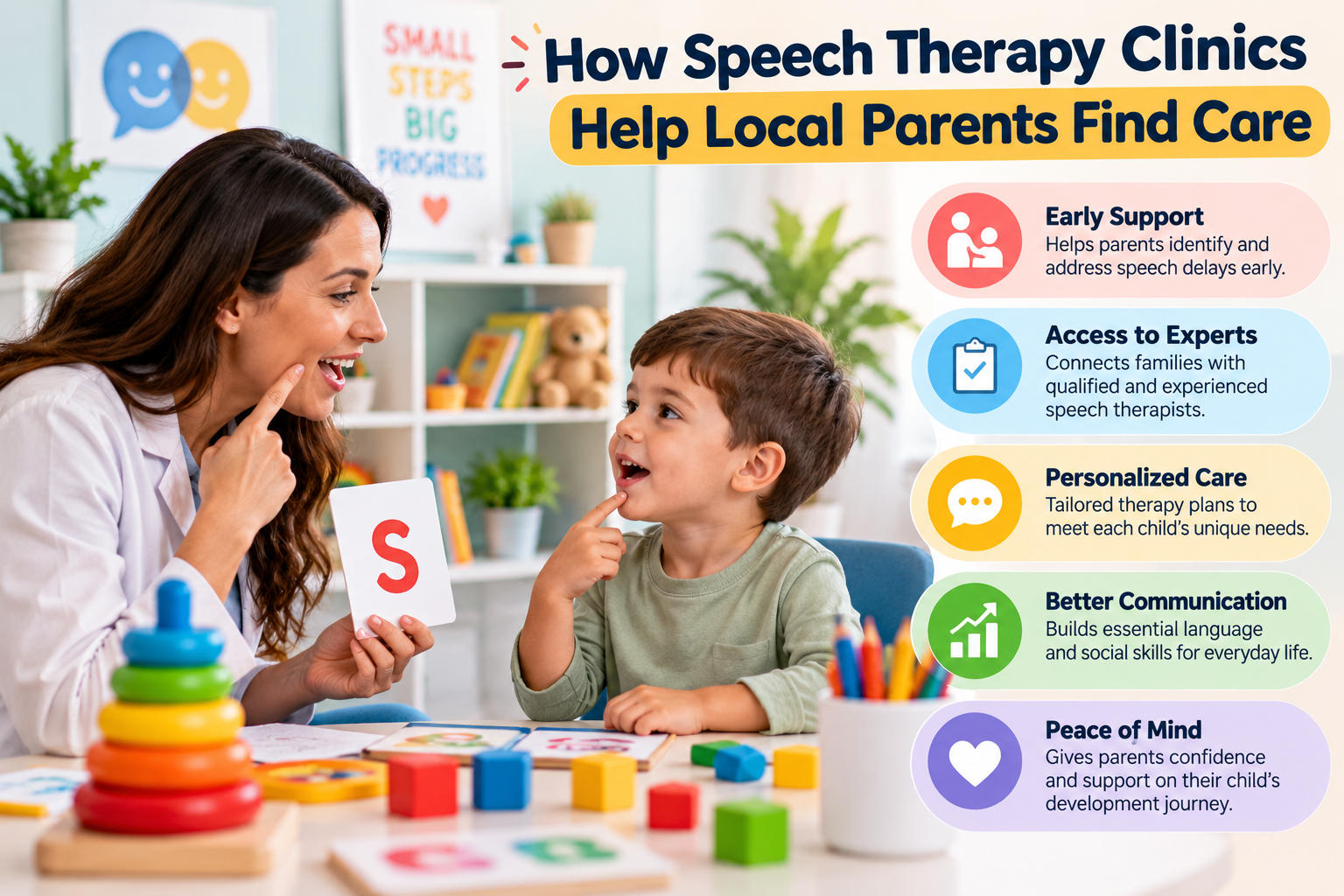
When a toddler isn’t hitting expected communication milestones, or a young child struggles to articulate basic words, parents often feel a mix of worry and confusion. They wonder if their child is simply a “late talker” who will catch up naturally, or if there is an underlying speech-language delay that requires professional support.
Searching for pediatric care can feel overwhelming. Between navigating pediatrician referrals, deciphering health insurance coverage, and sifting through online directories, parents face numerous hurdles. Modern speech therapy clinics recognize these challenges and actively restructure how they reach out to their surrounding communities, ensuring families receive clear answers and timely intervention.
Demystifying Speech Milestones and Early Warning Signs
Quick Answer: Speech therapy clinics help parents by providing clear, accessible milestone checklists and free initial phone consultations that turn vague worries into actionable developmental insights.
One of the greatest barriers to care is uncertainty. Parents frequently ask themselves whether a child’s articulation difficulties are age-appropriate or signs of a developmental delay.
To help families find clarity, proactive speech clinics publish free educational resources, self-assessment tools, and milestone guides tailored to specific age groups. By breaking down complex speech-language pathologist (SLP) terminology into plain language, clinics give parents the confidence to seek an evaluation early. Providing early intervention speech therapy guidance online helps parents identify issues like stuttering, expressive language delays, or auditory processing challenges before they impact a child’s school readiness.
Boosting Local Search Visibility to Reach Families in Need
Quick Answer: Speech clinics optimize their digital presence on search engines and map listings so parents searching for immediate help can instantly discover verified, nearby pediatric specialists.
When parents begin searching for help, they usually turn to Google late at night, searching phrases like “pediatric speech therapist near me” or “speech therapy for toddlers.” If a local practice does not appear prominently in local search results, a family might go weeks or months without discovering accessible care right in their neighborhood.
Building a strong digital presence requires a clear, local-first marketing strategy. For growing practices aiming to improve their pediatric speech therapy search visibility, partnering with digital marketing experts for targeted SEO services in Utah or regional optimization ensures their practice ranks prominently on Google Maps and organic search results. A well-optimized website featuring clear location pages, patient reviews, and clinic bios ensures families in the immediate area can easily find contact information, clinic hours, and evaluation booking forms.
Navigating Insurance Coverage and Pediatric Referrals
Quick Answer: Dedicated intake coordinators at speech therapy clinics guide parents through the complex process of verifying insurance benefits, obtaining pre-authorizations, and securing physician referrals.
The administrative side of healthcare is a major obstacle for parents seeking speech therapy. Many commercial health insurance plans have strict criteria regarding which speech diagnoses are covered, often differentiating between developmental delays and acute medical conditions.
To ease local speech clinic parent navigation, leading clinics employ dedicated patient care coordinators who:
Partnering with Local Schools, Daycares, and Pediatricians
Quick Answer: Speech practices collaborate directly with preschool teachers, daycare staff, and local pediatricians to establish a community-wide safety net for early detection.
Clinics do not operate in isolation. They build active referral networks across the community so that educators and healthcare providers can direct families toward help the moment a communication struggle is observed.
By conducting free speech and hearing screenings at local preschools, presenting educational workshops for daycare staff, and sharing intake guides with local pediatric offices, speech clinics ensure that trusted community leaders can guide parents toward appropriate clinical resources.
Providing Flexible Delivery Models: Telepractice and Hybrid Care
Quick Answer: Offering virtual teletherapy alongside traditional clinic-based appointments eliminates transportation hurdles, accommodating busy family schedules and rural residents.
For many working parents, driving across town for weekly 45-minute therapy sessions during business hours is impossible. Transportation challenges, sibling schedules, and geographic distance frequently cause families to delay or drop out of necessary treatment.
To make care accessible, modern clinics offer flexible service models:
Myth vs. Fact: Seeking Pediatric Speech Therapy
Clearing up common misconceptions helps parents seek care without unnecessary delays:
|
Misconception |
Clinical Reality |
|
“You should wait until a child is 4 or 5 years old before starting speech therapy.” |
Early intervention between ages 1 and 3 yields faster, more significant long-term communication gains. |
|
“Speech therapy is only for children who stutter or have a lisp.” |
SLPs treat expressive delays, receptive language, social communication (pragmatics), and feeding/swallowing disorders. |
|
“If my child receives speech therapy at school, we cannot get private clinic care.” |
Private therapy often complements school-based services, focusing on broader home and social communication goals. |
A Parent’s Action Checklist for Securing Speech Therapy
Use this checklist to guide your journey from initial concern to your child’s first session:
Connecting parents with pediatric speech therapy requires far more than opening a clinic door. It demands clear educational resources, high local search visibility, hands-on insurance support, strong community partnerships, and flexible care models. When speech therapy clinics proactively remove these administrative and physical barriers, local parents can move quickly from uncertainty to action—ensuring every child receives the timely support needed to find their voice.