
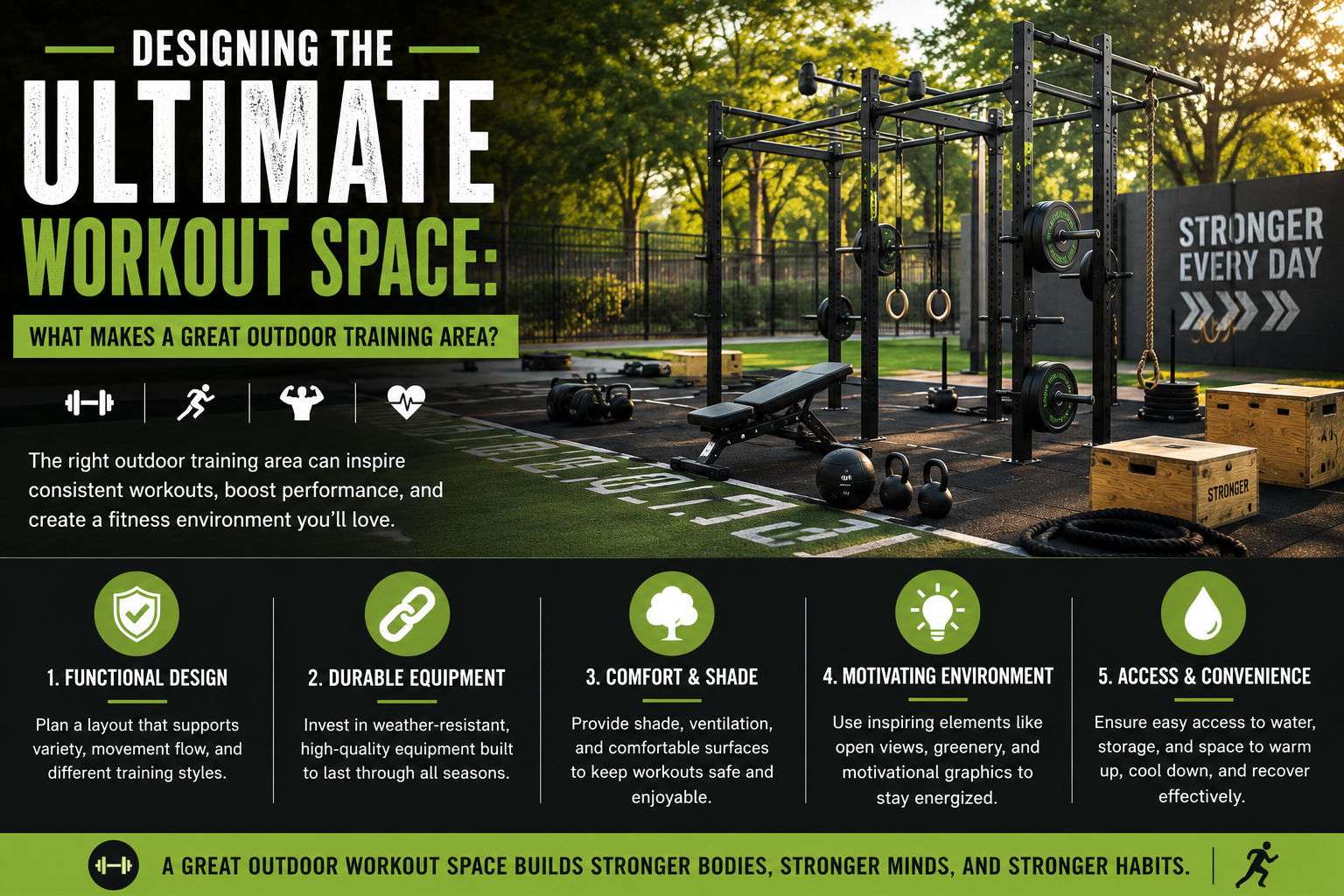
There is a unique energy that comes with exercising in the open air. The combination of direct sunlight, fresh oxygen, and natural breeze turns an intense conditioning session into an invigorating experience. Because of this, backyard fitness hubs, commercial outdoor rigs, and community athletic spaces have surged in popularity.
However, tossing a few kettlebells onto a patch of grass does not create a functional workout space. Rain transforms soil into mud, untreated metal rusts within weeks, and bare concrete or wood surfaces quickly break down under dropped weights.
Building a high-performance outdoor training space requires a balance between athletic function and environmental resilience. Whether you are designing a commercial fitness facility or a private home gym, here is what transforms an outdoor space into an elite training area.
The Direct Answer: What Makes a Great Outdoor Training Area?
A great outdoor training area combines impact-resistant, slip-proof flooring, heavy-duty weather-protected equipment, strategic shade and drainage systems, and a logical spatial flow tailored for safe movement.
When you protect your foundation and equipment from climate damage, you create a space that inspires consistent, year-round use without constant maintenance headaches.
1. Groundwork Matters: Durable Base Preparation and Protective Surfaces
The foundation is the most critical element of any outdoor gym. Dropping heavy barbells, executing explosive plyometrics, or dragging sleds requires a stable, level, and shock-absorbing surface.
Standard lawn or dirt quickly degrades into uneven pits, creating joint instability and trip hazards. While concrete provides a flat base, raw concrete shatters bumper plates and damages joints over time.
For elevated timber decks or exposed concrete pads, protection against moisture, UV rays, and heavy impacts is essential. If you are building a fitness deck in climates exposed to severe seasonal shifts, applying protective deck coatings in Salt Lake City or surrounding regional zones creates a heavy-duty, waterproof, and slip-resistant barrier. This treatment shields the underlying structure from freeze-thaw cycles, rot, and impact fractures caused by heavy equipment.
Once your sub-base is sealed and level, layer it with high-density vulcanized rubber mats or commercial exterior turf lanes. Exploring specialized outdoor gym flooring options allows you to mix surfaces for different training modalities—such as rubber tiles under squat racks and turf for sprint or sled work.
2. Climate Mitigation: Shade, Drainage, and Ventilation
Nothing ruins an outdoor workout faster than scalding metal gear in peak summer or standing in deep water puddles after a morning rainstorm.
Environmental planning keeps your space usable through changing weather conditions:
3. Investing in Weatherproof Workout Equipment
Standard indoor gym equipment will fail quickly if left exposed to ambient humidity, rain, and UV rays. Standard powder coatings chip, bare steel barbells oxidize instantly, and vinyl bench padding cracks under intense sun exposure.
When selecting weatherproof workout equipment, look for key manufacturing standards:
Myth vs. Fact: Outdoor Gym Design
4. Spatial Flow and Functional Layout
Effective athletic facility design relies on distinct movement zones to keep athletes safe and workouts efficient. Equipment should never feel cramped or disorganized.
Divide your space into four distinct zones:
Maintain at least six feet of clear space around all lifting stations to ensure spotters and athletes move without collision risks.
Essential Outdoor Gym Checklist
Before opening or using your new training space, verify that you have covered these structural standards:
How do you clean and maintain outdoor gym flooring?
Sweep away leaves and dirt regularly using a stiff-bristle broom. Wash rubber tiles or turf monthly using a mild dish soap solution and a garden hose. Avoid pressure washers set to high pressure, as they can gouge soft rubber surfaces.
Can cardio machines stay outside year-round?
Self-powered cardio machines (like manual treadmills, air bikes, and rowers) built with powder-coated frames can stay outside if placed under a hard roof shelter and covered with heavy-duty waterproof equipment covers when not in use. Electronic cardio machines requiring power outlets should stay indoors.
Conclusion
A great outdoor training area is much more than a collection of heavy weights placed outside. It is a thoughtfully engineered environment where durable flooring, smart weatherproofing, specialized equipment, and open spatial design come together. By taking the time to seal your surfaces against climate damage, invest in weather-resistant gear, and establish clear training zones, you build an invigorating athletic sanctuary that delivers incredible workouts for years to come.