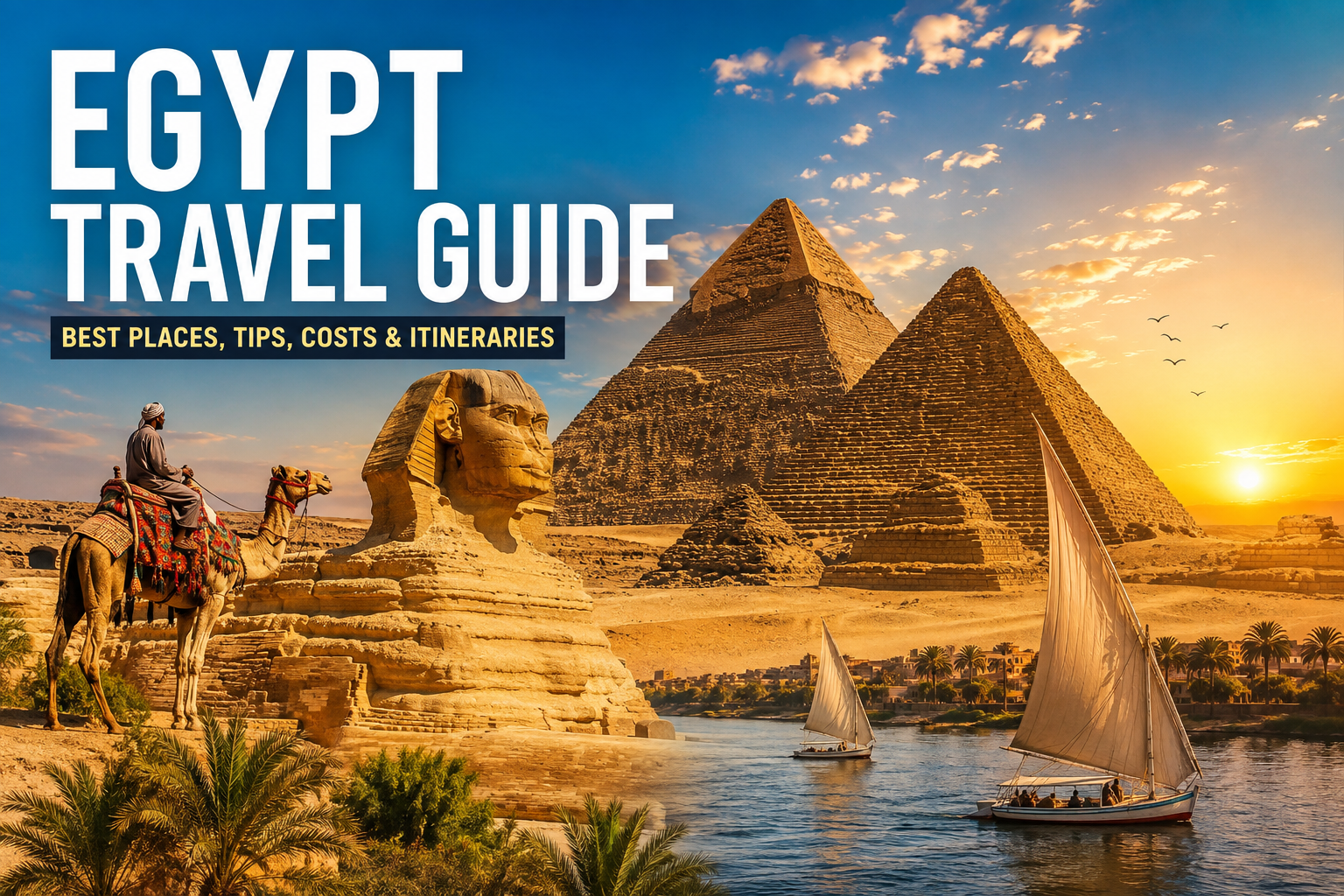
Egypt travel is much more than seeing the pyramids: it is a journey through ancient history, living culture, remarkable food, desert landscapes, the Nile, and Red Sea coastlines. The best Egypt trip combines famous landmarks such as Giza and Luxor with slower cultural experiences, carefully chosen transportation, realistic planning, and enough flexibility to handle the country’s heat, crowds, and busy cities. Imagine standing in front of the Great Pyramid just after sunrise. The stones are warmer than you expected, Cairo is already beginning to wake up in the distance, and the scale of the monument makes photographs feel almost meaningless 3S International Travel
Why Egypt Travel Is Different From an Ordinary Vacation
Egypt has something few destinations can genuinely offer: its most famous attractions are not simply old buildings. They are physical evidence of civilizations that shaped human history.
The pyramids, temples, tombs, museums, mosques, churches, markets, and ancient settlements are connected to thousands of years of political, religious, artistic, and social change.
At the same time, Egypt is not an open-air museum.
Modern Cairo is a huge, energetic city. Alexandria has a Mediterranean identity. Luxor revolves around archaeological tourism and the Nile. Aswan has strong Nubian cultural influences. Hurghada and Sharm El-Sheikh offer a completely different experience based around beaches and diving.
That means an Egypt itinerary can be designed around very different interests.
Egypt for History Lovers
Travelers interested in ancient history can spend days exploring Giza, Saqqara, Dahshur, Luxor, Karnak, the Valley of the Kings, and other archaeological sites.
Egypt for Food Lovers
Egyptian cuisine provides another reason to visit. Koshari, ful medames, ta’ameya, mahshi, molokhia, fattah, grilled meats, breads, pastries, and desserts offer an entirely different perspective on Egyptian culture.
Egypt for Beach Travelers
The Red Sea changes the character of the trip. Hurghada, Sharm El-Sheikh, Dahab, and other coastal destinations are known for beaches, coral reefs, snorkeling, and diving.
Egypt for Cultural Travelers
Historic neighborhoods, mosques, churches, markets, traditional crafts, Nubian communities, and everyday Egyptian life can be just as interesting as monumental attractions.
Best Places to Visit in Egypt
The biggest mistake first-time visitors make is treating Egypt as though it were one compact destination.
It is not.
The distance between major attractions means that choosing the right destinations is one of the most important parts of Egypt travel planning.
Cairo
Cairo is usually the natural starting point for international travelers.
It is crowded, noisy, fascinating, frustrating, historic, modern, and full of contrasts. Give the city enough time rather than treating it as nothing more than an airport stop.
Giza Pyramids
The Giza pyramid complex is Egypt’s most recognizable attraction.
The complex includes the Great Pyramid of Khufu, the Pyramid of Khafre, the Pyramid of Menkaure, associated structures, and the Great Sphinx.
Do not underestimate the scale of the area. Visiting the pyramids involves walking, sun exposure, crowds, and often considerable time outdoors.
A morning visit is usually more comfortable than arriving in the hottest part of the day.
Egyptian Museum and Museums in Cairo
Cairo’s museums provide context that archaeological sites alone cannot.
A good museum visit helps travelers understand how ancient objects were used, who created them, and how Egyptian civilization developed.
Museum planning should therefore be treated as part of the archaeological experience rather than a separate activity.
Khan el-Khalili
Khan el-Khalili is one of Cairo’s best-known traditional market areas.
It is a place to browse crafts, souvenirs, spices, jewelry, lamps, textiles, and other goods while experiencing the energy of historic Cairo.
The market is also a reminder that Egyptian heritage is not limited to pharaohs. Islamic architecture, traditional commerce, craftsmanship, food, and urban life form an important part of the country’s identity.
Islamic Cairo
Historic Cairo contains mosques, madrassas, old streets, gates, markets, and architectural landmarks.
Travelers interested in architecture should allocate more than a quick walk through the area.
A local guide can add considerable value because the history of the buildings is often difficult to understand from photographs alone.
Coptic Cairo
Coptic Cairo offers another side of the city.
Historic churches and Christian heritage sites demonstrate the religious diversity and long history of Egypt.
Combining Islamic Cairo, Coptic Cairo, and ancient Egyptian attractions creates a much more complete understanding of the country’s history.
Saqqara and Dahshur
If you have additional time around Cairo, do not automatically spend it all at Giza.
Saqqara and Dahshur provide a different archaeological experience and can help travelers understand how pyramid construction developed.
Saqqara
Saqqara is associated with the Step Pyramid of Djoser and a large archaeological complex.
Its importance goes far beyond one monument.
The area contains tombs, temples, inscriptions, and evidence of ancient Egyptian development over long periods.
Dahshur
Dahshur is famous for pyramids including the Bent Pyramid and Red Pyramid.
For travelers who want to go beyond the most crowded attractions, Dahshur can be an excellent addition to a Cairo itinerary.
Luxor
Luxor is one of the most important destinations for serious Egypt travel.
The modern city sits near the ancient area of Thebes and provides access to some of the country’s most extraordinary temples and tombs.
Karnak Temple
Karnak is not simply one building.
It is a vast temple complex developed over centuries by different rulers.
Its columns, courtyards, obelisks, inscriptions, and monumental spaces make it one of the most impressive stops on the Nile.
Give yourself enough time to walk rather than rushing through for photographs.
Luxor Temple
Luxor Temple is particularly atmospheric around sunset and after dark when lighting changes the character of the monument.
It is conveniently located in the city, making it easier to combine with other Luxor activities.
Valley of the Kings
The Valley of the Kings is one of the most famous archaeological landscapes in Egypt.
The tombs demonstrate how ancient Egyptian ideas about death, religion, kingship, and the afterlife influenced architecture and art.
A common mistake is assuming that the most famous tomb is automatically the best experience for every traveler.
Tomb access changes, and the available selection can vary. Check current conditions before visiting.
Hatshepsut Temple
The temple of Hatshepsut is another major Luxor attraction.
Its architecture and location against the cliffs create a memorable landscape, while Hatshepsut’s story provides a valuable opportunity to explore the role of women and political power in ancient Egypt.
Aswan
Aswan feels different from Cairo and Luxor.
The city is closely connected with the Nile and has strong Nubian cultural influences.
Philae Temple
Philae Temple is one of the most visually memorable temple experiences in southern Egypt.
Its island setting makes the journey part of the attraction.
Nubian Villages
A visit to a Nubian community can add cultural depth to an Egypt itinerary.
Instead of viewing Egypt only through monuments, travelers can learn about contemporary traditions, architecture, food, hospitality, and community life.
The key is to approach cultural tourism respectfully rather than treating communities as photographic attractions.
Abu Simbel
Abu Simbel is one of Egypt’s most spectacular ancient sites.
Its distance from Aswan requires additional planning, but travelers who prioritize ancient Egyptian history often consider the journey worthwhile.
Alexandria
Alexandria offers a completely different atmosphere.
Located on the Mediterranean coast, the city has a long history connected with Greek, Roman, Egyptian, and later Mediterranean cultures.
Important places to explore include the Bibliotheca Alexandrina, Citadel of Qaitbay, Corniche, and archaeological sites.
Alexandria works particularly well for travelers who want to see a side of Egypt that feels different from the classic pyramid-and-temple itinerary.
Fayoum Oasis
Fayoum is an especially interesting option for travelers who want something beyond the standard Cairo-Luxor-Aswan route.
The region combines oasis landscapes, lakes, desert scenery, archaeological heritage, villages, and outdoor experiences.
Lake Qarun
Lake Qarun provides a striking contrast to the surrounding desert environment.
Wadi El Hitan
Wadi El Hitan, or Valley of the Whales, is known for fossil remains and is an important destination for travelers interested in natural history.
Wadi El Rayan
Wadi El Rayan combines desert scenery with water and outdoor landscapes.
Fayoum can be especially attractive for photographers and travelers who prefer destinations with a strong sense of place rather than another crowded monument.
Sharm El-Sheikh
Sharm El-Sheikh is one of Egypt’s major Red Sea resort destinations.
It is particularly suitable for travelers interested in:
- Diving
- Snorkeling
- Beaches
- Resorts
- Marine life
- Relaxation
- Organized excursions
It can work well as the relaxing end of a longer Egypt trip.
Hurghada
Hurghada is another major Red Sea destination.
It offers beaches, diving, snorkeling, desert excursions, resorts, and boat trips.
The choice between Hurghada and Sharm El-Sheikh should depend more on the experience you want than on trying to visit both.
Dahab
Dahab has a more relaxed reputation and attracts travelers interested in diving, snorkeling, outdoor activities, and a less resort-centered atmosphere.
It can be a good choice for independent travelers who want more flexibility.
Siwa Oasis
Siwa is one of the more adventurous additions to an Egypt itinerary.
Its remote location makes it less convenient than Cairo or Luxor, but that is also part of its appeal.
Travelers can explore oasis landscapes, traditional architecture, desert environments, local culture, and natural springs.
Because remote desert travel requires additional planning, visitors should use reputable local operators and verify current access conditions.
Best Time for Egypt Travel
Egypt is a year-round destination, but the ideal travel period depends heavily on what you want to do.
October to April
The cooler months are generally attractive for sightseeing, especially in Cairo, Luxor, Aswan, and desert areas.
Winter can provide more comfortable conditions for long archaeological days.
May to September
Summer can be extremely hot, especially in Upper Egypt.
However, summer can still work for travelers who prioritize Red Sea resorts and are comfortable planning activities around heat.
Best Time for Pyramids and Ancient Sites
For archaeological sightseeing, cooler months are generally easier.
Early morning is often preferable even during favorable seasons.
Best Time for the Red Sea
The Red Sea can be visited throughout much of the year, although individual travelers will have different preferences for air and water temperatures.
Check current weather and sea conditions before booking specialized activities.
How Many Days Do You Need in Egypt?
There is no single correct answer.
Three Days
Three days is enough for a focused Cairo trip.
A practical plan could include:
- Giza
- Egyptian museums
- Historic Cairo
- Khan el-Khalili
- Egyptian food experiences
Five Days
Five days allows a stronger combination of Cairo and Luxor.
Seven Days
Seven days is a good starting point for a classic first trip.
A possible route is:
- Cairo
- Giza
- Luxor
- Aswan
- Nile experience
Ten Days
Ten days gives travelers more breathing room.
You can combine:
- Cairo
- Giza
- Luxor
- Aswan
- Nile cruise
- Red Sea
Two Weeks
Two weeks allow a much deeper trip.
You could include:
- Cairo
- Saqqara
- Dahshur
- Luxor
- Aswan
- Abu Simbel
- Red Sea
- Fayoum or another specialized destination
The most important principle is simple: do not add destinations simply to say you visited them.
A slower seven-day trip can be more enjoyable than a rushed ten-day itinerary.
Egypt Travel Itinerary for First-Time Visitors
Days 1–2: Cairo and Giza
Use your first day to settle into Cairo.
Explore the city, enjoy Egyptian food, and avoid scheduling too many major attractions immediately after a long international flight.
On day two, visit Giza and spend time understanding the archaeological landscape rather than rushing between viewpoints.
Day 3: Historic Cairo
Explore museums and historic neighborhoods.
Leave enough time for Khan el-Khalili and a relaxed Egyptian dinner.
Days 4–5: Luxor
Travel to Luxor and explore the East Bank.
Visit Karnak and Luxor Temple.
The following day, explore the West Bank, including the Valley of the Kings and other major sites.
Days 6–7: Aswan
Continue toward Aswan.
Explore Philae and consider a Nubian cultural experience.
Days 8–10: Red Sea
Finish with several days in Hurghada, Sharm El-Sheikh, or another suitable Red Sea destination.
This final stage can make the trip feel less exhausting because you can slow down after several days of sightseeing.
Egypt Travel Costs
Egypt can be relatively affordable compared with many major international destinations, but the actual budget varies enormously.
The biggest variables include:
- Hotel category
- Private guides
- Domestic flights
- Nile cruises
- Private transportation
- Diving
- Desert tours
- Restaurant choices
- Entrance fees
- Shopping
Budget Egypt Travel
Budget travelers can reduce costs through:
- Guesthouses
- Local restaurants
- Public or shared transportation where appropriate
- Fewer organized tours
- Longer stays in fewer locations
Mid-Range Egypt Travel
Mid-range travelers can spend more on:
- Comfortable hotels
- Private transfers
- Selected guided tours
- Better restaurants
- Domestic flights
This is often a practical balance for first-time visitors.
Luxury Egypt Travel
Luxury travelers can choose:
- High-end Cairo hotels
- Private guides
- Premium Nile cruises
- Private drivers
- Luxury Red Sea resorts
- Personalized archaeological tours
The important lesson is that Egypt travel costs are not determined only by the country. Your travel style matters just as much.
How to Get Around Egypt
Transportation deserves serious attention.
Domestic Flights
Flights can save significant time between distant destinations.
They are particularly useful when your trip is short.
Trains
Rail travel can provide a more local experience, but travelers should research current schedules, classes, routes, and safety considerations before relying on trains.
Private Drivers
A private driver can be valuable for day trips and multi-stop sightseeing.
The biggest advantage is flexibility.
Taxis and Ride-Hailing
Ride-hailing services can make urban transportation easier in major cities, but travelers should still verify the vehicle and driver before entering.
Nile Cruises
A Nile cruise combines accommodation, transportation, and sightseeing.
This can be one of the most efficient ways to experience Luxor, Edfu, Kom Ombo, and Aswan.
However, cruise quality varies considerably, so research the ship rather than purchasing solely based on the cheapest advertised package.
Egypt Travel Visa and Entry Requirements
Visa requirements depend on nationality, passport type, and the current rules of Egyptian authorities.
Travelers should verify requirements before departure rather than relying on old blog posts or social media comments.
For example, current UK government guidance says British passport holders need a passport valid for at least six months from arrival and at least one blank page. It also notes that eligible travelers can use visa-on-arrival arrangements at approved airports, while Cairo International Airport introduced digital visa-on-arrival purchasing from August 1, 2026.
Visa rules can differ significantly by nationality.
Therefore, the safest approach is to check the Egyptian government’s current requirements and the relevant Egyptian embassy or consulate for your passport.
Egypt Travel Safety
Egypt is visited by large numbers of international travelers, and most tourist trips are completed without serious problems. However, responsible planning remains essential.
The UK government says most visits by British travelers are trouble-free but continues to maintain regional warnings for parts of Egypt.
The U.S. State Department currently advises travelers to exercise increased caution in Egypt because of terrorism, crime, and health risks, while identifying specific areas where travel should be avoided.
Tourist Areas
Stay alert around major attractions.
Common problems can include:
- Overcharging
- Aggressive selling
- Unofficial guides
- Pickpocketing
- Transportation scams
- Unclear prices
Agree on prices before purchasing services when appropriate.
Women Travelers
Women may experience unwanted attention or harassment.
Travelers should research local conditions, choose accommodation carefully, use reputable transportation, and seek help from hotel staff or trusted operators when necessary.
Desert Travel
Do not treat remote desert travel like an ordinary self-drive excursion.
Some areas have security restrictions and require professional operators or permissions.
Current U.S. guidance specifically warns against travel to Northern and Middle Sinai, certain border areas, and the Western Desert except under appropriate professional arrangements.
Driving in Egypt
Self-driving is generally not the first choice I would recommend to an international first-time visitor.
Traffic conditions can be challenging, particularly in Cairo.
A hired driver or organized transfer can reduce stress.
Emergency Numbers
Current UK government guidance lists:
- Police: 122
- Tourist Police: 126
- Ambulance: 123
- Fire: 180
Keep these numbers available, but also save your accommodation, airline, insurer, and embassy contact details.
Health Tips for Egypt Travel
Heat and dehydration can turn an enjoyable sightseeing day into an exhausting one.
Carry water and plan breaks.
Food and Water
Use sensible food and water precautions, particularly during the first days of your trip.
Travelers with specific dietary or medical needs should plan ahead rather than assuming every restaurant can accommodate them.
Sun Protection
The Egyptian sun can be intense.
Bring:
- Sunscreen
- Sunglasses
- Hat
- Lightweight clothing
- Comfortable walking shoes
- Reusable water bottle
Travel Insurance
Comprehensive travel insurance is particularly important for trips involving remote areas, diving, desert activities, or extensive transportation.
The U.S. government recommends comprehensive medical insurance that includes medical evacuation for travelers to Egypt.
Egyptian Food You Should Try
Food is one of the easiest ways to make an Egypt trip more memorable.
Koshari
Koshari combines rice, pasta, lentils, chickpeas, tomato sauce, and fried onions.
It is filling, inexpensive, and distinctly Egyptian.
Ful Medames
Ful is a traditional dish based on cooked fava beans.
It is commonly associated with breakfast but can be enjoyed at different times of day.
Ta’ameya
Egyptian ta’ameya is a fava-bean-based version of falafel.
Trying it from a reputable local restaurant can be a great introduction to everyday Egyptian food.
Molokhia
Molokhia is a traditional leafy green dish often served with rice and meat or poultry.
Its texture can surprise first-time visitors, but it is an important part of Egyptian cuisine.
Mahshi
Mahshi refers to vegetables or leaves stuffed with seasoned rice and other ingredients.
Fattah
Fattah combines layers of bread, rice, meat, and sauce and is associated with celebrations and traditional meals.
Egyptian Desserts
Travelers with a sweet tooth should look for:
- Basbousa
- Kunafa
- Om Ali
- Zalabya
- Rice pudding
Food-focused travelers can build an entire Egypt itinerary around local dishes and regional specialties.
Egyptian Culture and Etiquette
Egypt is predominantly Muslim, and cultural awareness can make interactions more comfortable.
Clothing
There is no single dress code for every situation.
Tourist resorts are generally more relaxed, while religious sites and conservative communities require more modest clothing.
When visiting mosques or other religious locations, dress respectfully and follow local instructions.
Ramadan
Travel during Ramadan can be rewarding, but it changes the rhythm of daily life.
The UK government advises visitors to respect local customs during Ramadan, including sensitivity around eating, drinking, smoking, dress, and public behavior during daylight hours.
Photography
Ask before photographing people, particularly in personal or sensitive situations.
Some archaeological, military, religious, or government-related locations may have photography restrictions.
Always follow posted rules.
How to Deal With Tourist Scams
One of the most useful Egypt travel skills is learning to distinguish hospitality from commercial pressure.
Common Situations
Travelers may encounter:
- Unrequested assistance
- Inflated prices
- Fake guides
- Taxi price disputes
- “Free” gifts that later require payment
- Aggressive souvenir selling
The Best Solution
Be polite but firm.
You do not need to argue.
A simple “No, thank you” and continuing to walk is often enough.
For transportation, confirm the price before starting when a meter is not being used.
For guides and excursions, use reputable companies and confirm exactly what the price includes.
What to Pack for Egypt
A smart Egypt packing list should prioritize comfort over fashion.
Essential Items
- Passport
- Visa documentation if required
- Travel insurance details
- Comfortable walking shoes
- Lightweight clothing
- Modest clothing for religious sites
- Sunglasses
- Hat
- Sunscreen
- Water bottle
- Power adapter
- Phone charger
- Portable battery
- Basic medicines
- Copies of important documents
Technology
Keep digital copies of important documents.
Download offline maps for destinations where connectivity may be unreliable.
Avoid relying entirely on your phone for navigation.
Egypt Travel for Different Types of Travelers
The ideal Egypt itinerary depends on who is traveling.
Egypt Travel for Solo Travelers
Solo travelers should prioritize reputable accommodation, reliable transportation, and clearly arranged excursions.
A small-group tour can provide social interaction while preserving some independence.
Egypt Travel for Couples
Couples can combine major archaeological attractions with:
- Nile cruises
- Sunset experiences
- Boutique hotels
- Red Sea resorts
- Romantic restaurants
- Private tours
Egypt Travel for Families
Families should avoid overly ambitious schedules.
Children may become tired from heat, walking, and long transportation days.
Balance historical attractions with swimming, boat trips, and relaxed activities.
Egypt Travel for Seniors
Comfortable transportation, shorter walking periods, suitable accommodation, and medical planning become especially important.
Egypt Travel for Budget Travelers
Budget travelers should focus on fewer destinations and use local restaurants and carefully selected accommodation.
Trying to cover the entire country on a very small budget can create unnecessary stress.
Egypt Travel for Luxury Travelers
Luxury travelers can build a customized experience around private guides, high-end hotels, premium Nile cruises, private transportation, and specialized cultural experiences.
Ten Travel Brands to Consider for Egypt Travel
There is no single best travel brand for every visitor. The right choice depends on whether you need accommodation, flights, tours, activities, or a complete package.
| Brand | Best For | Main Strength | Potential Limitation |
|---|---|---|---|
| Booking.com | Hotels | Very broad accommodation choice | Quality varies by property |
| Expedia | Flights and hotels | Package planning | Less specialized in Egypt |
| Trip.com | Flights and hotels | International booking options | Compare conditions carefully |
| Viator | Tours and activities | Large activity marketplace | Experiences vary by operator |
| GetYourGuide | Tours | Easy activity discovery | Operator quality differs |
| Intrepid Travel | Small-group tours | Structured cultural travel | Less flexibility than independent travel |
| G Adventures | Group travel | Social and organized itineraries | Group schedule may not suit everyone |
| EgyptAir | Flights | National carrier and domestic connectivity | Schedules and service vary |
| Hilton | Hotels | Recognizable international standards | Luxury properties can be expensive |
| Marriott | Hotels | Wide international hotel portfolio | Not always the best local-value option |
How to Choose a Travel Brand
Do not select a company simply because it appears first in search results.
Compare:
- Cancellation policy
- Reviews
- What’s included
- Airport transfers
- Guide qualifications
- Group size
- Hotel category
- Transportation
- Refund terms
- Customer support
For tours, the company you book through and the company actually operating the tour may be different. Read the operator information carefully.
Pros and Cons of Egypt Travel
Advantages
Extraordinary History
Few destinations offer such a concentration of ancient monuments.
Strong Variety
One trip can include archaeology, food, cities, beaches, desert, museums, and river travel.
Cultural Depth
Egypt has layers of ancient, Islamic, Christian, Mediterranean, Nubian, and modern culture.
Flexible Travel Styles
Egypt works for budget backpackers, families, couples, luxury travelers, photographers, history enthusiasts, and divers.
Unique Experiences
A Nile cruise, sunrise at an archaeological site, desert landscape, or Red Sea dive can create experiences that are difficult to reproduce elsewhere.
Disadvantages Egypt travel
Traffic Egypt travel
Cairo traffic can consume significant time.
Heat Egypt travel
Summer conditions can make archaeological sightseeing difficult.
Tourist Pressure Egypt travel
Popular attractions can involve persistent vendors and crowds.
Planning Complexity Egypt travel
The country’s size makes spontaneous multi-city travel more complicated than it appears on a map.
Regional Safety Differences Egypt travel
Travel conditions are not identical across the country. Some areas have significant security restrictions and should not be treated like ordinary tourist destinations.
Common Egypt Travel Mistakes
Trying to See Everything Egypt travel
Egypt is too large for a rushed itinerary.
Choose priorities.
Visiting the Pyramids at the Worst Time Egypt travel
Heat and crowds can make the experience much harder.
Aim for an early start when practical.
Booking the Cheapest Tour Egypt travel
The cheapest tour can become expensive if transportation, entrance fees, meals, or guide services are excluded.
Ignoring Travel Time Egypt travel
A destination that looks close on a map may require much longer to reach because of traffic and road conditions.
Not Checking Visa Requirements Egypt travel
Rules depend on nationality and can change.
Always verify before departure.
Forgetting Cultural Etiquette Egypt travel
Respectful clothing, photography behavior, and awareness of religious customs can prevent uncomfortable situations.
Overpacking Egypt travel
You will spend a lot of time moving between destinations.
Pack for heat, walking, and practicality.
Trusting Old Travel Information Egypt travel
This is particularly important for visas, security restrictions, transportation, attraction opening hours, and prices.
Current official guidance should take priority.
A Better Way to Plan Egypt Travel
The strongest Egypt itinerary is not necessarily the one with the most attractions.
Start with your primary purpose.
If History Is Your Priority Egypt travel
Choose:
- Cairo
- Giza
- Saqqara
- Luxor
- Aswan
- Abu Simbel
If You Want Relaxation Egypt travel
Choose:
- Cairo
- Giza
- Luxor
- Red Sea resort
If You Want Culture Egypt travel
Choose:
- Cairo
- Historic Cairo
- Aswan
- Nubian experiences
- Local food experiences
- Alexandria
If You Want Adventure Egypt travel
Choose:
- Fayoum
- Desert experiences with reputable operators
- Red Sea diving
- Siwa Oasis where current access and conditions allow
How to Make Egypt Travel More Meaningful
The best memories often come from moments that are not on the standard checklist.
Instead of asking only, “What monument should I see next?” ask:
What do I want to understand about Egypt?
You might want to understand how ancient Egyptians viewed death.
You might want to understand modern Cairo.
You might want to explore Egyptian food.
You might want to experience Nubian culture.
You might want to understand how the Nile shaped settlement and agriculture.
That question changes the entire trip.
Egypt Travel and Sustainable Tourism Egypt travel
Egypt’s most famous sites face pressure from large numbers of visitors.
Responsible tourism can help.
Choose Local Guides Egypt travel
Qualified local guides can provide income while adding historical and cultural context.
Respect Archaeological Sites Egypt travel
Do not touch, climb, scratch, or otherwise interfere with ancient structures unless an activity is explicitly authorized.
Support Local Businesses Egypt travel
Eat at reputable local restaurants, purchase authentic crafts, and use legitimate local operators.
Avoid Exploitative Tourism Egypt travel
Cultural experiences should benefit communities rather than reduce them to photo opportunities.
The Future of Egypt Travel
Egypt’s tourism sector is evolving.
Travelers increasingly expect more than traditional package tours.
Growth of Experience-Based Travel Egypt travel
Visitors are looking for experiences rather than simply collecting landmarks.
That means:
- Food tours
- Local workshops
- Cultural experiences
- Small-group archaeology
- Photography trips
- Wellness
- Adventure tourism
are likely to remain important.
More Digital Travel Planning
Travelers increasingly research destinations, compare hotels, read reviews, use digital maps, and organize activities online.
This makes accurate, current information more valuable than generic travel content.
AI-Assisted Trip Planning
Artificial intelligence is also changing how people build itineraries.
Travelers can now use AI tools to compare routes, generate schedules, translate basic information, and organize interests.
However, AI should not replace official sources for visa rules, border restrictions, security warnings, or other rapidly changing information.
Greater Interest in Lesser-Known Egypt
As travelers become more familiar with the pyramids and Luxor, destinations such as Fayoum, Siwa, Alexandria, and less-visited archaeological locations can attract more attention.
This creates opportunities for travelers who want to explore beyond the classic route.
FAQs
Is Egypt Worth Visiting?
Yes, particularly for travelers interested in history, culture, food, architecture, nature, or the Red Sea.
The key is setting realistic expectations.
Egypt is not always effortless travel, but its cultural and historical rewards can be extraordinary.
How Many Days Are Enough for Egypt?
Seven days is a reasonable starting point for a first visit, while ten to fourteen days allow a more relaxed combination of Cairo, Luxor, Aswan, and the Red Sea.
Is Egypt Expensive?
Egypt can accommodate different budgets.
Accommodation, transportation, tours, and dining choices have the greatest influence on total spending.
Is Egypt Safe for Tourists?
Many tourists visit Egypt successfully every year, but travelers should review current official guidance because risks vary by region. Current U.S. and UK government guidance includes specific warnings for certain areas, so travelers should not assume that conditions are identical throughout Egypt.
What Is the Best Month to Visit Egypt?
For sightseeing, the cooler part of the year is generally more comfortable.
However, the best month depends on whether you prioritize archaeological sites, beaches, diving, or lower-season travel.
What Should I Wear in Egypt?
Choose lightweight, comfortable clothing and dress more conservatively when visiting religious sites or traditional communities.
Should I Book a Tour?
First-time visitors can benefit from guided tours, particularly for complicated archaeological sites and multi-city transportation.
Independent travel can work well for experienced travelers who prefer flexibility.
Is Cairo Worth Visiting?
Absolutely.
Cairo provides access to Giza but also offers museums, historic neighborhoods, markets, architecture, food, and modern Egyptian culture.
Is Fayoum Worth Visiting?
For travelers interested in landscapes, fossils, desert scenery, oasis culture, and less conventional destinations, Fayoum can be an excellent addition to an Egypt itinerary.
Can I Visit Egypt With Children?
Yes.
Families should simply balance historical sightseeing with rest, swimming, food experiences, and activities that children enjoy.
Conclusion
Egypt remains one of the world’s most distinctive travel destinations because it offers something that is difficult to find elsewhere: an extraordinary ancient past existing alongside a vibrant modern society. The pyramids deserve their fame, but they should not define your entire trip. The strongest Egypt travel experience combines the iconic with the unexpected: Giza with Saqqara, Luxor with local food, Aswan with Nubian culture, Cairo with historic neighborhoods, and famous destinations with lesser-known places such as Fayoum. A successful trip is less about checking every attraction off a list and more about creating a route that matches your interests, budget, energy level, and travel style.