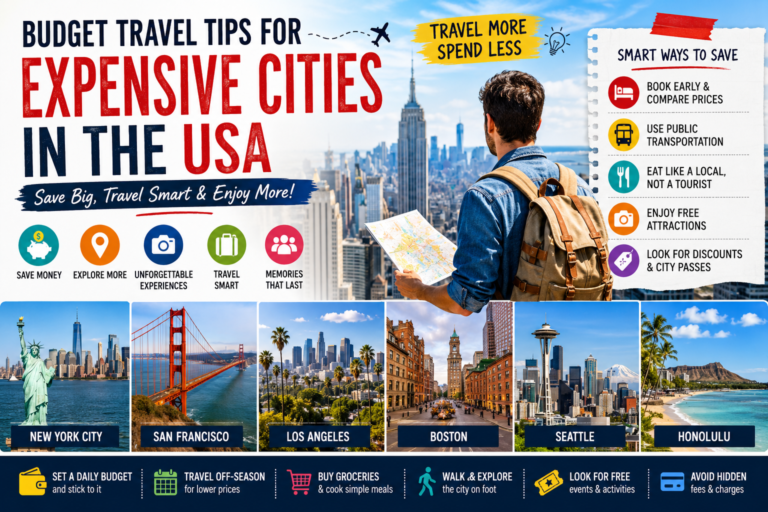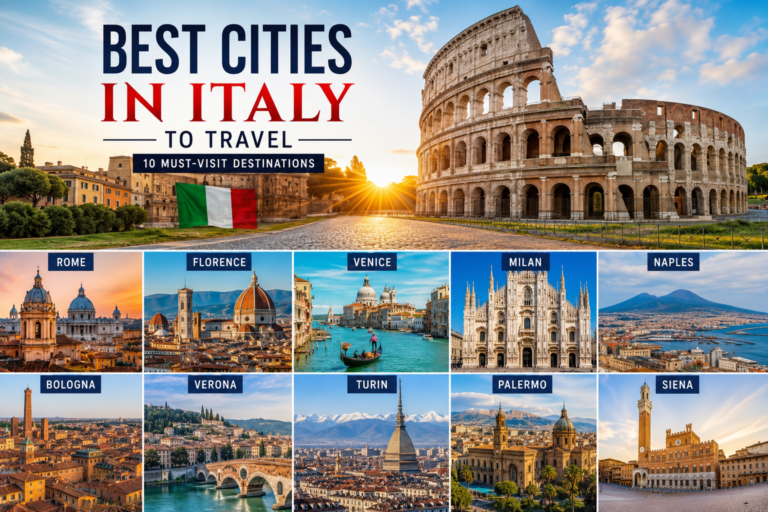
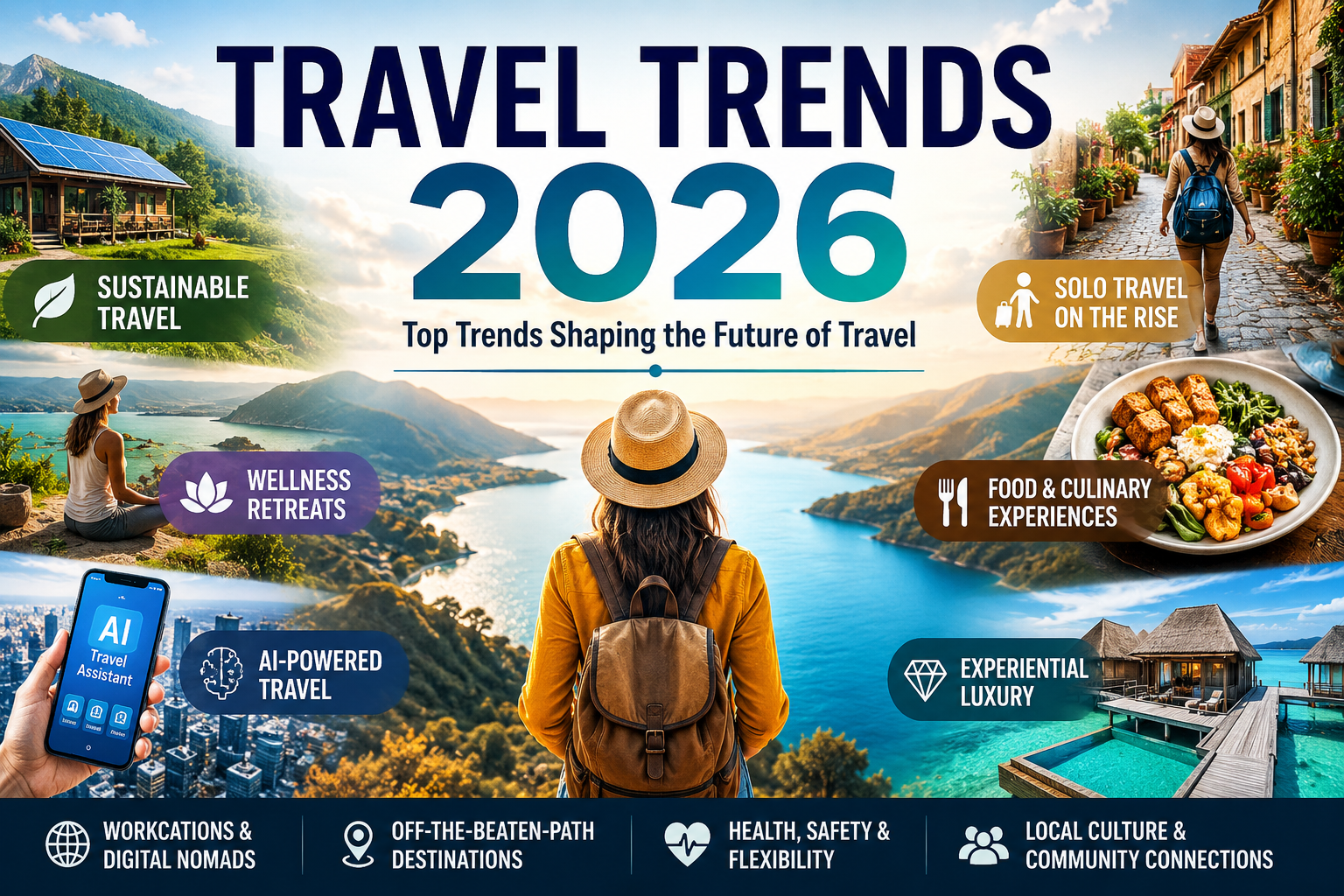
Travel trends in 2026 are moving beyond simply visiting famous destinations; travelers increasingly want personalized, flexible, meaningful, affordable, and experience-driven journeys. AI trip planning, solo travel, slow tourism, wellness escapes, alternative destinations, longer stopovers, microcations, immersive entertainment, and more conscious travel are reshaping how people decide where to go and what to do TripOptionTravel
Quick Summary of Travel Trends in 2026
The most important travel trends include:
- AI-powered travel planning
- Solo travel
- Slow travel
- Microcations and short breaks
- Longer stopovers
- Alternative and emerging destinations
- Wellness and restorative travel
- Experience-led travel
- Sports tourism
- Entertainment and fandom travel
- Food-focused trips
- Nature and outdoor tourism
- Sustainable and responsible tourism
- Off-season travel
- Work-from-anywhere trips
- Bleisure travel
- Multigenerational travel
- Luxury travel with greater personalization
- Budget-conscious premium travel
- Carry-on-only travel
- Travel based on hobbies and personal interests
- Reading and literary retreats
- Farm stays and rural tourism
- Digital detox vacations
- Personalized travel recommendations
These trends overlap. A single traveler might take a solo wellness trip, use AI to plan it, stay in a rural property, travel during the shoulder season, and spend less by choosing an emerging destination.
That combination is one of the most important developments in modern tourism.
Why Travel Trends Matter More Than Ever
Travel trends are not simply fashionable phrases used by tourism companies.
They reveal changes in consumer behavior.
A trend can influence:
- Where people travel
- When they travel
- How long they stay
- How much they spend
- Where they stay
- What experiences they purchase
- Which destinations become popular
- Which destinations lose demand
- How airlines schedule routes
- How hotels design rooms
- How tourism boards market destinations
For travelers, understanding these patterns can help identify better experiences and sometimes lower costs.
For travel businesses, recognizing them early can reveal new opportunities.
For travel bloggers, trends can provide strong content opportunities because people increasingly search for specific travel problems rather than broad terms such as “vacations.”
For example, instead of searching only for “Italy travel,” a traveler may search for:
- Best quiet Italian destinations
- Best solo travel destinations in Italy
- Affordable Italy trips
- Italy shoulder season travel
- Best food destinations in Italy
- AI travel planner for Italy
- Hidden Italian coastal towns
The broader travel industry is therefore moving from destination-first travel toward traveler-intent travel.
The Big Shift: From Tourism to Personal Travel
Traditional tourism often followed a predictable model:
Destination → hotel → sightseeing → restaurants → return home
Modern travel is becoming more personal:
Interest → purpose → experience → destination
A traveler might first decide:
“I want to photograph wildlife.”
Then choose a destination.
Another might think:
“I need a peaceful week to recover from work.”
That person may search for wellness resorts, nature destinations, spa hotels, or quiet towns.
Someone else may think:
“I want to attend a major football match.”
The destination becomes secondary to the event.
This is why travel trends increasingly cross into other industries such as:
- Entertainment
- Sports
- Food
- Health and wellness
- Technology
- Fashion
- Education
- Books
- Gaming
- Photography
- Remote work
Travel is becoming an extension of people’s lifestyles.
AI-Powered Travel Planning Is Becoming Mainstream
Artificial intelligence is one of the most significant travel trends of 2026.
Travelers can increasingly use AI tools to help with:
- Destination discovery
- Itinerary creation
- Hotel research
- Restaurant recommendations
- Activity planning
- Translation
- Packing suggestions
- Budget calculations
- Route planning
- Travel timing
- Personalized recommendations
The important change is not simply that AI can create an itinerary.
The bigger development is personalization.
Instead of asking:
“What should I do in Paris?”
A traveler can ask:
“I have three days in Paris, dislike crowded attractions, love photography and bakeries, have a $500 activity budget, and want to walk as much as possible.”
That produces a much more useful travel-planning experience.
Why AI Travel Planning Is Growing
Travel involves thousands of interconnected decisions.
A typical trip can require decisions about:
- Flights
- Airports
- Hotels
- Neighborhoods
- Transportation
- Restaurants
- Activities
- Opening hours
- Weather
- Budget
- Travel documents
- Local customs
AI can help organize those decisions.
Booking.com reported that its 2026 travel predictions found strong interest in technology-enabled personalization, with research covering more than 29,000 travelers across 33 countries and territories.
The Problem With AI Travel Planning
AI should not automatically be treated as an authoritative travel agent.
It can produce:
- Outdated opening hours
- Incorrect transportation information
- Wrong prices
- Imaginary attractions
- Incorrect visa assumptions
- Unrealistic itineraries
The safest approach is:
Use AI for discovery and organization, then verify important information with official sources.
This is particularly important for visas, border rules, health requirements, flights, entry restrictions, and local regulations.
Solo Travel Continues to Grow
Solo travel has moved well beyond the stereotype of a young backpacker traveling around Europe.
Today, solo travelers include:
- Young professionals
- Entrepreneurs
- Students
- Retirees
- Parents taking personal trips
- Digital workers
- Photographers
- Creators
- Wellness travelers
Recent 2026 reporting shows strong interest in solo travel, with Google searches for the term reaching a record level in February 2026 in one U.S. market. A 2025 Hostelworld survey of more than 3,300 solo travelers also found that freedom and spontaneity were major motivations.
Why People Choose Solo Travel
Solo travel provides something group travel cannot always provide:
complete control.
You decide:
- When to wake up
- Where to eat
- What to visit
- When to rest
- How much to spend
- Whether to change plans
This is especially attractive to people with demanding schedules.
Solo Travel Is Becoming More Social
Solo does not necessarily mean lonely.
Modern solo travelers often use:
- Hostels
- Walking tours
- Group excursions
- Cooking classes
- Local meetups
- Travel communities
- Social events
- Co-working spaces
The traveler controls the itinerary while choosing when to socialize.
Slow Travel Is Replacing Checklist Tourism
One of the most meaningful travel trends is the movement from seeing everything to experiencing fewer places more deeply.
Traditional itinerary:
Five cities in seven days.
Slow travel:
One region for seven days.
The second approach can create a stronger connection with the destination.
What Is Slow Travel?
Slow travel means deliberately reducing the speed and intensity of a trip.
It can involve:
- Staying longer
- Using trains instead of multiple flights
- Exploring neighborhoods
- Shopping locally
- Eating regional food
- Spending time in small towns
- Taking walking or cycling trips
- Avoiding excessive sightseeing
The objective is not necessarily to travel less.
It is to travel with greater intention.
Why Slow Travel Appeals to Modern Travelers
Many travelers are experiencing itinerary fatigue.
They return from vacation needing another vacation.
Slow travel offers a different promise:
less rushing, more living.
Microcations Are Becoming a Serious Travel Category
A microcation is a very short trip, often lasting around one to three days.
Examples include:
- Weekend city breaks
- 24-hour trips
- Overnight nature escapes
- Short beach trips
- Two-night food trips
Microcations are particularly attractive to:
- Gen Z
- Millennials
- Busy professionals
- Parents
- Entrepreneurs
- Remote workers
Instead of waiting six months for a two-week holiday, travelers can take several smaller trips throughout the year.
Why Microcations Make Sense
They can require:
- Less time off work
- Less planning
- Smaller budgets
- Less luggage
- Less disruption to daily life
The downside is that transportation costs can represent a large percentage of a short trip’s total budget.
For a two-day vacation, spending eight hours traveling each way may not make sense.
This is why short-haul accessibility is becoming increasingly important.
Longer Stopovers Are Turning Layovers Into Mini-Vacations
A layover used to be something travelers wanted to avoid.
That attitude is changing.
Expedia’s 2026 Air Hacks data indicates that a significant share of travelers are deliberately choosing longer layovers to explore another city.
For example:
A traveler flying from Asia to Europe might intentionally schedule a long stop in a Middle Eastern hub.
Instead of:
Airport → connecting flight → destination
the trip becomes:
Destination A → Stopover City → Destination B
Benefits of Stopover Travel
- See another city
- Potentially add value without booking a separate vacation
- Break up long-haul journeys
- Discover less familiar destinations
Important Warning
Always check:
- Transit visa rules
- Baggage arrangements
- Airport transfer times
- Minimum connection requirements
- Entry requirements
A cheap stopover is not useful if the traveler cannot legally leave the airport.
Emerging Destinations Are Challenging Traditional Hotspots
Travelers increasingly want alternatives to overcrowded destinations.
Instead of visiting the most famous city in a country, they may explore:
- Secondary cities
- Smaller coastal towns
- Rural communities
- Regional capitals
- Less-famous islands
- Mountain villages
Expedia’s 2026 trend research specifically highlights rising interest in destinations that are gaining attention before becoming mainstream.
This creates an opportunity for travelers.
Why Alternative Destinations Can Be Better
They may offer:
- Fewer crowds
- Lower accommodation costs
- More authentic interactions
- Easier restaurant reservations
- Less congested attractions
- More relaxed local experiences
But travelers should avoid assuming that “hidden gem” automatically means inexpensive.
Once a destination becomes popular, prices can rise quickly.
Overtourism Is Changing How People Choose Destinations
Overtourism has become one of the biggest challenges facing popular destinations.
When too many visitors arrive at the same place at the same time, consequences can include:
- Crowded streets
- Higher prices
- Housing pressure
- Environmental damage
- Traffic
- Long attraction queues
- Local frustration
Expedia’s 2026 research even introduced a travel-health framework focused on overcrowding and destination sustainability.
The New Opportunity: Tourism Distribution
Instead of concentrating millions of visitors in one location, tourism organizations increasingly have an incentive to distribute visitors across:
- Different neighborhoods
- Different seasons
- Nearby towns
- Secondary attractions
- Alternative regions
This can benefit both travelers and residents.
Wellness Travel Is Becoming More Holistic
Wellness travel is no longer limited to luxury spas.
Modern wellness trips can include:
- Yoga
- Hiking
- Sleep retreats
- Meditation
- Nature immersion
- Digital detox
- Healthy food
- Fitness
- Thermal baths
- Quiet hotels
- Mental rest
- Outdoor activities
The key shift is from pampering to recovery.
A wellness traveler may not want a five-star spa.
They may simply want:
- Clean air
- Quiet surroundings
- Good sleep
- Walking trails
- Healthy meals
- No work notifications
Wellness Travel for Different Demographics
Young professionals: stress recovery and digital detox.
Families: nature and activity-based wellness.
Older travelers: gentle outdoor activities and relaxation.
Couples: spa, nature, and restorative experiences.
Solo travelers: reflection, personal growth, and independence.
Sports Tourism Is Expanding
Sports are powerful travel motivators.
People travel for:
- Football
- Basketball
- Tennis
- Formula 1
- Cricket
- Rugby
- Golf
- Marathon events
- Olympic competitions
- Major international tournaments
The interesting part is that sports tourism does not always require attending the final or biggest event.
Fans may travel for:
- Stadium tours
- Training sessions
- Local matches
- Sports museums
- Fan festivals
- Amateur competitions
This makes sports tourism a year-round opportunity.
Entertainment and Fandom Travel Are Growing
Travel increasingly follows popular culture.
People travel because they love:
- Movies
- Television
- Books
- Music
- Anime
- Video games
- Fantasy
- Celebrity culture
This is sometimes called set-jetting, where travelers visit filming locations or places associated with entertainment.
The Rise of Story-Based Travel
Booking.com’s 2026 research identified strong interest in travel inspired by fantasy and fictional worlds. More than seven in ten surveyed travelers said they could be interested in visiting destinations inspired by romantasy, while many were open to AI-assisted recommendations connected to fantasy aesthetics and fictional worlds.
This illustrates an important principle:
People increasingly travel into stories, not just places.
A castle is no longer merely a historical building.
For a fan, it can represent an entire fictional world.
Food Tourism Is Becoming a Primary Reason to Travel
Food has always been part of tourism.
But increasingly, food is the destination.
Travelers plan trips around:
- Restaurants
- Street food
- Regional cuisine
- Coffee
- Bakeries
- Markets
- Cooking classes
- Food festivals
- Wine regions
- Local specialties
Food Tourism Is More Than Fine Dining
Some of the strongest food experiences can be inexpensive.
Examples include:
- Local breakfast
- Street markets
- Family-owned restaurants
- Regional snacks
- Food halls
- Traditional bakeries
- Local cooking workshops
The traveler is not simply consuming food.
They are learning about the destination through food.
Nature Travel Continues to Gain Momentum
Nature-based travel remains one of the strongest categories for people seeking meaningful experiences.
Popular activities include:
- Hiking
- Camping
- Wildlife watching
- National parks
- Scenic road trips
- Mountain tourism
- Forest stays
- Beaches
- Lakes
- Cycling
Nature travel also connects directly with wellness and slow tourism.
A three-day hiking trip can simultaneously be:
- A wellness vacation
- An adventure trip
- A digital detox
- A solo journey
- A photography experience
This overlap explains why modern travel trends should not be viewed as isolated categories.
Sustainable Travel Is Becoming More Practical
Sustainable tourism is moving from marketing language toward practical decisions.
Travelers increasingly consider:
- Local businesses
- Public transportation
- Train travel
- Refillable water
- Longer stays
- Responsible wildlife tourism
- Small accommodations
- Off-season travel
- Community-based experiences
Sustainable Travel Does Not Mean Perfect Travel
A traveler does not need to eliminate every environmental impact.
A more realistic approach is to reduce avoidable impact.
For example:
Instead of flying between three nearby cities, a traveler might use rail transportation.
Instead of changing hotels every night, they might stay longer.
Instead of visiting a severely overcrowded attraction at peak time, they might choose an alternative.
The Hidden Benefit
Sustainable travel can sometimes improve the travel experience itself.
Fewer rushed transfers can mean:
- Less stress
- More local interaction
- More time
- Better sleep
- Better understanding of a destination
Shoulder-Season Travel Is Becoming More Attractive
Peak-season travel often means:
- Higher prices
- Larger crowds
- Limited availability
- Hotter weather in some destinations
Shoulder seasons can provide a compromise.
Examples include:
- Spring instead of peak summer
- Early autumn instead of midsummer
- Late winter instead of holiday periods
Travelers may get:
- Better hotel availability
- More manageable crowds
- More reasonable prices
- Comfortable weather
However, shoulder-season conditions vary significantly by destination.
Always check local weather and seasonal closures.
Carry-On-Only Travel Is Becoming More Popular
Travelers are increasingly looking for efficiency.
Expedia’s 2026 Air Hacks reporting indicates that carry-on-only travel has become a notable behavior, with 48% of travelers in its dataset flying with carry-on luggage only.
Why?
Because carry-on travel can mean:
- Faster airport exit
- Lower baggage fees
- Less lost-luggage risk
- Easier train travel
- Easier hotel changes
- Less physical burden
Carry-On Travel Requires Strategy
Travelers should prioritize:
- Versatile clothing
- Lightweight footwear
- Compact toiletries
- Travel-sized electronics
- Digital documents
- Minimal duplicate items
The goal is not to pack as little as possible.
The goal is to pack what actually gets used.
Bleisure Travel Continues to Blur Work and Vacation
Bleisure combines:
Business + Leisure
A professional may travel for a conference and stay two additional days to explore the destination.
This model benefits:
- Employers
- Employees
- Hotels
- Airlines
- Local tourism businesses
Remote work has made this even easier for some travelers.
The New Travel Question
Instead of asking:
“Can I take vacation?”
People increasingly ask:
“Can I combine work travel with personal travel?”
That changes the structure of business trips.
Work-From-Anywhere Travel Is Becoming More Selective
Remote work created a major travel opportunity.
But the initial excitement around working from anywhere is becoming more practical.
Travelers now need to consider:
- Internet reliability
- Time zones
- Visa rules
- Taxes
- Accommodation workspace
- Noise
- Data security
- Work-life boundaries
A beautiful beach does not automatically make a good remote office.
The Better Model
Instead of working from a different country every week, some remote workers may prefer:
one destination for several weeks or months.
This combines slow travel with remote work.
Multigenerational Travel Is Creating New Demand
Families are increasingly traveling across multiple generations.
A single trip may include:
- Grandparents
- Parents
- Children
- Teenagers
This creates complicated planning requirements.
The best destinations offer a mix of:
- Relaxation
- Accessibility
- Child-friendly activities
- Cultural experiences
- Good transportation
- Comfortable accommodation
Multigenerational travelers often value convenience more than extreme adventure.
Luxury Travel Is Becoming More Personal
Luxury travel is changing.
Luxury does not always mean:
largest suite + most expensive restaurant.
Increasingly, luxury can mean:
- Privacy
- Space
- Personalization
- Quiet
- Exclusive access
- Flexible schedules
- Exceptional service
- Unique experiences
A traveler may prefer a private villa in a small destination over a famous five-star hotel in a crowded city.
The New Definition of Luxury
For many travelers:
Time is luxury.
A trip without queues, stress, unnecessary transfers, or rigid schedules can feel more luxurious than expensive décor.
Affordable Premium Travel Is Growing
Budget travelers do not necessarily want the cheapest possible experience.
Many want:
the best value for money.
They may save on:
- Flights
- Transportation
- Accommodation
and spend more on:
- Food
- Experiences
- Special activities
This creates a “selective splurge” model.
Instead of spending $300 more for a larger hotel room, a traveler may spend that money on a memorable experience.
Reading Retreats and Hobby-Based Travel Are Emerging
One of the more unusual travel trends for 2026 is the rise of trips built around personal hobbies.
Expedia’s 2026 research highlighted trends including reading retreats, book-related escapes, farm stays, and interest-driven travel.
This signals a broader movement.
People are asking:
“What do I love doing?”
Then:
“Where can I do it?”
That creates opportunities for:
- Photography travel
- Writing retreats
- Gardening holidays
- Cycling tours
- Fishing trips
- Craft workshops
- Art retreats
- Book retreats
- Cooking holidays
- Music experiences
Travel becomes an extension of identity.
Rural Tourism Is Getting More Attention
Cities will remain essential to global tourism.
But rural destinations offer something increasingly valuable:
space.
Rural travel can provide:
- Lower density
- Nature
- Local food
- Farms
- Traditional culture
- Outdoor activities
- Quiet accommodation
Farm stays are particularly interesting because they combine accommodation with experience.
A traveler can learn about:
- Agriculture
- Local food production
- Rural traditions
- Animal care
- Regional cuisine
This can create a more educational form of tourism.
Digital Detox Travel Is Becoming More Relevant
Technology makes travel easier.
But technology can also make it harder to disconnect.
Travelers may deliberately seek:
- No television
- Limited Wi-Fi
- Nature
- Quiet hotels
- Phone-free activities
- Meditation
- Reading
- Outdoor experiences
The irony is that travelers may use technology to book a digital detox.
That is not necessarily contradictory.
Technology handles logistics so people can disconnect once they arrive.
Personalization Is the Master Trend Behind Everything
If there is one idea connecting most travel trends in 2026, it is personalization.
The old travel model:
“Here are the ten places everyone should visit.”
The emerging model:
“Here is the trip that fits you.”
A traveler can personalize:
- Budget
- Pace
- Food
- Accommodation
- Activities
- Travel companions
- Season
- Transportation
- Interests
- Accessibility needs
- Wellness goals
This is why travel companies are investing heavily in recommendation systems, AI, customer profiles, and flexible booking.
Travel Planning Is Becoming More Flexible
Travelers increasingly want options.
They may compare:
- Multiple airports
- Different dates
- Alternative destinations
- Flexible accommodation
- Different transport modes
- Various trip lengths
This is particularly valuable when prices fluctuate.
A traveler who is locked into one date and one airport has fewer opportunities.
A traveler who can shift by two days may find significantly better options.
10 Travel Brands to Know in 2026
Different travel brands solve different parts of the travel-planning process.
| Brand | Main Strength | Best For | Potential Limitation |
|---|---|---|---|
| Booking.com | Accommodation and travel discovery | Hotels, apartments, global stays | Huge inventory can make comparison overwhelming |
| Expedia | Bundled travel planning | Flights, hotels, packages | Best value depends on itinerary and dates |
| Airbnb | Homes and experiences | Longer stays, groups, local-style accommodation | Quality and rules vary by property |
| Trip.com | International travel booking | Flights, hotels, rail and Asian travel | Travelers should compare conditions carefully |
| Agoda | Accommodation | Hotels and stays, particularly across Asia | Pricing and cancellation conditions require attention |
| Skyscanner | Flight comparison | Flexible airfare research | Final booking terms come from the selected provider |
| KAYAK | Travel comparison | Flights, hotels and price research | Large amounts of data can require filtering |
| Tripadvisor | Reviews and discovery | Restaurants, attractions and traveler opinions | Reviews represent individual experiences |
| Hostelworld | Social accommodation | Solo and budget travelers | Primarily focused on hostel-style stays |
| Hopper | Price-oriented planning | Flight and hotel timing research | Predictions are not guarantees |
The best brand depends on the traveler’s objective.
Someone searching for the cheapest flight should not necessarily use the same platform they use to choose a boutique hotel.
A useful strategy is to separate:
Discovery → Comparison → Verification → Booking
How to Use Travel Trends to Plan a Better Trip
Understanding trends is useful.
Using them intelligently is even more useful.
Step 1: Define the Purpose of Your Trip
Before searching for a destination, ask:
- Why am I traveling?
- What do I want to feel?
- What do I want to experience?
- How much time do I have?
- What is my budget?
Possible purposes include:
- Relaxation
- Adventure
- Food
- Culture
- Sports
- Romance
- Family time
- Photography
- Wellness
- Entertainment
- Personal growth
Step 2: Choose the Travel Style
Decide whether you prefer:
- Fast-paced
- Slow
- Luxury
- Budget
- Solo
- Family
- Group
- Adventure
- Wellness
- Cultural
- Nature-focused
Step 3: Search Beyond the Obvious Destination travel trends
If the main destination is expensive or overcrowded, look for alternatives.
Compare:
- Nearby cities
- Secondary airports
- Smaller towns
- Regional destinations
Step 4: Compare Multiple Travel Dates travel trends
Even changing the dates by one or two days can affect:
- Airfare
- Hotel prices
- Crowds
- Weather
- Availability
Step 5: Build Around Experiences travel trends
Instead of filling every hour with attractions, choose three to five experiences that matter most.
For example:
Three-day food trip
- Local market
- Cooking class
- Signature restaurant
- Neighborhood food walk
- Regional bakery
That may create a stronger memory than visiting ten tourist attractions.
Step 6: Leave Empty Time travel trends
One of the biggest mistakes travelers make is overplanning.
Leave space for:
- Walking
- Rest
- Unexpected discoveries
- Weather changes
- Local recommendations
The empty hours can become the best part of the trip.
How Different Demographics Are Responding to Travel Trends
Travel behavior varies considerably by age, lifestyle, budget, and purpose.
Gen Z Travelers travel trends
Common priorities can include:
- Affordability
- Social experiences
- Short trips
- Unique destinations
- Entertainment
- Food
- Flexible travel
- Digital discovery
Millennials travel trends
Often interested in:
- Experiences
- Food
- Wellness
- Remote work
- Family travel
- Adventure
- Cultural tourism
Families With Children travel trends
Often prioritize:
- Safety
- Convenience
- Flexible schedules
- Family rooms
- Activities
- Transportation
- Food options
Older Travelers travel trends
May place greater emphasis on:
- Comfort
- Accessibility
- Quality
- Culture
- Scenic travel
- Longer stays
- Good transportation
These are broad tendencies rather than rules.
Individual travelers can behave very differently from demographic averages.
Travel Trends for Budget Travelers
Travel trends can actually help people on limited budgets.
Travel During Shoulder Season travel trends
Avoiding peak demand can reduce costs.
Choose Secondary Destinations travel trends
A nearby alternative may offer a similar experience for less.
Use Longer Stays travel trends
Some accommodations provide better value for longer bookings.
Consider Slow travel trends
Moving less often can reduce:
- Transport expenses
- Airport fees
- Taxi costs
- Last-minute bookings
Pack Light travel trends
Carry-on travel can help reduce baggage-related expenses where airline rules make this possible.
Travel Trends for Luxury Travelers
Luxury travelers are increasingly looking for:
- Privacy
- Exclusivity
- Personalization
- Local experiences
- Wellness
- Private transportation
- Unique accommodation
- Culinary experiences
The future of luxury travel is therefore less about showing wealth and more about creating experiences that cannot easily be replicated.
Travel Trends for Solo Travelers
Solo travelers should prioritize:
- Safe accommodation
- Reliable transportation
- Good connectivity
- Social opportunities
- Flexible activities
- Travel insurance
- Emergency contacts
A good solo destination is not necessarily the safest place in the abstract.
It is a destination where the traveler’s personal experience, accommodation choice, transport plan, and behavior create a manageable level of risk.
Travel Trends for Families
Families can benefit from:
- Apartment-style accommodation
- Longer stays
- Direct flights
- Kitchen facilities
- Flexible itineraries
- Multi-activity destinations
One of the most useful trends for families is the movement toward experience-based travel.
Children often remember:
- Making pizza
- Riding a train
- Swimming in a lake
- Visiting a farm
- Seeing animals
more vividly than simply walking through another museum.
Common Travel Mistakes in 2026
Mistake 1: Following Every Trend
Not every trend is suitable for every traveler.
A viral destination may be completely wrong for someone who dislikes crowds.
Solution: Use trends as signals, not instructions.
Mistake 2: Trusting AI Without Verification
AI can organize information but may not have reliable real-time knowledge of every travel rule.
Solution: Verify critical information.
Mistake 3: Overplanning travel trends
An itinerary with 20 activities may look impressive on paper.
It can be exhausting in reality.
Solution: Plan priorities, not every minute.
Mistake 4: Choosing a Destination Only Because It Is Cheap
Cheap travel is not always good-value travel.
Solution: Calculate the full cost, including transportation, accommodation, food, activities, and time.
Mistake 5: Ignoring Travel Time travel trends
A cheap destination requiring multiple connections may not be worth the savings.
Solution: Calculate the value of your time.
Mistake 6: Booking Without Checking Cancellation Rules travel trends
The lowest displayed price may have restrictive conditions.
Solution: Read cancellation, change, baggage, and payment terms before confirming.
Mistake 7: Ignoring Local Conditions travel trends
Popular destinations can experience:
- Extreme weather
- Transport strikes
- Seasonal closures
- Political disruption
- Local restrictions
Solution: Check current official information before departure.
Pros and Cons of Modern Travel Trends
| Trend | Advantages | Disadvantages |
|---|---|---|
| AI planning | Fast personalization | Can produce inaccurate information |
| Solo travel | Freedom and flexibility | Safety and loneliness concerns |
| Slow travel | Deeper experiences | Fewer destinations per trip |
| Microcations | Easy to fit into busy lives | Less time at destination |
| Emerging destinations | Fewer crowds | Infrastructure may be limited |
| Wellness travel | Rest and recovery | Can become expensive |
| Sustainable travel | Lower impact | Sometimes less convenient |
| Long stopovers | See additional destinations | Visa and luggage complexity |
| Carry-on travel | Speed and convenience | Limited packing space |
| Luxury personalization | Exceptional experiences | High cost |
| Rural tourism | Peace and authenticity | Transport can be difficult |
| Bleisure | More value from business trips | Work can reduce relaxation |
The Most Important Travel Trend: Intentionality travel trends
The travel industry may talk about dozens of trends.
But underneath them is one larger movement:
travelers are becoming more intentional.
They are asking:
- Is this worth my money?
- Is this worth my time?
- Is this experience meaningful?
- Is this destination too crowded?
- Can I do something different?
- Can technology make planning easier?
- Can I travel more responsibly?
- Can I combine multiple interests into one trip?
That mindset is likely to influence travel for years.
Future Travel Trends: What Could Happen Next?
AI Travel Agents May Become More Capable travel trends
Today’s AI travel tools primarily assist with research and planning.
Future systems may increasingly connect:
- Flights
- Hotels
- Restaurants
- Transportation
- Activities
- Calendars
- Budgets
The long-term goal could be a more unified travel assistant.
But travelers will still need control over important decisions.
Personalized Itineraries Could Replace Generic Packages travel trends
Travel packages may increasingly become dynamic.
Instead of buying:
“Seven-day European vacation.”
A traveler might build:
“Seven-day Europe trip for food, architecture, photography, and relaxed mornings.”
That is a much more personalized product.
Smaller Destinations May Gain More Attention travel trends
As major tourist centers struggle with overcrowding, travelers and tourism boards have strong incentives to develop alternative destinations.
This could lead to greater interest in:
- Secondary cities
- Rural areas
- Regional airports
- Lesser-known islands
- Small cultural destinations
Travel Could Become More Seasonal travel trends
Climate, pricing, and overcrowding may encourage travelers to reconsider traditional peak seasons.
Instead of everyone traveling in July and August, demand may increasingly spread across the year.
Experiences May Matter More Than Accommodation travel trends
Accommodation remains important.
But travelers increasingly want to know:
“What will I actually do there?”
Hotels that provide distinctive experiences may therefore gain an advantage.
Travel and Entertainment Will Continue to Merge travel trends
Expect continued growth in trips connected to:
- Music
- Film
- Television
- Books
- Gaming
- Sports
- Festivals
- Pop culture
The destination becomes part of the story.
Travel Could Become More Hyperlocal travel trends
The future of travel does not necessarily mean flying farther.
A traveler may discover extraordinary experiences within a few hours of home.
Local tourism can offer:
- Lower transportation costs
- Shorter trips
- Repeat visits
- Seasonal experiences
- Deeper regional knowledge
This could make travel more frequent rather than simply more distant.
How Travel Businesses Can Respond to These travel trends
Travel businesses should not simply add “AI” or “sustainable” to their marketing.
They should solve real traveler problems.
Hotels Can Focus On travel trends
- Flexible check-in
- Work-friendly rooms
- Wellness experiences
- Local activities
- Long-stay packages
- Family-friendly spaces
- Solo traveler services
Tourism Boards Can Focus On travel trends
- Secondary destinations
- Off-season campaigns
- Local communities
- Sustainable infrastructure
- Authentic experiences
- Better visitor distribution
Travel Bloggers Can Focus On travel trends
Instead of writing only:
“Best Places to Visit in Europe”
create more specific content:
- Best European destinations for solo travelers
- Quiet European cities for slow travel
- Affordable European destinations for families
- Best European food trips
- Best shoulder-season destinations
- Best weekend trips for remote workers
This aligns content with real search intent.
Internal Linking Strategy for a Travel Website travel trends
A strong travel website should build topical authority through related internal links.
For an article about travel trends, useful internal articles could include:
- Travel Planning Guide
- Best Travel Destinations
- Solo Travel Guide
- Budget Travel Tips
- Sustainable Travel Guide
- Family Travel Tips
- Luxury Travel Guide
- Travel Packing Checklist
- Travel Safety Tips
- Best Travel Apps
- How to Plan an International Trip
- Best Travel Insurance Tips
- Airport and Flight Guide
- Slow Travel Guide
- Wellness Travel Guide
- Food Tourism Guide
Recommended Internal Link Structure travel trends
Use descriptive anchor text naturally.
For example:
Travelers planning their first international trip can follow our international travel planning guide before booking flights.
Another example:
If you prefer traveling alone, our solo travel guide explains how to plan a safer and more flexible trip.
Avoid forcing internal links into every paragraph.
The goal is to help readers discover the next useful piece of information.
FAQs
What are the biggest travel trends in 2026?
The biggest travel trends include AI-assisted planning, solo travel, slow travel, microcations, wellness tourism, alternative destinations, sports tourism, food travel, sustainable tourism, longer stopovers, and highly personalized experiences.
What is the most important travel trend right now?
Personalization is arguably the most important overarching trend. Travelers increasingly want trips designed around their interests, schedules, budgets, lifestyles, and personal goals rather than generic vacation packages.
Is solo travel becoming more popular?
Yes. Recent 2026 reporting indicates strong interest in solo travel, and research from Hostelworld found freedom and spontaneity to be major motivations among surveyed solo travelers.
What is slow travel?
Slow travel is an approach that emphasizes spending more time in fewer places, reducing unnecessary movement, and experiencing local culture, food, communities, and surroundings more deeply.
What is a microcation?
A microcation is a short vacation, often lasting one to three days. It can be a weekend trip, overnight escape, short city break, or brief nature getaway.
How is AI changing travel?
AI can help travelers discover destinations, create itineraries, compare options, translate information, organize plans, and personalize recommendations. However, important travel requirements should still be verified through authoritative sources.
Is sustainable travel becoming more important?
Yes. Travelers, tourism businesses, and destinations are increasingly considering issues such as overcrowding, environmental impact, local communities, transportation, and visitor distribution.
What is bleisure travel?
Bleisure combines business and leisure travel. A traveler may attend a conference or business meeting and extend the trip to explore the destination personally.
Why are travelers choosing lesser-known destinations?
Travelers may choose alternative destinations to avoid crowds, find better value, experience local culture, and discover places before they become highly commercialized.
Is luxury travel changing?
Yes. Luxury increasingly emphasizes privacy, personalization, space, convenience, exclusive access, wellness, and distinctive experiences rather than simply expensive accommodation.
What are the best travel trends for budget travelers?
Budget travelers can benefit from shoulder-season trips, alternative destinations, slow travel, carry-on packing, flexible dates, longer stays, public transportation, and comparison shopping.
How can travelers use travel trends without following hype?
Treat trends as information rather than instructions. Identify your purpose, budget, preferred pace, and interests first, then use trends to discover options that match your needs.
Will AI replace travel agents?
AI may automate some research and planning tasks, but complex trips can still benefit from human expertise, particularly when travelers need specialized knowledge, complicated arrangements, or help during disruptions.
Are crowded destinations becoming less attractive?
For some travelers, yes. Overtourism is encouraging interest in alternative destinations, off-season travel, and less concentrated tourism experiences. However, famous destinations will continue to attract travelers because of their cultural and historical importance.
What will travel look like in the future?
Future travel is likely to become more personalized, technology-assisted, flexible, experience-focused, and diversified. Travelers may increasingly choose destinations based on personal interests rather than traditional lists of famous attractions.
Conclusion
Travel is not disappearing. It is evolving. The global tourism market entered 2026 from a very strong position, with UN Tourism reporting a record 1.52 billion international tourist arrivals in 2025. But the most interesting story is not simply the number of people traveling. It is how they are traveling. The future therefore belongs neither exclusively to luxury tourism nor budget tourism. It belongs to purpose-driven travel. A traveler who understands their own priorities can use these trends to create better trips. A travel business that understands those priorities can create better products. And a travel destination that balances visitor demand with local quality of life can build a healthier tourism economy