Travel can be exciting, but good preparation is important for a safe and comfortable journey. Whether you are traveling within your own country or planning an international trip, following the right travel guidelines can help you avoid many common problems. Travel guidelines cover documents, visas, health, money, baggage, airport procedures, accommodation, transportation, safety, local laws, and emergency planning. Many travel problems happen because people do not check important information before leaving home. A passport may not have enough validity, a visa may be required, baggage may be overweight, certain medicines may need special documents, or an item may not be allowed through customs. Simple planning can prevent many of these issues Safetotraveltravels
What Are Travel Guidelines?
Travel guidelines are general recommendations and rules that help people prepare for and complete a journey safely and responsibly. They can apply to domestic and international travel.
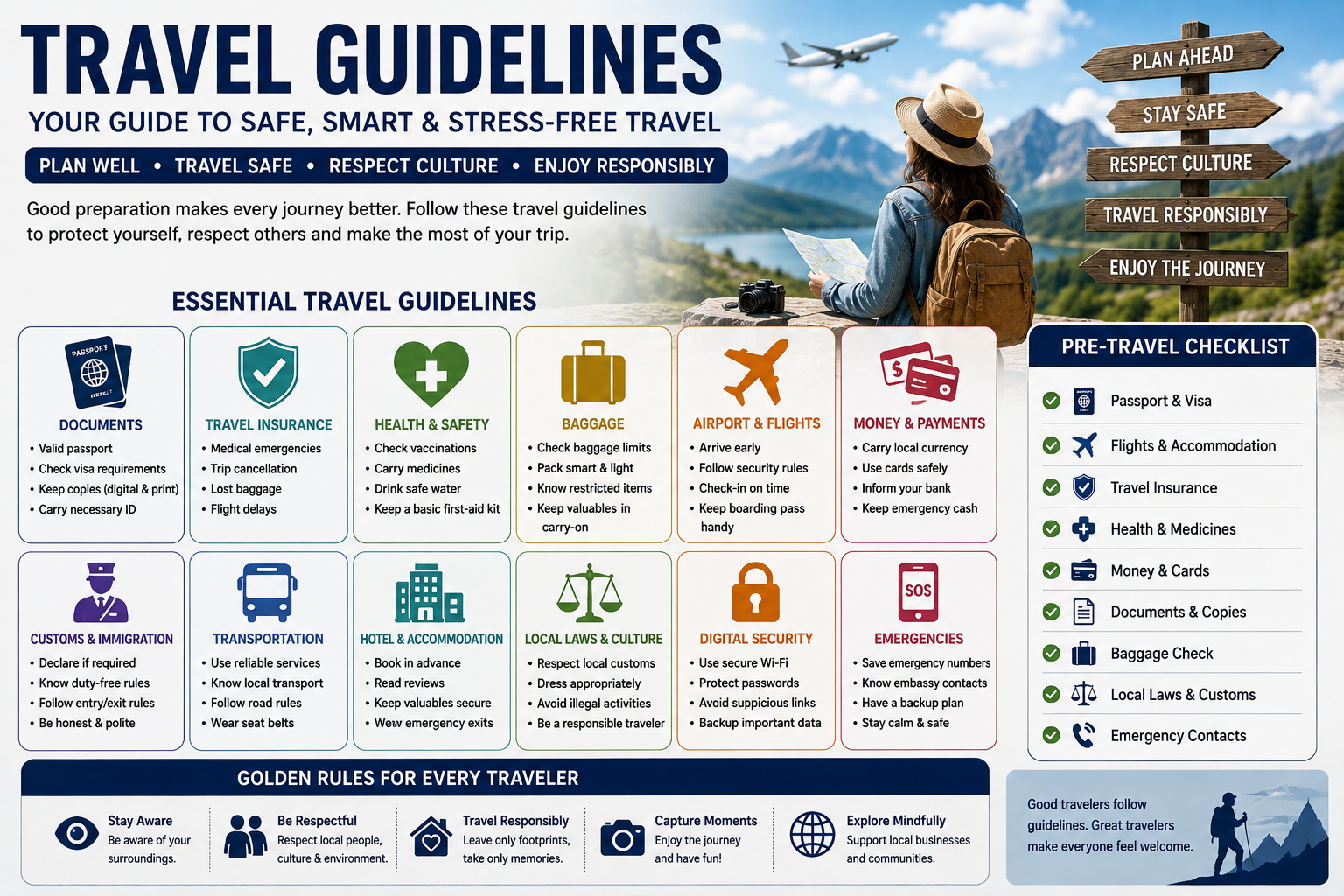
These travel guidelines may include:
- Passport requirements
- Visa requirements
- Airline rules
- Airport security procedures
- Baggage restrictions
- Customs requirements
- Health information
- Travel insurance
- Money and payment advice
- Transportation rules
- Accommodation safety
- Local laws
- Cultural customs
- Digital security
- Emergency procedures
Travel guidelines are useful because every trip has different requirements. A short domestic trip may require only identification, transportation arrangements, and accommodation. An international trip can require a passport, visa, health documents, insurance, customs declarations, and other paperwork.
Travelers should therefore treat travel guidelines as a planning checklist rather than assuming that every destination has the same rules.
Why Travel Guidelines Are Important
Following travel guidelines can make a trip easier and reduce unnecessary stress.
For example, checking passport requirements before booking a flight can prevent problems at check-in. Checking baggage rules can help travelers avoid unexpected fees. Learning local laws can prevent accidental violations.
The main benefits of following travel guidelines include:
- Better preparation
- Improved personal safety
- Fewer airport problems
- Lower risk of missing documents
- Better financial planning
- Easier border crossing
- Greater awareness of local laws
- Better health preparation
- Reduced risk of losing important information
- More confidence during the journey
Good preparation does not mean that every part of a trip must be planned. Travelers should still have flexibility for unexpected changes. The purpose of travel guidelines is to prepare for important issues while leaving room to enjoy the journey.
Travel Documents and Passport Guidelines
A passport is one of the most important documents for international travel. Before traveling, check the passport carefully.
Important passport checks include:
- Is the passport valid?
- Is it damaged?
- Does it have enough blank pages if required?
- Does the name match the travel booking?
- Does the passport meet the destination’s validity requirement?
- Do you have a secure copy of the passport?
Some countries require travelers to have a certain amount of passport validity remaining after entering or leaving the country. The exact requirement depends on the destination and circumstances.
Do not assume that a passport that is technically valid will always meet the destination’s entry requirements.
It is also useful to keep copies of important documents. A traveler can keep a secure digital copy and a separate physical copy.
Important documents may include:
- Passport
- Visa
- Flight booking
- Hotel booking
- Travel insurance
- Driving license
- International driving permit, when required
- Medical documents
- Prescription information
- Emergency contacts
Do not keep every original document in one place. Losing all documents at the same time can make recovery more difficult.
Visa and Entry Requirements
Visa rules are among the most important travel guidelines for international travelers.
A visa is official permission that may allow a traveler to enter a country for a particular purpose and period. Different countries use different systems.
Possible visa categories and entry systems include:
- Visa-free travel
- Visa on arrival
- Electronic visa
- Tourist visa
- Business visa
- Student visa
- Transit visa
- Work visa
- Residence permit
The required document depends on the traveler’s nationality, destination, purpose of travel, and planned length of stay.
Before traveling, check:
- Whether a visa is required.
- What type of visa is required.
- Whether an electronic application is available.
- How long the visa is valid.
- How many entries are permitted.
- How long the traveler can stay.
- Whether onward or return travel evidence is required.
- Whether proof of accommodation is required.
- Whether financial evidence is required.
- Whether additional health or immigration documents are required.
Visa information should be checked through official immigration or government sources because requirements can change.
A traveler should never rely only on an old social media post or information from another person’s previous trip.
Travel Insurance Guidelines
Travel insurance can provide financial protection against certain unexpected travel problems.
The exact coverage depends on the policy, but travel insurance may cover some situations involving:
- Emergency medical treatment
- Trip cancellation
- Trip interruption
- Lost baggage
- Delayed baggage
- Travel delays
- Emergency transportation
- Certain unexpected expenses
Before buying insurance, read the policy carefully.
Pay attention to:
- Coverage limits
- Exclusions
- Deductibles
- Medical conditions and exclusions
- Adventure activity coverage
- Cancellation conditions
- Baggage limits
- Claim procedures
Travel insurance is particularly worth considering for expensive international trips, cruises, adventure travel, or journeys where medical costs could be high.
Insurance should not be treated as a replacement for careful planning. It is a backup for certain unexpected situations.
Health and Vaccination Guidelines
Health preparation is another important part of travel guidelines.
Health requirements can differ between destinations. Some countries may have specific vaccination or health requirements for travelers arriving from certain areas.
Before departure, travelers should check official health information for their destination.
Useful health preparation may include:
- Checking vaccination requirements
- Carrying regular medicines
- Keeping prescriptions available
- Carrying medical information
- Preparing basic first-aid supplies
- Checking health insurance
- Understanding local healthcare options
- Learning about food and water safety
If you take prescription medicine, keep it in appropriate packaging and carry supporting documents when necessary.
Travelers should also consider the climate and activities they will experience. A hot destination may require different preparation from a cold or high-altitude destination.
People with specific health needs should obtain professional medical advice before travel.
Airport and Airline Guidelines
Airports can be busy, especially during holidays and peak travel periods. Following airline and airport travel guidelines can make the journey smoother.
Before leaving for the airport, check:
- Flight time
- Terminal
- Check-in deadline
- Baggage allowance
- Boarding requirements
- Airport security rules
- Transportation to the airport
Arrive early enough to complete check-in, baggage drop, security, and other required procedures.
The appropriate arrival time depends on the airport, airline, destination, and travel situation. International flights often require more preparation than simple domestic journeys.
Keep important items accessible, especially:
- Passport
- Boarding pass
- Visa
- Phone
- Wallet
- Medication
- Important documents
Do not place essential travel documents in checked baggage.
Baggage Guidelines
Baggage rules are different between airlines and ticket types. Always check the airline’s current baggage policy before traveling.
Common baggage considerations include:
- Number of bags allowed
- Maximum weight
- Maximum dimensions
- Carry-on allowance
- Personal item allowance
- Checked baggage fees
- Sports equipment rules
- Special baggage procedures
A simple baggage table can help:
| Baggage Type | What to Check |
|---|---|
| Carry-on | Size and weight limit |
| Personal item | Approved dimensions |
| Checked bag | Weight and size |
| Sports equipment | Special airline rules |
| Fragile items | Packing and handling |
| Valuable items | Keep with you when possible |
| Medicines | Carry properly and check destination rules |
Do not assume that an item permitted on one airline is automatically permitted on another.
Airlines and airports also have restrictions on liquids, batteries, sharp objects, flammable materials, and other items.
Airport Security Guidelines
Security screening is an important part of air travel.
Travelers should follow instructions from airport security staff and keep restricted items out of their baggage.
Before going to security:
- Keep your boarding pass available.
- Keep identification accessible.
- Follow liquid restrictions.
- Remove items when instructed.
- Place electronics in the required location when requested.
- Follow instructions about clothing and personal items.
Security procedures can vary between airports and countries.
Travelers should not argue with security personnel about established procedures. If something is unclear, politely ask for an explanation.
Customs and Immigration Guidelines
Customs and immigration are different processes, although travelers may encounter both during international travel.
Immigration generally concerns a person’s permission to enter or leave a country.
Customs generally concerns goods, money, food, products, and other items being brought across a border.
Travelers may need to declare certain items.
Potentially regulated items can include:
- Food
- Plants
- Agricultural products
- Large amounts of currency
- Commercial goods
- Medicines
- Animal products
- Certain electronics or equipment
Rules vary by country.
Never assume that something is allowed simply because it is legal in your home country.
When a declaration is required, provide accurate information.
Money and Payment Guidelines
Money management is an important part of travel guidelines.
Before traveling, think about how you will pay for transportation, accommodation, food, activities, and emergencies.
Useful preparations include:
- Carrying an appropriate amount of local currency
- Taking a debit or credit card
- Keeping an emergency payment option
- Checking international transaction fees
- Informing your bank about travel when necessary
- Knowing how to contact your bank
- Understanding exchange rates
Avoid keeping all your money in one place.
For example, you can keep your main card securely stored while carrying a smaller amount of cash for everyday purchases.
Be careful when exchanging money. Use reputable banks, authorized exchange services, or other reliable providers.
Travel Safety Guidelines
Personal safety should be part of every trip.
Basic safety travel guidelines include staying aware of your surroundings and protecting personal belongings.
Travelers should:
- Avoid displaying large amounts of cash.
- Keep important documents secure.
- Be careful in crowded places.
- Avoid unfamiliar areas when local advice suggests they are unsafe.
- Use reliable transportation.
- Keep emergency contacts available.
- Stay connected with someone they trust.
- Be careful when accepting help from strangers.
- Follow local safety instructions.
Travelers should also research their destination before leaving.
Useful information includes:
- Local emergency procedures
- Common scams
- Transportation options
- Areas to avoid
- Local laws
- Weather conditions
- Natural hazards
Being informed does not mean being afraid. It simply allows travelers to make better decisions.
Accommodation Guidelines
Choosing the right accommodation can have a major effect on the travel experience.
Before booking a hotel, apartment, guesthouse, or other accommodation, consider:
- Location
- Reviews
- Price
- Cancellation policy
- Check-in time
- Check-out time
- Transportation access
- Safety
- Available facilities
When arriving, learn where the emergency exits are located.
Keep valuable items secure and avoid leaving important documents openly visible.
If you are staying in shared accommodation, be particularly careful with passports, money, electronics, and other valuable belongings.
Transportation Guidelines
Transportation rules differ between countries and cities.
Common options include:
- Buses
- Trains
- Taxis
- Ride-hailing services
- Rental cars
- Domestic flights
- Ferries
- Metro systems
Before using transportation, check the payment system, operating hours, ticket requirements, and safety information.
For rental cars, travelers should understand:
- Driving license requirements
- Minimum age
- Insurance
- Deposit requirements
- Local road rules
- Parking rules
- Fuel policy
- Speed limits
Some countries may require an international driving permit in addition to a valid domestic driving license.
Local Laws and Cultural Guidelines
Respecting local laws is one of the most important travel guidelines.
Travelers are expected to follow the laws of the country they visit, even if those laws are different from the rules in their home country.
Travelers should research rules concerning:
- Clothing
- Photography
- Alcohol
- Smoking
- Public behavior
- Religious sites
- Drugs
- Driving
- Identification
- Public gatherings
Cultural awareness is equally important.
For example, some places may expect visitors to dress modestly when entering religious or traditional locations.
Simple respect can prevent misunderstandings.
Digital Security Guidelines
Modern travelers often depend on smartphones, online banking, email, and travel applications. This makes digital safety an important part of travel guidelines.
Before traveling:
- Update your phone.
- Use a strong device password.
- Enable two-factor authentication where possible.
- Back up important information.
- Avoid suspicious links.
- Be careful with public Wi-Fi.
- Do not share sensitive account information.
- Keep your devices physically secure.
If you use public Wi-Fi, avoid performing highly sensitive activities if you are unsure about network security.
Also be careful when charging devices in unfamiliar public locations. Use trusted charging equipment and avoid unknown accessories when possible.
Family Travel Guidelines
Traveling with children requires additional planning.
Parents and guardians should check:
- Children’s passports
- Visa requirements
- Consent documentation when applicable
- Travel insurance
- Medication
- Accommodation arrangements
- Car seat requirements
- Child-friendly transportation
Keep children’s essential documents and emergency contact information accessible.
In crowded places, parents should establish a simple meeting plan in case family members become separated.
Children should also know basic information such as the name of their accommodation and how to ask a trusted official for help.
Solo Travel Guidelines
Solo travel can be rewarding, but preparation is especially important when there is no companion available to help during an emergency.
Solo travelers should:
- Share their itinerary with someone they trust.
- Keep regular contact when appropriate.
- Choose accommodation carefully.
- Research transportation.
- Avoid unnecessary risks.
- Keep important documents secure.
- Have emergency funds.
- Keep a charged phone available.
A solo traveler should also trust their judgment. If a situation feels unsafe or suspicious, leaving the area is usually better than taking an unnecessary risk.
Sustainable Travel Guidelines
Responsible travel is becoming increasingly important.
Sustainable travel guidelines focus on reducing negative effects on the environment and local communities.
Travelers can:
- Reduce unnecessary waste.
- Avoid littering.
- Carry reusable items where practical.
- Respect wildlife.
- Stay on marked trails.
- Support local businesses.
- Choose responsible tourism providers.
- Avoid damaging natural areas.
- Respect local traditions.
- Use public transportation when practical.
Sustainable travel does not require travelers to make every decision perfectly. Small responsible choices can still make a difference.
Emergency Travel Guidelines
Even with careful planning, emergencies can happen.
Possible problems include:
- Lost passport
- Lost wallet
- Theft
- Medical emergency
- Flight cancellation
- Natural disaster
- Severe weather
- Transportation disruption
If your passport is lost abroad, contact the relevant local authorities and your country’s embassy or consulate for guidance.
If money is stolen, contact your bank or card provider quickly.
For a medical emergency, seek appropriate local medical assistance.
Always keep emergency contact information available.
Pre-Travel Checklist
A checklist can make travel guidelines easier to follow.
| Task | Before Departure |
|---|---|
| Passport | Check validity and condition |
| Visa | Confirm current requirements |
| Flight | Confirm time and terminal |
| Hotel | Confirm booking |
| Insurance | Review coverage |
| Health | Check requirements |
| Medicine | Prepare necessary supplies |
| Money | Arrange cards and cash |
| Baggage | Check airline limits |
| Documents | Make secure copies |
| Transportation | Plan airport and local travel |
| Safety | Research destination |
| Local Laws | Learn important rules |
| Emergency | Save contact information |
Complete the checklist several days before departure rather than waiting until the last minute.
Common Travel Mistakes to Avoid
Many travel problems are preventable.
Common mistakes include:
Not Checking Visa Rules
Do not assume that another traveler has the same requirements as you. Visa rules can depend on nationality and purpose of travel.
Ignoring Passport Validity
A passport may expire during or soon after a trip and may not meet the destination’s requirements.
Overpacking
Extra baggage can create additional fees and make transportation more difficult.
Forgetting Insurance
Travelers may face unexpected medical, cancellation, or baggage costs.
Carrying Restricted Items
Always check airline and airport rules before packing.
Keeping Everything in One Bag
If the bag is lost, you could lose your documents, money, medicine, and other important items.
Ignoring Local Laws
Visitors are still responsible for following the laws of the country they enter.
Relying on Old Information
Travel requirements can change. Always verify important information close to the date of travel.
Travel Guidelines for International Travelers
International travel requires additional preparation because travelers cross borders and may be subject to immigration and customs requirements.
Before international travel, check:
- Passport validity
- Visa requirements
- Entry rules
- Exit rules
- Transit requirements
- Health requirements
- Customs rules
- Currency rules
- Insurance
- Local laws
- Transportation
- Emergency contacts
Keep your passport and important documents secure during the entire trip.
It is also useful to know the location and contact information of your country’s embassy or consulate in the destination country.
Travel Guidelines for Business Travelers
Business travelers often have limited time, so organization is especially important.
Useful business travel preparations include:
- Confirming meeting locations
- Checking transportation time
- Carrying work documents securely
- Having backup copies
- Checking internet availability
- Understanding local business culture
- Planning enough time between meetings
- Keeping receipts for expenses
- Checking corporate travel policies
Business travelers should also leave some flexibility for delays.
Travel Guidelines for Responsible Travelers
Responsible travel is about respecting the destination.
A responsible traveler should try to:
- Respect local people.
- Follow local laws.
- Protect the environment.
- Avoid unnecessary waste.
- Support local businesses.
- Respect cultural traditions.
- Avoid damaging historical sites.
- Treat animals responsibly.
- Keep public places clean.
Tourism can provide major benefits to communities when visitors behave responsibly.
What to Do Before Leaving Home
A final check before leaving can prevent many problems.
Make sure:
- Your passport is available.
- Your visa is valid if required.
- Your flight details are confirmed.
- Your accommodation is confirmed.
- Your phone is charged.
- Your important documents are backed up.
- Your payment methods work.
- Your medicines are packed.
- Your baggage meets airline rules.
- Someone you trust knows your travel plan.
This final review should take only a short time but can provide significant peace of mind.
Travel Guidelines During the Journey
Travel guidelines are not only for the preparation stage.
During the trip:
- Keep documents secure.
- Follow airport instructions.
- Monitor transportation updates.
- Respect local laws.
- Protect your belongings.
- Stay aware of your surroundings.
- Keep emergency information accessible.
- Avoid suspicious offers.
- Respect local culture.
- Keep your phone and important devices secure.
Travelers should remain flexible because schedules can change.
A flight can be delayed, weather can affect transportation, or a hotel may have an unexpected issue. Staying calm and knowing your options can make these situations easier to manage.
FAQs
What are the most important travel guidelines?
The most important travel guidelines include checking passport and visa requirements, preparing health and insurance documents, following baggage and airport rules, securing money and valuables, understanding local laws, and having an emergency plan.
How early should I check visa requirements?
Visa requirements should be checked well before booking or traveling. Because requirements can change, travelers should verify the information again close to departure through official government or immigration sources.
How long should my passport be valid?
Passport validity requirements vary by destination. Some countries require several months of validity beyond the planned stay. Always check the specific destination’s current requirements.
Do I need travel insurance?
Travel insurance is not required for every trip, but it can provide useful financial protection against certain medical emergencies, cancellations, delays, baggage problems, and other covered events.
What should I pack in my carry-on?
Important items such as your passport, travel documents, money, medication, phone, chargers, and other essential items should generally stay with you rather than being placed in checked baggage.
What items are restricted at airports?
Restrictions can apply to liquids, sharp objects, batteries, flammable materials, weapons, and other items. The exact rules vary by airport, airline, and destination.
What should I do if I lose my passport abroad?
If you lose your passport abroad, report the situation as appropriate and contact your country’s embassy or consulate for guidance on replacement or emergency travel documentation.
How can I stay safe while traveling?
Research your destination, protect your belongings, use reliable transportation, avoid known unsafe areas, keep emergency contacts available, and follow local safety advice.
What should I know about local customs?
Research clothing expectations, religious practices, photography rules, public behavior, food customs, and other important cultural practices before visiting a destination.
How can I prepare for international travel?
Check your passport, visa, health requirements, insurance, baggage rules, accommodation, transportation, money, customs requirements, and local laws before departure.
Conclusion
Following good travel guidelines is one of the simplest ways to make a trip safer, easier, and more organized. Travel does not always go exactly according to plan, but preparation can reduce the impact of many common problems. The most important travel guidelines begin with documents. Make sure your passport meets the destination’s requirements and confirm whether you need a visa. Keep copies of important documents and protect your originals throughout the trip. Health preparation is also important. Check destination-specific health information, prepare necessary medicines, and understand your insurance coverage. Airport and baggage travel guidelines should also be checked before departure.