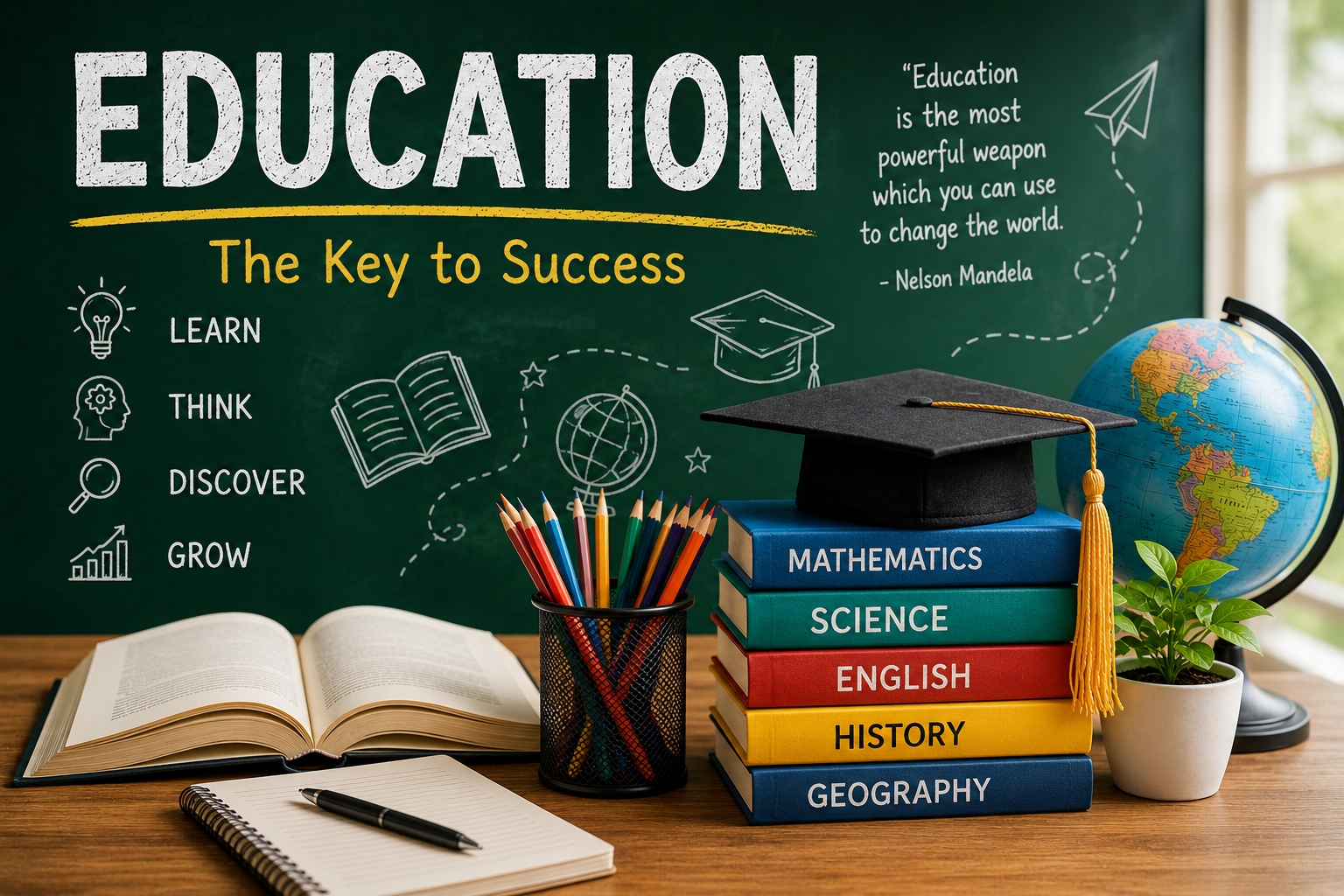
educatuon is one of the most important parts of human life. It gives people knowledge, skills, confidence, and the ability to understand the world around them. Education begins at an early age, but learning can continue throughout a person’s life. A child learns basic reading and writing at school, a young person may learn professional skills at college or university, and an adult can continue education through work, training, books, and online courses. Education is not only about passing examinations or getting certificates. Good education helps people think clearly, solve problems, communicate with others, and make responsible decisions. It can also help people discover their interests and prepare for future careers Ceıvır
What Is Education?
Education is the process of learning knowledge, skills, values, ideas, and experience. It can happen in a classroom, at home, at work, online, or through everyday activities.
Formal education usually takes place in schools, colleges, universities, and training institutions. Informal education happens through family, friends, personal experiences, books, work, and daily life.
Education can teach people about many different subjects, including:
- Mathematics
- Science
- Languages
- History
- Geography
- Technology
- Business
- Arts
- Literature
- Health
- Social studies
- Technical skills
Education can also develop skills that are useful in daily life. These include communication, teamwork, time management, decision-making, creativity, and problem-solving.
A person does not stop learning after completing school. Education can continue through professional training, hobbies, reading, online courses, workplace experience, and personal study.
This idea of continuous learning is important because the world keeps changing. New technology, new jobs, and new industries create new learning needs.
Why Education Is Important
Education has a major effect on personal development. It helps people understand information, communicate ideas, and make better decisions.
Education is also important because it can create opportunities. A person with suitable education and skills may have access to more career choices.
The importance of education can be understood through several areas.
Education Builds Knowledge
Knowledge is one of the basic results of education. Students learn about the world and develop an understanding of different subjects.
For example, science education can help students understand nature and technology. Mathematics can develop logical thinking. Language education can improve reading and communication. History can help people understand past events and how societies have changed.
Knowledge can also help people make informed decisions in everyday life.
Education Develops Skills
Education is not only about learning facts. Students also develop practical and personal skills.
Important skills include:
- Reading
- Writing
- Communication
- Problem-solving
- Research
- Critical thinking
- Teamwork
- Time management
- Digital skills
- Creativity
These skills can be useful at school, at work, and in personal life.
Education Builds Confidence
Learning can increase confidence. When students understand a difficult subject or complete a challenging task, they can feel more capable.
A good education environment should allow students to ask questions and make mistakes without fear. Mistakes are a natural part of learning.
Education Creates Career Opportunities
Many careers require specific education and training. Doctors, engineers, teachers, lawyers, accountants, programmers, and other professionals need specialized knowledge.
Education can also support technical and vocational careers. People can learn skills related to construction, automotive repair, electrical work, cooking, design, information technology, hospitality, and manufacturing.
Education does not guarantee a successful career, but it can help people become better prepared for employment.
Types of Education
Education can take many forms. Different types of education serve different purposes and age groups.
| Type of Education | Description | Examples |
|---|---|---|
| Formal Education | Structured learning through institutions | Schools and universities |
| Informal Education | Learning through everyday life | Family and personal experience |
| Primary Education | Basic early learning | Primary school |
| Secondary Education | More advanced school learning | High school |
| Higher Education | Advanced academic learning | College and university |
| Vocational Education | Practical job-related learning | Technical institutes |
| Online Education | Learning through digital platforms | Online courses |
| Adult Education | Learning for adults | Professional courses |
Formal Education
Formal education is structured and follows a planned curriculum. Students attend educational institutions, study subjects, complete assignments, and may take examinations.
Schools and universities provide formal education in a controlled learning environment.
Formal education helps students develop academic knowledge and qualifications that may be required for further education or employment.
Informal Education
Informal education happens outside traditional classrooms.
People can learn from:
- Parents
- Friends
- Coworkers
- Books
- Television
- Online resources
- Personal experience
- Travel
- Work
For example, a person may learn cooking from a family member or learn how to repair something by watching an experienced worker.
Informal education is important because learning happens everywhere.
Primary Education
Primary education provides basic learning for children. Students normally learn reading, writing, mathematics, science, language, and basic social knowledge.
Primary education creates a foundation for future education.
Secondary Education
Secondary education builds on primary education. Students usually study subjects in greater detail and may begin thinking about future careers and higher education.
Secondary education can prepare students for university, vocational training, or employment.
Higher Education
Higher education includes universities, colleges, and other advanced educational institutions.
Students may study subjects such as:
- Medicine
- Engineering
- Business
- Computer science
- Law
- Education
- Arts
- Social sciences
Higher education can provide specialized knowledge and professional qualifications.
Vocational Education
Vocational education focuses on practical skills for specific jobs.
Examples include:
- Electrical training
- Plumbing
- Automotive repair
- Welding
- Construction
- Cooking
- Graphic design
- Information technology
- Hospitality
- Fashion design
Vocational education can be useful for students who prefer practical work.
Online Education
Online education allows students to learn through internet-based platforms. Students can attend lessons, watch videos, complete quizzes, read digital books, and communicate with teachers online.
Online education can be useful for people who cannot attend traditional classes because of distance, work, family responsibilities, or other reasons.
Benefits of Education
Education provides many personal and social benefits. It can influence a person’s career, communication, confidence, decision-making, and understanding of society.
| Benefit | How Education Helps |
|---|---|
| Knowledge | Helps people understand different subjects |
| Employment | Develops skills needed for many careers |
| Communication | Improves speaking, reading, and writing |
| Confidence | Helps people handle new situations |
| Problem-solving | Develops logical and practical thinking |
| Social awareness | Helps people understand communities |
| Independence | Builds useful life and professional skills |
| Personal growth | Helps people discover interests and goals |
Better Employment Opportunities
Education can help people qualify for different types of jobs. Employers often look for workers with appropriate knowledge, communication skills, technical skills, and professional qualifications.
Education can also help people understand what skills are needed in a particular industry.
Better Communication
Communication is an important part of education. Students learn how to read, write, speak, listen, and explain ideas.
Good communication is useful in almost every profession. It is also important in family life, business, teamwork, and social situations.
Stronger Problem-Solving Skills
Education teaches people to identify problems and find possible solutions.
Mathematics, science, programming, business, and technical subjects can develop logical thinking. Students can also learn problem-solving through projects and practical activities.
Personal Growth
Education can help people discover their interests and abilities.
A student may discover an interest in science, technology, business, art, writing, medicine, or another field through education.
The Role of Teachers in Education
Teachers are an important part of education. A teacher does more than provide information. Teachers guide students and help them understand difficult topics.
Teachers can:
- Explain complex subjects
- Answer student questions
- Provide feedback
- Encourage participation
- Help students solve problems
- Support students who need extra help
- Encourage teamwork
- Develop student confidence
- Help students set learning goals
A good teacher can make difficult subjects easier to understand.
Teachers also provide human support. Technology can provide information quickly, but it cannot completely replace the value of personal guidance and communication.
Technology in Education
Technology has changed education in many ways. Students can now access information and learning resources from computers, tablets, and smartphones.
Technology in education can include:
- Online classes
- Digital textbooks
- Educational websites
- Learning applications
- Virtual classrooms
- Video lessons
- Digital libraries
- Online quizzes
- Interactive simulations
- Artificial intelligence tools
Technology can make education more flexible. Students can sometimes study at their own pace and review lessons several times.
However, technology also has limitations. Some students may not have reliable internet access or suitable devices. Too much screen time can also create problems for some learners.
Technology should support education rather than completely replace teachers and classroom interaction.
Modern Education Methods
Education methods continue to develop as teachers look for better ways to help students understand and apply knowledge.
Classroom Learning
Traditional classroom education provides direct interaction between students and teachers.
Students can ask questions, participate in discussions, work in groups, and receive immediate guidance.
Online Learning
Online learning allows students to study through digital platforms.
It can be useful for students who need flexible schedules or live far from educational institutions.
Blended Learning
Blended learning combines classroom education with online learning.
For example, students may attend school during the day and use digital resources at home to review lessons.
Project-Based Learning
Project-based learning allows students to learn by completing practical projects.
Students may research a topic, identify a problem, create a solution, and present their results.
This method can develop:
- Creativity
- Teamwork
- Research skills
- Communication
- Problem-solving
- Time management
Group Learning
Group learning allows students to work together.
Students can share ideas, explain concepts to one another, and develop teamwork skills.
Personalized Learning
Students have different learning speeds and needs. Personalized education attempts to provide learning experiences that match individual requirements.
Some students may need more practice, while others may be ready for advanced material.
Challenges in Education
Education provides many benefits, but educational systems also face serious challenges.
Limited Access
Some communities do not have enough schools, teachers, classrooms, or learning resources.
Students in remote areas may need to travel long distances to attend school.
High Education Costs
Education can become expensive because of tuition, books, transportation, accommodation, uniforms, and technology.
High costs can make it difficult for some students to continue their education.
Teacher Shortages
A shortage of qualified teachers can affect education quality. Large classrooms may make it difficult for teachers to provide individual attention.
Unequal Learning Resources
Students do not always have equal access to learning resources.
Some students may have computers, private study areas, books, and fast internet. Others may have very limited resources.
Technology Problems
Online education requires suitable devices and internet access. Students without these resources can face difficulties.
Student Stress
Students can experience stress because of examinations, assignments, competition, academic expectations, and concerns about future careers.
Education should provide academic challenges while also creating supportive learning environments.
Education and Career Development
Education plays an important role in career development. Students often choose subjects based on their interests and future goals.
When considering a career, students can think about:
- What subjects do I enjoy?
- What skills do I have?
- What type of work interests me?
- What qualifications are required?
- What skills should I develop?
- What career opportunities are available?
Career decisions should not be based only on popularity. Students should consider their abilities, interests, opportunities, and long-term goals.
Practical Experience
Practical experience helps students understand how education is used in real situations.
Useful forms of practical experience include:
- Internships
- Apprenticeships
- Workshops
- Projects
- Volunteer work
- Part-time employment
- Laboratory work
- Professional training
Practical education can make students more prepared for the workplace.
Education and Society
Education has an important role in society. A skilled and knowledgeable population can contribute to businesses, healthcare, technology, government, agriculture, manufacturing, and other sectors.
Education can support society in many ways.
| Area | Role of Education |
|---|---|
| Economy | Develops skilled workers |
| Employment | Builds professional abilities |
| Health | Improves knowledge and awareness |
| Technology | Develops digital skills |
| Community | Encourages cooperation |
| Innovation | Supports new ideas |
| Society | Promotes responsible participation |
Reducing Illiteracy
Basic education can help reduce illiteracy. Reading and writing skills allow people to understand instructions, documents, books, and other important information.
Promoting Equality
Education can provide opportunities to people from different backgrounds.
When quality education is available to more people, more individuals can develop skills and pursue their goals.
Supporting Economic Development
Businesses need skilled employees. Education helps develop the knowledge and skills required by different industries.
A skilled workforce can support productivity, innovation, and economic growth.
How to Improve Education
Improving education requires cooperation between governments, educational institutions, teachers, families, communities, and students.
Improve Teaching Quality
Teachers need proper training, resources, and professional development.
Supporting teachers can improve the quality of education.
Provide Better Learning Resources
Schools should have access to appropriate books, laboratories, libraries, computers, and other learning materials.
Improve Technology Access
Students should have access to suitable digital tools when technology is required for their education.
Encourage Practical Learning
Students should have opportunities to apply knowledge to real situations.
Projects, experiments, workshops, internships, and practical activities can make education more useful.
Make Education Affordable
Reducing financial barriers can help more students continue their education.
Create Safe Learning Environments
Students need a safe and respectful environment to learn effectively.
Schools should work to prevent bullying, discrimination, and other harmful behavior.
Education and Lifelong Learning
Education does not end when a person graduates. Lifelong learning allows people to continue developing knowledge and skills.
Lifelong education can include:
- Reading books
- Taking online courses
- Attending workshops
- Learning new software
- Professional training
- Learning languages
- Developing business skills
- Studying new technologies
- Learning through work experience
The need for lifelong education is increasing because technology and industries continue to change.
A person may need to learn new skills several times during a career.
Education and Artificial Intelligence
Artificial intelligence is becoming an important technology in education. AI tools can help students understand topics, practice questions, organize information, and receive explanations.
Teachers can also use technology to create educational materials and support different learning needs.
However, students should use AI responsibly. Education should develop independent thinking, not replace it.
Students should understand the information they receive, check important facts, and use technology as a learning support.
Artificial intelligence can become a useful part of education when it helps students learn instead of doing all the thinking for them.
Education and Digital Skills
Digital skills are increasingly important in modern life.
Students may need to understand:
- Basic computer use
- Online research
- Digital communication
- Online safety
- Data handling
- Software tools
- Online collaboration
- Responsible use of digital information
Digital education can help students prepare for workplaces where computers and internet-based systems are common.
Education and Creativity
Good education should encourage creativity as well as academic knowledge.
Creative activities can include:
- Writing
- Drawing
- Music
- Design
- Experiments
- Presentations
- Projects
- Problem-solving
Creativity helps students think of new ideas and find different solutions.
Education should give students opportunities to explore their interests instead of focusing only on memorizing information.
Education and Communication
Communication is one of the most useful skills developed through education.
Students should learn how to:
- Speak clearly
- Listen carefully
- Write effectively
- Explain ideas
- Ask questions
- Participate in discussions
- Work with others
Communication skills can be useful in education, business, employment, and personal relationships.
Education and Personal Responsibility
Education can help people become more responsible and independent.
Students can learn important life skills such as:
- Time management
- Goal setting
- Financial awareness
- Cooperation
- Respect
- Decision-making
- Professional behavior
These skills can help people manage their personal and professional lives.
How Students Can Improve Their Education
Students can take an active role in their own education. Good learning habits can make studying more effective.
Useful habits include:
- Attend classes regularly
- Listen carefully
- Ask questions
- Review lessons
- Practice difficult subjects
- Read additional material
- Complete assignments
- Manage study time
- Reduce distractions
- Ask teachers for help
- Set realistic goals
Students should understand that learning takes time. Difficult subjects may require repeated practice.
Making mistakes is normal. A mistake can show a student which area needs more attention.
Education at Home
Families can support education by creating a positive learning environment.
Parents can encourage children to:
- Read regularly
- Complete homework
- Ask questions
- Develop study habits
- Use technology responsibly
- Explore different interests
- Respect teachers
- Stay curious
Education at home does not replace school education. Instead, family support can strengthen what students learn at school.
Future of educatuon
The future of education is likely to combine traditional learning with new technology.
Online learning, artificial intelligence, digital resources, interactive tools, and personalized learning may become more common.
However, important human skills will remain valuable.
Future education may focus more strongly on:
- Critical thinking
- Creativity
- Communication
- Teamwork
- Digital skills
- Problem-solving
- Adaptability
- Practical experience
- Lifelong learning
Technology can change how education is delivered, but the main purpose of education will remain helping people learn and develop.
Simple Ways to Make educatuon Better
Students and teachers do not always need complicated systems to improve education. Small, consistent changes can have a positive effect.
Students can:
- Create a regular study schedule
- Study in a quiet place
- Break large topics into smaller sections
- Review lessons regularly
- Practice important skills
- Take short breaks
- Ask for support
- Use reliable learning materials
- Avoid unnecessary distractions
Teachers can make lessons more effective by using clear explanations, examples, practical activities, discussions, and feedback.
Schools can support educatuon by providing safe classrooms, useful resources, trained teachers, libraries, technology, and opportunities for practical learning.
educatuon in a Changing World
The world is changing quickly. Technology, international business, new industries, and changing workplace requirements are creating new learning needs.
Education must adapt to these changes.
Traditional subjects remain important. Reading, writing, mathematics, science, and social knowledge provide essential foundations.
At the same time, modern education needs to develop skills such as digital literacy, communication, creativity, critical thinking, and problem-solving.
The strongest educatuon system combines basic knowledge with practical and modern skills.
FAQs
What is educatuon?
educatuon is the process of gaining knowledge, skills, values, ideas, and experience. It can take place in schools, universities, workplaces, homes, online platforms, and everyday life.
Why is educatuon important?
educatuon helps people gain knowledge, develop useful skills, improve communication, build confidence, solve problems, and prepare for careers and daily responsibilities.
What are the main types of educatuon?
The main types include formal educatuon, informal education, primary education, secondary education, higher education, vocational educatuon, online education, and adult education.
How does educatuon help with careers?
Education provides knowledge, qualifications, and skills needed for many careers. Practical training, internships, projects, and professional courses can also help people prepare for employment.
What is formal educatuon?
Formal education is structured learning provided by schools, colleges, universities, and other recognized educational institutions.
What is informal educatuon?
Informal educatuon is learning that happens outside traditional classrooms through family, friends, work, books, personal experiences, and everyday activities.
How does technology help educatuon?
Technology provides access to online classes, digital books, educational applications, virtual classrooms, videos, interactive tools, and other learning resources.
What role do teachers play in educatuon?
Teachers guide students, explain difficult subjects, answer questions, provide feedback, encourage learning, and support academic and personal development.
What are the main benefits of educatuon?
educatuon can improve knowledge, communication, problem-solving, confidence, career opportunities, social awareness, independence, and personal growth.
What is vocational educatuon?
Vocational educatuon focuses on practical skills for specific careers. Examples include electrical work, construction, automotive repair, cooking, technology, welding, and hospitality.
What are common challenges in educatuon?
Common challenges include limited access to schools, high costs, teacher shortages, unequal learning resources, technology gaps, and student stress.
How can students improve their educatuon?
Students can attend classes regularly, ask questions, review lessons, practice difficult subjects, manage their time, complete assignments, read additional material, and ask teachers for help.
What is lifelong educatuon?
Lifelong educatuon means continuing to learn throughout life through courses, professional training, reading, workshops, work experience, and personal study.
What is the future of educatuon?
The future of educatuon is likely to include more online learning, artificial intelligence, personalized learning, digital resources, practical training, and lifelong learning.
Can educatuon improve confidence?
Yes. Learning new knowledge and successfully developing skills can improve confidence.educatuon also helps people communicate, solve problems, make decisions, and handle new situations.
Why is practical educatuon important?
Practical educatuon allows students to apply what they learn to real situations. Projects, internships, experiments, workshops, and vocational training can help students prepare for work and daily life.
How does educatuon help society?
educatuon can reduce illiteracy, develop skilled workers, support economic growth, encourage responsible citizenship, promote social awareness, and support innovation.
Why is lifelong learning important?
Lifelong learning helps people keep their knowledge and skills up to date. It can make it easier to adapt to new technologies, changing careers, and new opportunities.
Conclusion
educatuon is a foundation for personal development, career preparation, and social progress. It gives people knowledge, skills, confidence, and opportunities to understand the world. Education can happen in schools, colleges, universities, workplaces, homes, online platforms, and everyday life. Formal education provides structure, while informal education allows people to learn through personal experiences. The benefits of education include better communication, stronger problem-solving, greater confidence, improved career opportunities, and increased social awareness.