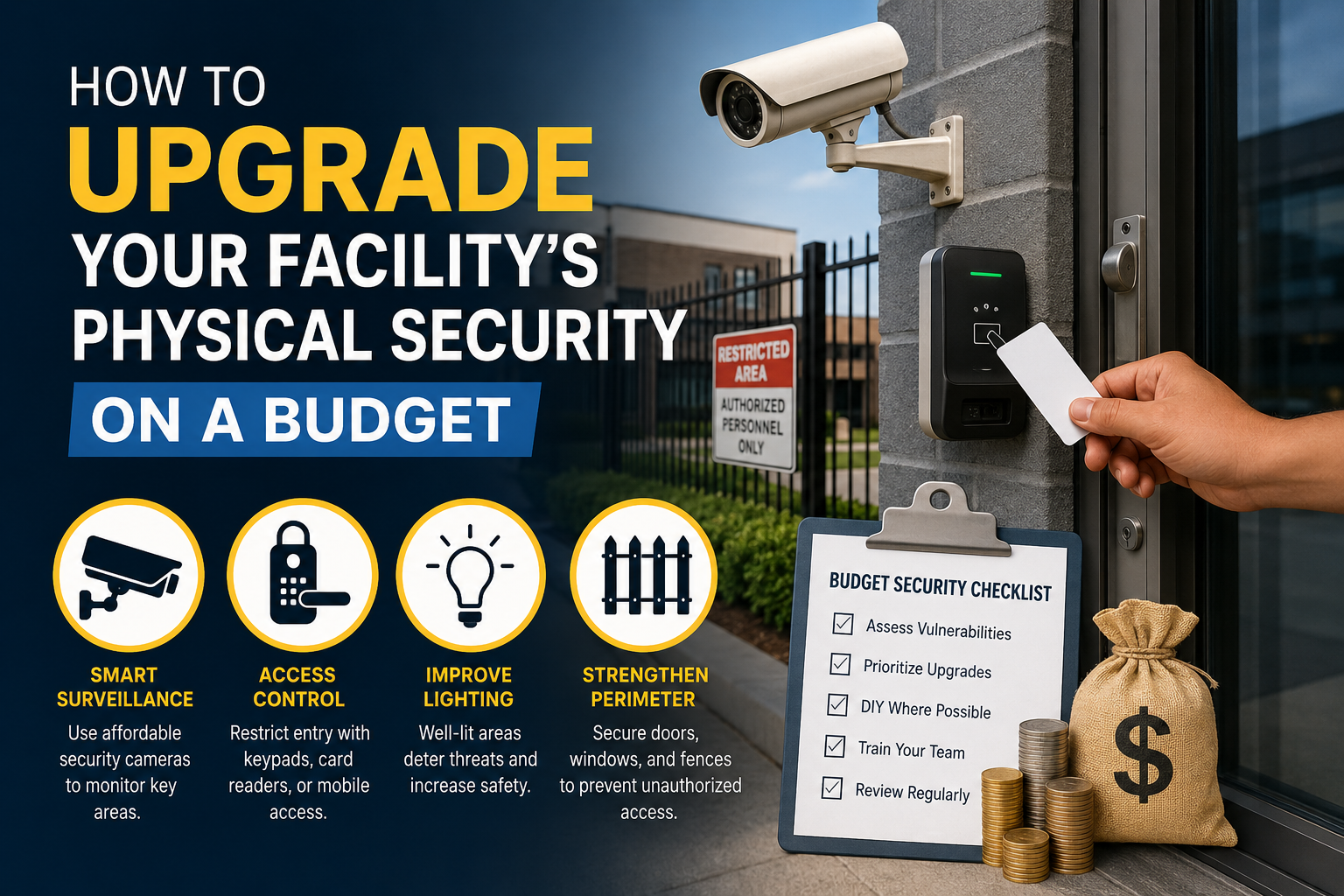
Securing a commercial facility does not require an endless supply of capital. While high-tech surveillance setups and full-time security staff are effective, many practical strategies can dramatically improve safety without straining your financial resources. Physical security relies on layers of protection that work together to deter intruders, delay unauthorized access, and protect valuable company assets.
By focusing on cost-effective improvements, smart facility layout adjustments, and routine maintenance, business owners can build a robust defense system that fits their budget.
Here are practical steps to elevate your facility’s physical security without overspending.
1. Conduct a Comprehensive Vulnerability Assessment
Before spending money on hardware or upgrades, identify where your property is most exposed. A thorough self-audit helps prioritize critical needs and prevents unnecessary expenses.
How to Implement
Walk around the perimeter of your facility at different times of the day, including after dark. Check for broken locks, dark corners, overgrown vegetation, unmonitored entry points, and loose window latches. Take detailed notes on areas where unauthorized individuals could easily hide or gain entry without detection.
2. Optimize Perimeter Defense and Lighting
A well-maintained boundary serves as the primary barrier against trespassing and vandalism. Clear physical boundaries communicate that a property is actively monitored and cared for.
How to Implement
Trim back trees, shrubs, and tall bushes near ground-level windows and doors to eliminate potential hiding spots. Upgrade exterior lighting by installing motion-sensor LED floodlights around entry points, alleyways, and parking areas. Bright lighting is one of the most affordable ways to deter criminal activity.
When structural boundary improvements are necessary, working with experienced fence contractors in Salt Lake City or your
local area ensures durable perimeter fencing that provides clear boundary lines and restricts casual access to private property.
3. Upgrade and Standardize Access Control
Unrestricted entry points make it easy for unauthorized visitors to wander into sensitive areas of a commercial building. Controlling who enters specific zones drastically reduces theft and security incidents.
How to Implement
Limit the number of public entry doors during operating hours and ensure all secondary doors remain locked from the outside. Replace traditional key locks on sensitive rooms with standalone digital keypad locks or mechanical combination locks. These low-cost solutions eliminate key duplication risks and allow quick pin resets whenever staff changes occur.
4. Maximize the Impact of Security Signage
Clear, visible warnings serve as a strong psychological deterrent. Potential trespassers are far less likely to target buildings that explicitly highlight active security protocols.
How to Implement
Place high-visibility signs along exterior fences, main gates, and building entrances. Use direct phrasing such as “Restricted Area,” “Property Under Video Surveillance,” and “No Trespassing.” Ensure these signs are well-lit at night so they remain effective around the clock.
5. Implement Strategic Low-Cost Video Surveillance
Installing complete closed-circuit camera systems across an entire property can be expensive. However, strategic camera placement allows you to cover critical areas at a fraction of the cost.
How to Implement
Focus your surveillance budget on high-value targets rather than attempting to monitor every square foot. Position reliable, budget-friendly cameras at primary ingress points, loading docks, cash rooms, and server closets. Ensure cameras sit at heights that prevent tampering while capturing clear views of faces and vehicle license plates.
6. Train Staff and Establish Clear Daily Protocols
The strongest locks and brightest lights are ineffective if employees leave doors propped open or forget to arm alarm systems. Human awareness remains one of the most powerful elements of physical security.
How to Implement
Establish daily closing checklists that mandate checking every exterior door, window, and gate before staff leave. Train employees to politely challenge unfamiliar visitors or direct them to reception. Encouraging a culture of shared responsibility keeps security top of mind without requiring additional financial investment.