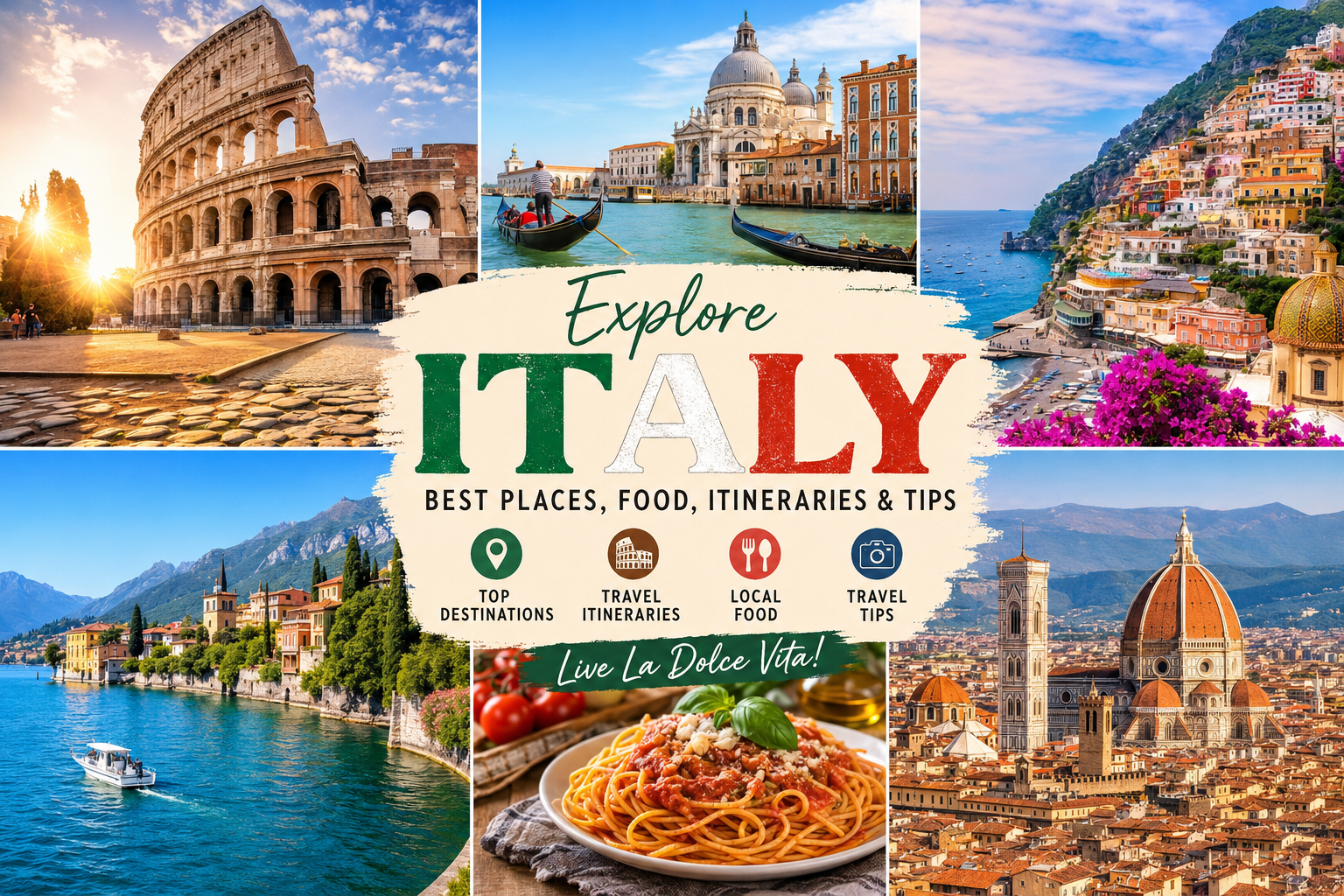
Italy travel offers an exceptional mix of ancient history, Renaissance art, Mediterranean landscapes, world-famous cuisine, fashion, architecture, beaches, mountains, and distinctive regional cultures. The best Italy trip is not about seeing every famous landmark; it is about choosing the right destinations, season, transportation, budget, and pace for your travel style Travel Industry
Why Italy Travel Is So Popular
Italy is unusual because it can satisfy completely different travelers within the same country.
A history enthusiast may spend days exploring Rome.
A fashion lover may prefer Milan.
A beach traveler may choose Sardinia or Sicily.
A food traveler may build an itinerary around Emilia-Romagna, Tuscany, Naples, or Sicily.
A nature lover may head toward the Dolomites.
A romantic traveler may choose Florence, Lake Como, Venice, or the Amalfi Coast.
A family might combine Rome with Tuscany and a coastal destination.
This diversity is one reason Italy works for both first-time visitors and repeat travelers.
Italy Offers Multiple Travel Experiences in One Country
Italy contains:
- Ancient Roman ruins
- Renaissance masterpieces
- Medieval towns
- Baroque architecture
- Alpine mountains
- Mediterranean islands
- Volcanic landscapes
- Vineyards
- Lakes
- Coastal villages
- Historic cities
- Fashion districts
- Food regions
- Art museums
- Religious landmarks
- UNESCO-recognized cultural landscapes
- Modern design and technology
The important thing is not to treat all of Italy as one destination.
Italy is a collection of regional travel experiences connected by one national identity.
Understanding Italy Before Your Trip
Italy is geographically compact compared with some countries, but distances can still be significant.
Traveling from Milan to Palermo, for example, is completely different from traveling between Florence and Rome.
The country can broadly be understood through several travel regions.
Northern Italy
Northern Italy includes destinations such as:
- Milan
- Turin
- Lake Como
- Lake Garda
- Venice
- Verona
- Bologna
- The Dolomites
The north is particularly strong for:
- Fashion
- Business
- Lakes
- Mountains
- Architecture
- Food
- High-speed rail
Central Italy
Central Italy includes:
- Rome
- Florence
- Tuscany
- Siena
- Umbria
This region is ideal for:
- Ancient history
- Renaissance art
- Wine
- Countryside
- Medieval towns
- Cultural tourism
Southern Italy
Southern Italy includes destinations such as:
- Naples
- Amalfi Coast
- Puglia
- Calabria
- Basilicata
It offers:
- Coastal scenery
- Historic towns
- Traditional food
- Mediterranean culture
- Beaches
- Ancient sites
Italian Islands
Italy’s major islands include:
- Sicily
- Sardinia
There are also many smaller islands with distinct identities.
Island travel can require additional planning because ferry and flight schedules can vary by season.
Is Italy Good for First-Time Travelers?
Absolutely.
Italy is one of the strongest choices for a first European trip because travelers can combine famous attractions with relatively straightforward transportation.
However, first-time travelers often make one major mistake:
They try to see too much.
A typical ambitious itinerary might look like:
Rome → Florence → Venice → Milan → Naples → Amalfi Coast → Sicily
That sounds exciting.
It can also become exhausting.
Every hotel change involves:
- Packing
- Checking out
- Traveling
- Finding the next hotel
- Checking in
- Reorganizing luggage
The result can be a trip dominated by logistics.
A better first trip might focus on three or four bases.
Best Time to Visit Italy
There is no single perfect month for Italy travel.
The best season depends on where you are going and what you want to do.
Spring in Italy
Spring generally offers a strong combination of:
- Mild weather
- Flowers
- Outdoor dining
- City sightseeing
- Countryside travel
April and May can be particularly attractive for travelers who want to explore cities without the full intensity of summer.
However, weather varies by region.
The Alps remain much colder than southern coastal areas.
Summer in Italy
June through August is the classic peak travel period.
Summer works especially well for:
- Beaches
- Islands
- Lakes
- Mountain travel
- Outdoor dining
- Festivals
But there are disadvantages.
Popular destinations can become:
- Crowded
- Expensive
- Hot
- Difficult to book at short notice
Major cities can feel particularly intense during heat waves.
Autumn in Italy
September and October can be excellent for:
- Wine regions
- Food travel
- City breaks
- Photography
- Countryside
- Cultural tourism
Autumn also allows travelers to experience Italy’s agricultural identity more closely.
Depending on the region and timing, travelers may encounter harvest activities, seasonal foods, and wine-related events.
Winter in Italy
Winter can be excellent for:
- Skiing
- Christmas markets
- Museums
- Shopping
- Opera
- Food
- City breaks
Southern Italy can be considerably milder than the Alps.
Winter also offers an opportunity to experience major cities with a different atmosphere.
The Best Italy Travel Strategy: Shoulder Season
If you want one practical recommendation from this entire guide, consider traveling during shoulder season.
That generally means periods between peak and low season.
Potential advantages include:
- Fewer crowds
- Better accommodation availability
- More comfortable sightseeing temperatures
- More relaxed restaurants
- Easier photography
- Potentially better prices
The exact shoulder season varies by destination.
For example, a coastal resort may operate differently in October than Rome or Florence.
Best Places to Visit in Italy
Italy has enough destinations for dozens of different itineraries.
These are some of the most useful destinations to understand.
Rome
Rome is the logical choice for travelers interested in ancient history.
The city combines:
- Roman ruins
- Renaissance art
- Baroque architecture
- Catholic heritage
- Modern Italian life
- Food
- Shopping
What to See in Rome
Major attractions include:
- Colosseum
- Roman Forum
- Pantheon
- Trevi Fountain
- Piazza Navona
- Vatican Museums
- St. Peter’s Basilica
- Castel Sant’Angelo
But Rome is more than its landmarks.
Spend time in neighborhoods and local markets.
Walk without constantly checking off attractions.
Rome becomes more interesting when you stop treating it as an archaeological theme park and start seeing it as a living city.
Florence
Florence is one of the world’s most important destinations for Renaissance art.
It is especially suitable for:
- Art lovers
- Architecture enthusiasts
- Couples
- History travelers
- Food lovers
Highlights of Florence
Consider:
- Florence Cathedral
- Uffizi Gallery
- Ponte Vecchio
- Palazzo Vecchio
- Piazza della Signoria
- Accademia Gallery
- Boboli Gardens
Florence is relatively compact compared with Rome, which makes it easier to explore on foot.
Venice
Venice is unlike almost anywhere else.
Its canals, bridges, historic buildings, and island geography create a distinctive travel experience.
What Makes Venice Special?
The biggest mistake is visiting only the busiest central areas.
Consider exploring:
- Cannaregio
- Dorsoduro
- Castello
- Giudecca
- Smaller islands
Venice rewards early mornings and late evenings.
When the day-trippers leave, the atmosphere can change dramatically.
Milan
Milan represents another side of Italy.
It is particularly strong for:
- Fashion
- Design
- Business
- Shopping
- Contemporary culture
- Architecture
Milan Highlights
Consider:
- Duomo di Milano
- Galleria Vittorio Emanuele II
- Brera
- Navigli
- Sforza Castle
- Leonardo da Vinci’s Last Supper, with advance planning
Milan is also a useful transportation hub for northern Italy.
Naples
Naples is energetic, chaotic, historic, and intensely local.
It is an excellent base for exploring:
- Pompeii
- Herculaneum
- Mount Vesuvius
- Amalfi Coast
- Capri
Naples is also closely associated with pizza culture.
Travelers who prefer polished tourist environments may find Naples challenging.
Travelers who want character and authenticity may find it fascinating.
Amalfi Coast
The Amalfi Coast is one of Italy’s most visually recognizable destinations.
Popular towns include:
- Amalfi
- Positano
- Ravello
The area is famous for:
- Dramatic cliffs
- Sea views
- Colorful architecture
- Luxury accommodation
- Coastal roads
The Problem With Peak Season
The same beauty that attracts visitors creates congestion.
Road traffic, limited parking, high accommodation prices, and crowded viewpoints can reduce the experience.
Consider visiting in shoulder season or staying longer instead of attempting a rushed day trip.
Tuscany
Tuscany is much larger than Florence.
The region is famous for:
- Vineyards
- Rolling hills
- Medieval towns
- Food
- Art
- Agriculture
Popular destinations include:
- Siena
- San Gimignano
- Lucca
- Pisa
- Montepulciano
Should You Rent a Car in Tuscany?
A car can be useful for rural areas.
However, it is not always necessary for city-focused travel.
If you drive, understand Italian road rules and restricted traffic zones before entering historic centers.
Bologna
Bologna is often overlooked by first-time visitors.
That is part of its appeal.
The city is famous for:
- Food
- Porticoes
- University culture
- Historic architecture
It is also an excellent base for exploring Emilia-Romagna.
Why Food Travelers Should Consider Bologna
The wider region is strongly associated with Italian food traditions.
Travelers can explore products and dishes connected to:
- Pasta
- Parmigiano Reggiano
- Prosciutto
- Traditional sauces
- Balsamic vinegar
Food tourism here can be more educational than simply visiting famous restaurants.
Lake Como
Lake Como combines:
- Mountains
- Water
- Historic villas
- Elegant towns
- Scenic boat journeys
Popular places include:
- Como
- Bellagio
- Varenna
The lake is particularly popular for romantic and luxury travel.
Accommodation prices can rise significantly during peak periods.
The Dolomites
The Dolomites are ideal for travelers seeking:
- Hiking
- Mountain scenery
- Photography
- Skiing
- Alpine villages
The landscape is dramatically different from southern Italy.
That contrast demonstrates why a single “Italy travel experience” does not really exist.
Sicily
Sicily deserves far more than a short side trip.
The island offers:
- Ancient Greek temples
- Baroque towns
- Beaches
- Volcanoes
- Seafood
- Distinctive regional culture
Major destinations include:
- Palermo
- Catania
- Taormina
- Syracuse
- Agrigento
Why Sicily Feels Different
Sicily has experienced centuries of cultural influences.
Greek, Roman, Arab, Norman, Spanish, and other historical layers have shaped the island.
That complexity appears in:
- Architecture
- Food
- Language
- Traditions
- Urban design
Sardinia
Sardinia is particularly attractive for:
- Beaches
- Clear water
- Outdoor travel
- Coastal resorts
- Relaxation
It can be a better choice for travelers whose primary goal is a beach vacation rather than museum-heavy sightseeing.
Puglia
Puglia is one of Italy’s increasingly popular regions.
It offers:
- Coastal towns
- Olive groves
- Whitewashed architecture
- Traditional food
- Historic villages
Destinations such as:
- Bari
- Alberobello
- Lecce
- Ostuni
- Polignano a Mare
can be combined into a southern Italy itinerary.
Hidden Gems and Less-Crowded Italy
Italy’s most famous destinations deserve attention, but travelers should not stop there.
Consider:
- Matera
- Trieste
- Bergamo
- Parma
- Modena
- Ferrara
- Ravenna
- Perugia
- Orvieto
- Mantua
- Urbino
- Lecce
Why Smaller Cities Matter
Smaller destinations can provide:
- Less crowd pressure
- More relaxed restaurants
- Lower accommodation costs in some cases
- Strong local traditions
- Easier interaction with local communities
They also help distribute tourism beyond the most famous destinations.
Italy Travel by Train
Train travel is one of the easiest ways to connect many major Italian cities.
Italy has high-speed rail services that make routes between major cities particularly practical.
For example, travelers can often connect major northern and central cities much faster by high-speed train than by car.
High-Speed Rail
Major operators include:
- Trenitalia
- Italo
Italo operates high-speed trains using Alstom AGV and EVO trainsets.
When Trains Are Best
Trains are particularly useful for:
- Rome to Florence
- Florence to Bologna
- Bologna to Milan
- Rome to Naples
- Milan to Venice
Exact schedules and fares change, so always check the operator before booking.
Italy Travel by Regional Train
Regional trains are useful for shorter journeys and access to smaller cities.
They may be:
- Slower
- Less expensive
- More frequent on certain routes
They are especially useful for travelers who want to move beyond major high-speed corridors.
Italy Travel by Car
A rental car can be useful for:
- Tuscany countryside
- Puglia
- Sicily
- Sardinia
- Dolomites
- Rural villages
But a car can be inconvenient in major historic cities.
The ZTL Problem
Many Italian cities have Zona a Traffico Limitato, or restricted traffic zones.
Entering a restricted area without authorization can result in a fine.
This is one of the most important issues for international drivers.
Before driving into a historic center:
- Check whether a ZTL exists.
- Understand when restrictions apply.
- Confirm whether your hotel can register your vehicle if permitted.
- Follow signs rather than blindly following GPS directions.
Italy Travel Without a Car
Italy is perfectly possible without renting a car.
A car-free trip can be especially easy when focusing on:
- Rome
- Florence
- Bologna
- Venice
- Milan
- Naples
For rural regions, public transportation may require more planning.
The best approach is to choose transportation based on geography.
How Much Does Italy Travel Cost?
Italy can be affordable, moderate, or extremely expensive.
Your final cost depends on:
- Season
- Destination
- Accommodation
- Dining style
- Transportation
- Activities
- Length of stay
Budget Travel
Budget travelers can reduce costs by:
- Staying outside the most expensive central districts
- Using public transport
- Booking accommodation early
- Eating at local establishments
- Traveling during shoulder season
- Using free attractions
Mid-Range Travel
Mid-range travelers can combine:
- Comfortable hotels
- Regional restaurants
- High-speed trains
- Paid attractions
- Occasional tours
Luxury Travel
Luxury Italy travel can include:
- Boutique hotels
- Historic properties
- Private transfers
- Fine dining
- Private guides
- Yacht experiences
- Exclusive wine tours
There is essentially no upper limit to luxury travel spending in Italy.
A More Accurate Way to Build Your Italy Budget
Instead of asking “How much does Italy cost?” divide the budget.
Accommodation
Calculate:
nightly rate × number of nights
Then add taxes or fees where applicable.
Transportation
Include:
- International flights
- Trains
- Buses
- Ferries
- Local transport
- Airport transfers
- Car rental if necessary
Food
Estimate:
- Breakfast
- Lunch
- Dinner
- Coffee
- Snacks
- Drinks
Attractions
Include:
- Museums
- Archaeological sites
- Guided tours
- Boat trips
- Cultural events
Emergency Fund
Keep additional money for:
- Missed connections
- Medical needs
- Lost items
- Unexpected transportation
- Last-minute accommodation
Italian Food: A Major Reason to Visit
Italian food is often presented internationally as one cuisine.
That description is misleading.
Italy has enormous regional variation.
Northern Italian Food
Northern cuisine may feature:
- Risotto
- Polenta
- Butter-based preparations
- Cheese
- Alpine influences
Central Italian Food
Central regions are known for:
- Pasta
- Olive oil
- Grilled meats
- Beans
- Seasonal vegetables
Southern Italian Food
Southern cuisine often features:
- Tomatoes
- Seafood
- Citrus
- Eggplant
- Olive oil
- Wheat-based dishes
Sicilian Food
Sicilian cuisine reflects the island’s complex history.
You may encounter combinations involving:
- Citrus
- Almonds
- Seafood
- Eggplant
- Raisins
- Spices
How to Eat Like a Local in Italy
You do not need to avoid every tourist restaurant.
Instead:
- Walk a few streets away from major attractions.
- Look for busy local restaurants.
- Explore markets.
- Try regional dishes.
- Ask hotel staff for recommendations.
- Do not assume the most photographed restaurant is the best.
Coffee Culture
Italian coffee culture is highly regional and social.
Learn the basic terms before ordering.
A “coffee” may mean espresso rather than the large drink some international travelers expect.
Meal Timing
Italian dining habits may differ from what travelers are used to.
Do not expect every restaurant to operate continuously throughout the day.
Always check opening hours.
Italy Travel for Families
Italy can be fantastic for families.
Children can experience:
- Ancient ruins
- Castles
- Beaches
- Gelato
- Boat rides
- Interactive museums
- Parks
- Trains
- Historic towns
Family Travel Strategy
Do not plan five museums in three days.
Combine educational experiences with fun.
For example:
Rome: ancient ruins + park + pizza
Florence: art + gelato + gardens
Venice: canals + boat ride + island exploration
Choose Convenient Accommodation
For families, a slightly more expensive hotel near transportation can sometimes be better value than a cheaper property requiring long daily journeys.
Italy Travel for Couples
Italy is naturally suited to romantic travel.
Consider:
- Tuscany
- Lake Como
- Amalfi Coast
- Venice
- Florence
- Puglia
- Sicily
But romance does not require luxury.
A quiet evening in a small town can be more memorable than an expensive hotel.
Italy Travel for Solo Travelers
Italy can be an excellent solo destination.
Major cities offer:
- Walking tours
- Museums
- Public transport
- Food experiences
- Hostels
- Day trips
Solo Travel Tips
Keep valuables secure in crowded areas.
Be careful around busy train stations and tourist attractions.
Avoid carrying unnecessary documents or large amounts of cash.
Choose accommodation in well-connected areas.
Italy Travel for Muslim Travelers
Italy has Muslim communities and halal options, particularly in larger cities.
Travelers should research:
- Halal restaurants
- Mosques
- Prayer facilities
- Food ingredients
- Accommodation locations
Rome, Milan, Florence, Turin, and other larger urban areas generally provide more choices than small towns.
A Practical Approach
Save halal restaurants and mosques on your map before departure.
For smaller destinations, consider carrying suitable snacks when necessary.
Italy Travel for Vegetarian and Vegan Travelers
Italy can be surprisingly friendly to vegetarian travelers.
Common foods that may fit vegetarian diets include:
- Pasta dishes
- Vegetable antipasti
- Pizza
- Salads
- Legume-based foods
- Vegetable soups
However, recipes vary.
If you have strict dietary requirements, communicate clearly with restaurant staff.
Italy Travel for Seniors
Italy’s historic beauty can also create physical challenges.
Old cities often contain:
- Cobblestones
- Stairs
- Hills
- Uneven sidewalks
- Limited elevators
Senior-Friendly Strategy
Choose:
- Central accommodation
- Direct trains
- Comfortable transport
- Moderate walking days
- Hotels with elevators
- Longer stays
Do not assume a hotel has an elevator because it is advertised as centrally located.
Confirm directly.
Italy Travel for Students
Students can build affordable Italy trips by:
- Staying in hostels
- Traveling by regional trains
- Using student discounts where available
- Eating at inexpensive local restaurants
- Visiting free attractions
- Traveling outside peak season
Cities such as Bologna can be particularly appealing because of their student culture.
Italy Travel for Luxury Travelers
Italy is one of Europe’s strongest luxury destinations.
Luxury experiences can include:
- Lake Como villas
- Tuscan estates
- Private yacht charters
- Luxury shopping in Milan
- Private museum tours
- Michelin-starred dining
- Exclusive wine experiences
- High-end coastal resorts
But luxury does not always mean better.
A private tour cannot automatically create a better memory than wandering through a beautiful neighborhood at your own pace.
Italy Travel for Photography Lovers
Italy is exceptionally photogenic.
Best Photography Subjects
- Architecture
- Piazzas
- Coastal cliffs
- Vineyards
- Mountains
- Historic streets
- Markets
- Churches
- Lakes
- Rural landscapes
Best Time for Photography
Early morning is often underrated.
You can experience:
- Softer light
- Fewer crowds
- Quieter streets
- Better compositions
Respect photography restrictions inside churches, museums, and other attractions.
Italy Travel for History Lovers
Italy is essentially an open-air history lesson.
The country allows travelers to encounter:
- Roman civilization
- Medieval Europe
- Renaissance culture
- Baroque art
- Religious history
- Modern Italian history
Build a Historical Route
A history-focused itinerary might combine:
Rome → Florence → Bologna → Venice
Or:
Naples → Pompeii → Sicily
The second route adds Greek and Roman archaeology with southern Italian history.
Italy Travel for Beach Lovers
Italy has thousands of kilometers of coastline and many islands.
Popular beach regions include:
- Sardinia
- Sicily
- Puglia
- Campania
- Calabria
- Liguria
Beach Travel Mistake
Do not assume every beautiful coastal destination is suitable for a relaxing beach holiday.
Some famous coastal towns are better for:
- Views
- Architecture
- Restaurants
- Day trips
than long sandy beach days.
Research the actual beach conditions before booking.
Italy Travel for Nature Lovers
Italy’s natural landscapes range from Alps to Mediterranean islands.
Mountains
Consider:
- Dolomites
- Alps
- Apennines
Lakes
Consider:
- Lake Como
- Lake Garda
- Lake Maggiore
Volcanoes
Italy has notable volcanic landscapes, including:
- Mount Etna
- Mount Vesuvius
- Stromboli
Always check current safety and access conditions before visiting volcanic areas.
Italy Travel Visa Requirements
Italy is part of the Schengen Area.
For travelers who need a short-stay visa, a Schengen visa generally covers stays of up to 90 days in any 180-day period, subject to the visa’s conditions. Italy’s Ministry of Foreign Affairs confirms that the Uniform Schengen Visa is the relevant short-stay visa framework.
Where Should You Apply?
If your itinerary includes multiple Schengen countries, the relevant application is generally determined by the country’s role as your main destination.
Italian consular guidance explains that when multiple Schengen countries are included, the application is normally made through the country that is the main destination based on the applicable criteria.
Always follow the instructions of the Italian embassy or consulate responsible for your place of legal residence.
Visa-Free Travelers
Visa-exempt travelers are still subject to Schengen short-stay rules.
Italy’s Ministry of Foreign Affairs states that visa-exempt travelers can generally remain in Italy or the Schengen Area for a maximum of 90 days within any 180-day period for short stays.
Italy Travel and EES
The European Union’s Entry/Exit System affects third-country nationals traveling for short stays across the Schengen external border.
Italy’s Ministry of Foreign Affairs states that EES began coming into force on October 12, 2025, with electronic registration of entries and exits for relevant travelers.
This means travelers may encounter more digital border processing than in previous years.
Allow extra time at busy airports.
Italy Travel and ETIAS
ETIAS is an important future travel requirement for visa-exempt nationals traveling to participating European countries.
The official EU website states that ETIAS is currently not in operation and that the European Union will announce the specific start date ahead of launch.
Once operational, eligible visa-exempt travelers will need an ETIAS authorization for relevant short trips.
Important Advice
Do not rely on social media posts or unofficial websites for ETIAS information.
Check the official EU website before traveling.
Italy Travel Safety Tips
Italy is a major international tourism destination, but travelers should still take normal precautions.
Watch Your Belongings
Be particularly careful in:
- Crowded train stations
- Public transport
- Tourist landmarks
- Busy squares
- Airports
Protect Your Passport
Avoid carrying your passport unnecessarily once your accommodation has secure storage, provided you remain compliant with identification requirements.
Keep secure digital and physical copies of important documents.
Be Careful With Taxis
Use authorized taxi services and understand the pricing system before beginning your journey.
Watch for Tourist Scams
Potential scams can involve:
- Unofficial guides
- Fake petitions
- Street games
- Overpriced transportation
- Distraction theft
- Fake charity requests
Research scams specific to your destination.
Italy Travel Insurance
Travel insurance can protect against unexpected expenses depending on the policy.
Possible coverage can include:
- Medical emergencies
- Trip cancellation
- Lost baggage
- Delayed baggage
- Travel interruption
- Emergency assistance
Read exclusions carefully.
Do not assume every policy covers every activity.
How to Pack for Italy
Italy travel often involves substantial walking.
Pack:
- Comfortable shoes
- Lightweight layers
- Weather protection
- Appropriate clothing for religious sites
- Phone charger
- Travel adapter if required
- Necessary medication
- Reusable water bottle
- Small day bag
- Copies of important documents
Avoid Overpacking
Italy’s historic cities can contain:
- Stairs
- Cobblestones
- Narrow streets
- Crowded trains
A lightweight suitcase can make a surprisingly large difference.
What to Wear in Italy
Italy is fashionable, but you do not need an expensive wardrobe.
Prioritize:
- Comfort
- Weather suitability
- Good walking shoes
- Layering
- Modesty for religious locations
Some churches and religious sites may require appropriate clothing.
Italy Travel and Mobile Internet
Travelers can choose among:
- International roaming
- Local SIM cards
- eSIMs
- Pocket Wi-Fi
Compare:
- Data allowance
- Coverage
- Price
- Tethering
- Validity
- Regional coverage
Download offline maps before traveling into areas with weaker connectivity.
How to Plan an Italy Trip
The following process works for most travelers.
Step 1: Decide What You Want From Italy
Choose your main purpose:
- History
- Food
- Beaches
- Nature
- Romance
- Family travel
- Fashion
- Art
- Luxury
- Budget travel
Step 2: Choose a Region
Do not start with 15 destinations.
Choose a logical geographical area.
Step 3: Select Three to Five Bases
Use major cities as hubs when possible.
Step 4: Calculate Transportation
Compare:
- Train
- Bus
- Car
- Flight
- Ferry
Step 5: Check the Season
Make sure the destination matches your travel month.
Step 6: Reserve High-Demand Attractions
Popular museums, trains, and attractions may require advance planning.
Step 7: Leave Empty Space
Not every hour needs to be scheduled.
Sample 7-Day Italy Itinerary
Days 1–3: Rome
Explore:
- Ancient Rome
- Vatican area
- Historic center
- Local neighborhoods
Days 4–5: Florence
Travel north and explore:
- Renaissance art
- Historic center
- Markets
- Tuscan food
Days 6–7: Venice
Finish with:
- Canals
- Historic neighborhoods
- Island exploration
- Evening walks
This itinerary is intense but manageable compared with trying to visit six or seven cities.
Sample 10-Day Italy Itinerary
Days 1–3: Rome
Ancient history, Vatican, food, neighborhoods.
Days 4–5: Florence
Art, architecture, Tuscan culture.
Days 6–7: Bologna
Food, porticoes, historic center.
Days 8–10: Venice
Canals, museums, neighborhoods, islands.
This itinerary provides a balanced introduction to central and northern Italy.
Sample 14-Day Italy Itinerary
A two-week trip allows more breathing room.
Days 1–3: Rome Italy travel
Days 4–5: Florence Italy travel
Days 6–7: Tuscany Italy travel
Days 8–9: Bologna Italy travel
Days 10–11: Venice Italy travel
Days 12–14: Milan or Lake Como Italy travel
The final choice should depend on your flight and interests.
Italy Travel Mistakes to Avoid
Trying to See the Entire Country
Solution: Focus on one or two regions.
Booking Every Hotel in the Historic Center
Solution: Compare transportation access and neighborhood atmosphere.
Driving Into Historic Centers
Solution: Research ZTL restrictions.
Ignoring Train Stations
Some cities have multiple stations or stations outside the exact location you expected.
Planning Too Many Day Trips
A day trip may look short on a map but become a long door-to-door journey.
Eating Only Near Major Attractions
Walk a few streets away and compare options.
Visiting Only Famous Places
Add smaller towns.
Ignoring Heat
Summer temperatures can make midday sightseeing uncomfortable.
Underestimating Walking
A city may look compact while still requiring many kilometers of walking.
Pros and Cons of Italy Travel
Advantages
- Exceptional history
- World-class art
- Diverse regional food
- Beautiful landscapes
- Strong rail connections
- Beaches and mountains
- Major cultural cities
- Luxury options
- Budget options
- Excellent romantic destinations
- Family-friendly experiences
- Strong photography opportunities
Disadvantages
- Peak-season crowds
- High prices in famous destinations
- Tourist scams in crowded areas
- Complex driving restrictions
- Uneven accessibility in historic areas
- Summer heat
- Transportation disruptions can occur
- Some rural destinations require more planning
Italy is not perfect.
But its diversity makes it unusually adaptable.
Ten Travel Brands and Platforms for Italy Travel Compared
Different travel brands solve different problems. A rail operator is useful for transportation, while a hotel marketplace is useful for accommodation. Travelers should compare the service they actually need rather than assuming one platform is best for everything.
Which Brand Should You Use?
There is no need to choose only one.
A practical workflow might be:
Train: Trenitalia or Italo
Hotel research: Booking.com or another accommodation provider
Apartment: Airbnb
Transport comparison: Omio
Activities: GetYourGuide or Viator
Reviews: Tripadvisor
Multi-country rail: Eurail
Always compare the final price and booking conditions with the actual transportation or accommodation provider where appropriate.
Italy Travel for Different Types of Travelers
The best Italy itinerary changes dramatically depending on who is traveling.
Italy Travel for Families
Prioritize:
- Short travel days
- Parks
- Interactive attractions
- Convenient hotels
- Beaches
Italy Travel for Couples
Prioritize:
- Tuscany
- Lake Como
- Venice
- Amalfi Coast
- Puglia
Italy Travel for Solo Travelers
Prioritize:
- Walkable cities
- Public transport
- Organized tours
- Social accommodation
Italy Travel for Seniors
Prioritize:
- Accessibility
- Elevators
- Direct trains
- Fewer hotel changes
Italy Travel for Students
Prioritize:
- Affordable accommodation
- Public transport
- Free attractions
- Regional travel
Italy Travel for Luxury Travelers
Prioritize:
- Boutique hotels
- Private experiences
- Fine dining
- Premium transportation
Italy Travel for Muslim Travelers
Prioritize:
- Halal dining
- Mosque access
- Food research
- Convenient accommodation
Italy Travel for Food Lovers
Prioritize:
- Regional destinations
- Food markets
- Cooking classes
- Local producers
Italy Travel Based on Common Problems
Italy Travel Without a Car
Stay primarily in cities connected by rail.
Italy Travel on a Budget
Avoid peak season and compare total trip costs.
Italy Travel in Summer
Schedule outdoor sightseeing early or late in the day.
Italy Travel in Winter
Focus on cities, skiing, food, culture, and seasonal experiences.
Italy Travel With Children
Avoid overly ambitious itineraries.
Italy Travel for First-Time Visitors
Focus on three or four major destinations.
Italy Travel for Repeat Visitors
Explore lesser-known regions and smaller towns.
Italy Travel for Short Trips
Choose one city and explore it deeply.
Sustainable Italy Travel
Tourism can provide significant economic benefits while also placing pressure on popular destinations.
Italy’s tourism ministry has emphasized that tourism should be evaluated not only through visitor numbers but also through its economic, social, and human impacts.
Travelers can contribute to more sustainable tourism by:
- Traveling outside peak season
- Staying longer
- Supporting local businesses
- Using public transport
- Exploring secondary destinations
- Respecting residential neighborhoods
- Avoiding unnecessary waste
- Following rules at natural and historic sites
Why Slow Travel Makes Sense Italy travel
Imagine two travelers.
Traveler A visits:
Rome → Florence → Venice → Milan
in six days.
Traveler B spends six days exploring:
Rome + one nearby region.
Traveler A sees more names on a map.
Traveler B may experience more of Italy.
The second approach is often more rewarding.
Overtourism and Italy Travel
Popular destinations face pressure during peak periods.
Venice, Rome, Florence, the Amalfi Coast, and other famous areas can become extremely busy.
This creates:
- Crowded attractions
- Higher prices
- Transportation congestion
- Pressure on local housing
- Reduced quality of life for residents
How Travelers Can Help Italy travel
Instead of asking:
“What is the most famous place?”
also ask:
“What is nearby that fewer people visit?”
That simple question can improve your trip and distribute tourism spending more widely.
The Future of Italy Travel
Italy’s tourism market is likely to continue evolving around several major trends.
More Shoulder-Season Italy travel
Travelers increasingly have incentives to avoid extreme summer crowds and heat.
More Regional Italy travel
Visitors are discovering that Italy is much more than Rome, Venice, Florence, and Milan.
Personalized Itineraries Italy travel
Travel technology will increasingly help travelers build routes around:
- Budget
- Interests
- Weather
- Transportation
- Food preferences
- Mobility needs
Sustainable Transportation Italy travel
Rail travel is likely to remain an important part of Italy’s domestic tourism ecosystem.
Experience-BasedI Italy travel
Instead of only visiting landmarks, travelers increasingly want to:
- Cook
- Eat
- Hike
- Cycle
- Learn crafts
- Visit farms
- Meet local producers
- Explore neighborhoods
Longer, Slower Trips Italy travel
The future traveler may increasingly choose:
fewer destinations + longer stays + deeper experiences
rather than attempting to collect countries and cities.
How to Make Your Italy Trip More Memorable Italy travel
The most valuable Italy travel advice is surprisingly simple.
Leave some space.
Do not schedule every meal.
Do not reserve every hour.
Allow yourself to sit in a piazza.
Walk down an unfamiliar street.
Enter a small food shop.
Take a regional train.
Visit a town you had never heard of.
Talk to locals when appropriate.
The landmarks are important.
But the unexpected moments often become the memories you carry home.
FAQs
What is the best place to visit in Italy?
There is no single best destination. Rome is excellent for history, Florence for Renaissance art, Venice for canals and architecture, Milan for fashion and design, Tuscany for countryside and food, and Sicily for beaches, history, and regional culture.
How many days are enough for Italy?
Seven days can provide an introduction to one region. Ten to fourteen days gives travelers more flexibility. Longer trips are better for exploring southern Italy, Sicily, Sardinia, or multiple regions without rushing.
What is the best month to visit Italy?
May, June, September, and October can be excellent choices for many travelers, although the best month depends on the destination. Summer is ideal for beaches and mountain travel, while winter is better for skiing, museums, and seasonal city experiences.
Is Italy expensive?
Italy can fit many budgets. Rome, Venice, Milan, Lake Como, and the Amalfi Coast can become expensive, particularly during peak periods. Travelers can reduce costs through shoulder-season travel, regional transportation, local restaurants, and careful accommodation choices.
Is Italy safe for tourists?
Italy is a major international tourist destination, but visitors should still take normal precautions. Pickpocketing and tourist scams can occur in crowded areas, so keep valuables secure and remain aware of your surroundings.
Is Italy good for families?
Yes. Families can enjoy beaches, museums, historical sites, parks, food, trains, and interactive experiences. The key is avoiding overly ambitious itineraries.
Is Italy good for solo travel?
Yes. Italy’s major cities offer public transportation, walking tours, museums, restaurants, and accommodation suitable for solo travelers.
Can I travel around Italy by train?
Yes. Major Italian cities are connected by extensive rail services, including high-speed services. Regional trains also connect many smaller destinations.
Is renting a car in Italy worth it?
A car can be useful in rural Tuscany, Puglia, Sicily, Sardinia, and mountain regions. It is often less useful in major historic cities where parking is difficult and ZTL restrictions apply.
What is a ZTL in Italy?
ZTL means Zona a Traffico Limitato, or limited-traffic zone. These restrictions control vehicle access in many historic areas. Entering without authorization can lead to fines.
Do I need a visa to visit Italy?
It depends on your nationality, residence status, purpose, and length of stay. Italy follows Schengen short-stay visa rules. Travelers requiring a visa should use official Italian consular information to determine eligibility and application procedures.
How long can I stay in Italy without a Schengen visa?
For travelers who are visa-exempt for short stays, the general Schengen rule is up to 90 days in any 180-day period, subject to the applicable rules.
Can I visit Italy with a Schengen visa issued by another country?
Generally, a valid Uniform Schengen Visa can permit travel throughout the Schengen Area, subject to its conditions. However, travelers should apply through the correct country based on the main-destination rules.
Is ETIAS required for Italy?
ETIAS applies to eligible visa-exempt travelers visiting participating European countries. The official EU website states that ETIAS is currently not in operation and that the EU will announce its specific launch date.
What food should I try in Italy?
Try regional food rather than only internationally famous dishes. Pizza in Naples, pasta and food traditions in Emilia-Romagna, Tuscan cuisine, Sicilian specialties, and northern Italian dishes all provide different experiences.
What should I pack for Italy?
Comfortable walking shoes, lightweight layers, weather protection, appropriate clothing for religious sites, chargers, necessary medication, and travel documents are good essentials.
Is Venice worth visiting?
Yes, particularly for travelers interested in architecture, history, art, canals, and unique urban landscapes. Visit early or stay overnight if you want a quieter experience.
Is Rome better than Florence?
Neither is objectively better. Rome is larger and stronger for ancient history, while Florence is more compact and particularly strong for Renaissance art and architecture.
Is Italy good for Muslim travelers?
Yes, particularly in major cities where travelers can find Muslim communities, halal restaurants, and mosques. Smaller destinations may require more advance planning.
Can vegetarians travel easily in Italy?
Generally yes. Italian cuisine includes many vegetarian dishes, but travelers with strict dietary requirements should confirm ingredients with restaurants.
Is Italy good for budget travelers?
Yes, although famous destinations can be expensive. Traveling during shoulder season, using trains and buses, choosing affordable accommodation, and eating locally can significantly reduce costs.
What is the biggest Italy travel mistake?
Trying to visit too many destinations. Italy rewards travelers who slow down and experience regions rather than simply collecting city names.
Should I book Italy attractions in advance?
For extremely popular museums, high-demand attractions, and peak-season experiences, advance booking can be wise. Always check the official attraction’s current ticket rules.
Is summer a good time for Italy?
Summer is excellent for beaches, islands, lakes, and mountains, but major cities can be hot and crowded. Consider early-morning sightseeing and shoulder-season alternatives.
What is the best way to travel between Rome, Florence, and Venice?
High-speed trains are often one of the most convenient options for these major city connections. Compare schedules and fares before booking.
Should I visit northern or southern Italy?
Choose the north for cities such as Milan and Venice, lakes, fashion, and the Alps. Choose the south for Mediterranean landscapes, coastal towns, Sicily, Puglia, and distinctive regional culture.
Conclusion
Italy travel can be as ambitious or as relaxed as you want it to be. You can build a fast-paced journey through Rome, Florence, Venice, and Milan, or spend two weeks exploring a single region. You can hike through the Dolomites, taste food in Emilia-Romagna, relax on a Sicilian beach, explore ancient ruins in Campania, photograph Tuscan villages, or spend a slow afternoon beside Lake Como. The important thing is to understand what you want from the trip before choosing the destinations.