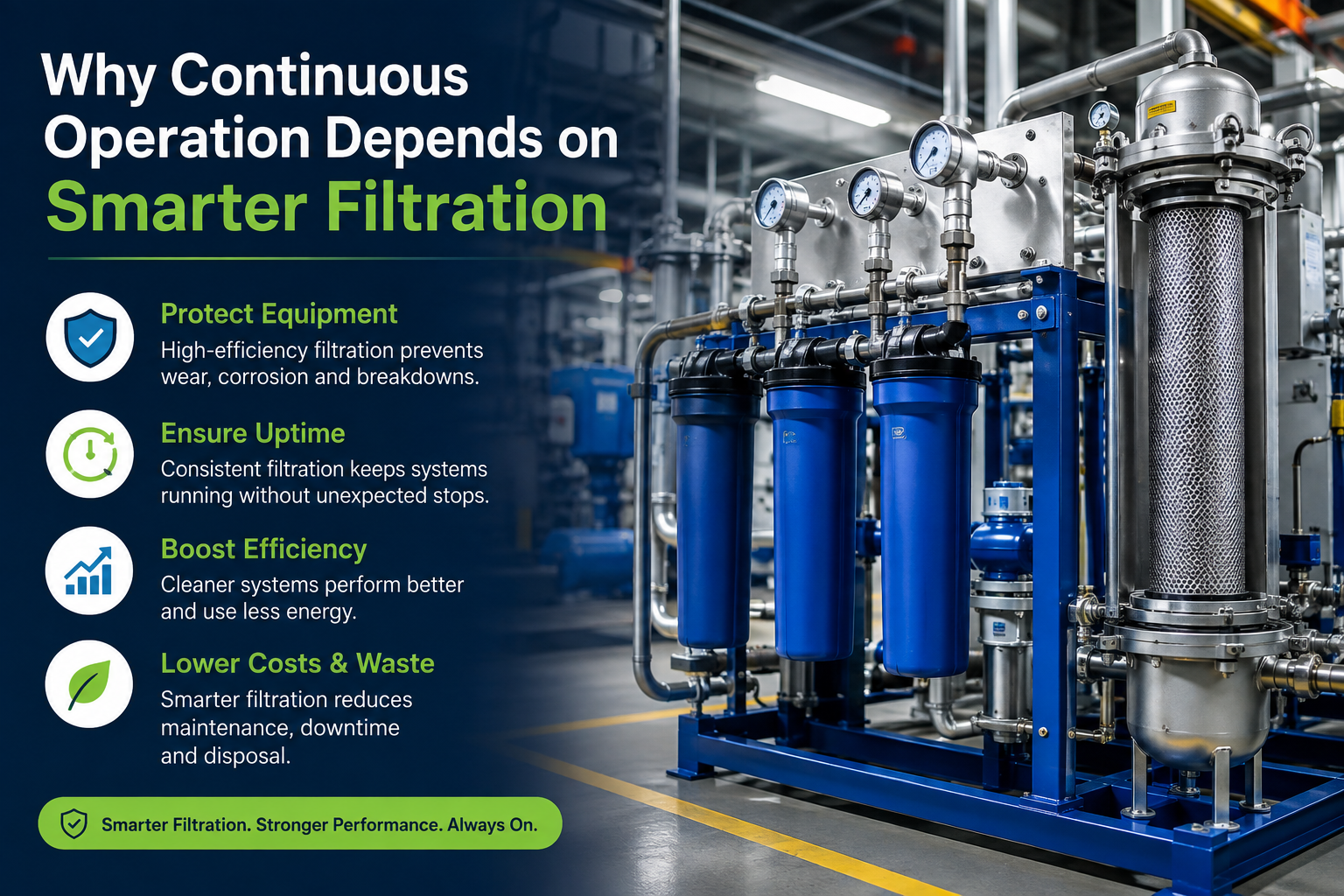
Unplanned downtime is one of the most expensive problems a fluid system can have. When filtration equipment demands constant manual attention, it pulls maintenance teams away from other critical work and raises the risk of costly interruptions.
The Hidden Cost of Manual Filter Maintenance
Facilities running high-volume fluid systems — whether for cooling, process water, chemical transfer, or hydraulic circuits — depend on filtration equipment to keep contaminants from damaging downstream components like pumps, valves, and heat exchangers. Traditional strainers work well at capturing debris, but they come with a tradeoff: someone has to shut the system down, open the housing, and manually clear the accumulated solids.
That maintenance cycle sounds simple on paper, but in practice it adds up. Every manual cleaning cycle means lost production time, a maintenance technician pulled off other tasks, and a brief window where the system is either offline or running unfiltered. In facilities that operate around the clock, these small interruptions compound into a significant drag on efficiency.
What Changes With Automated Filtration
Automated filtration technology removes the manual step from the equation entirely. Instead of relying on a technician to notice pressure differential building up and schedule a cleaning, the equipment senses changes in flow and pressure on its own and triggers a cleaning cycle automatically — without stopping the process.
This shift matters most in facilities where continuous operation isn’t optional. Power generation plants, chemical processing lines, and water treatment systems all run fluid circuits that can’t tolerate frequent shutdowns. Industrial self-cleaning strainers address this directly, clearing debris from the filter element while the system stays online, so production doesn’t have to pause for routine upkeep.
Where This Technology Fits Best
Not every system needs the same level of automation, but certain conditions make automated filtration especially valuable:
- High-particulate fluid streams, where debris accumulates quickly and manual cleaning would otherwise be needed multiple times per shift
- Continuous process lines, where any shutdown — even a short one — disrupts output further down the system
- Facilities with limited maintenance staff, where technician time is better spent on higher-value repairs than routine cleaning
- Critical infrastructure, where reliability isn’t just about cost but about safety and regulatory compliance
How the Cleaning Cycle Actually Works
Most automated systems rely on a straightforward mechanism: a pressure differential sensor monitors the difference between the inlet and outlet side of the filter element. As debris builds up on the screen, that differential rises. Once it crosses a preset threshold, the unit activates a backwash or brush cycle that dislodges the trapped solids and flushes them out through a separate discharge line — all while the main flow of fluid continues uninterrupted.
Because the cleaning cycle is triggered by actual buildup rather than a fixed schedule, the equipment only runs a cleaning cycle when one is genuinely needed. That reduces unnecessary wear on seals and moving parts compared to a fixed-interval maintenance routine, and it means the filter element is always working at close to peak efficiency rather than gradually clogging between scheduled service visits.
Maintenance Teams Gain Time Back
One of the most underrated benefits of automating this part of the process is what it frees up for the maintenance team. Instead of building schedules around predictable cleaning cycles, technicians can focus on inspections, upgrades, and addressing issues before they become failures. Over time, this shift tends to reduce overall wear on the system, since manual intervention — opening housings, handling components, reassembling seals — introduces its own risk of human error.
Weighing the Investment
Automated filtration equipment typically costs more upfront than a standard manual strainer. For many facilities, though, the calculation isn’t just about the purchase price. It’s about what a single unplanned shutdown costs in lost production, emergency repairs, or non-compliance penalties. When measured against those risks, the upfront investment often pays for itself well before the equipment reaches the midpoint of its service life.
Facility engineers evaluating this upgrade should look closely at flow rates, particulate load, and how much downtime their current maintenance approach actually creates over a year. That data makes it much easier to determine whether the switch is worth it — and how quickly it will pay off.
It also helps to factor in indirect costs that don’t always show up on a maintenance report. Repeated manual servicing exposes seals, gaskets, and housing components to wear that they wouldn’t otherwise see, which can shorten the service life of the surrounding equipment. Labor costs matter too — a technician spending an hour clearing debris every shift adds up to a substantial amount of skilled labor over the course of a year, time that could go toward inspections or upgrades that extend equipment life instead.
For facilities weighing multiple upgrade projects at once, filtration is often one of the easier ones to justify, since the payback period tends to be shorter and easier to measure than upgrades elsewhere in the system.
Conclusion
Filtration doesn’t have to be a recurring interruption to production. With the right equipment in place, fluid systems can run cleaner, longer, and with far less hands-on attention than facilities have traditionally required.