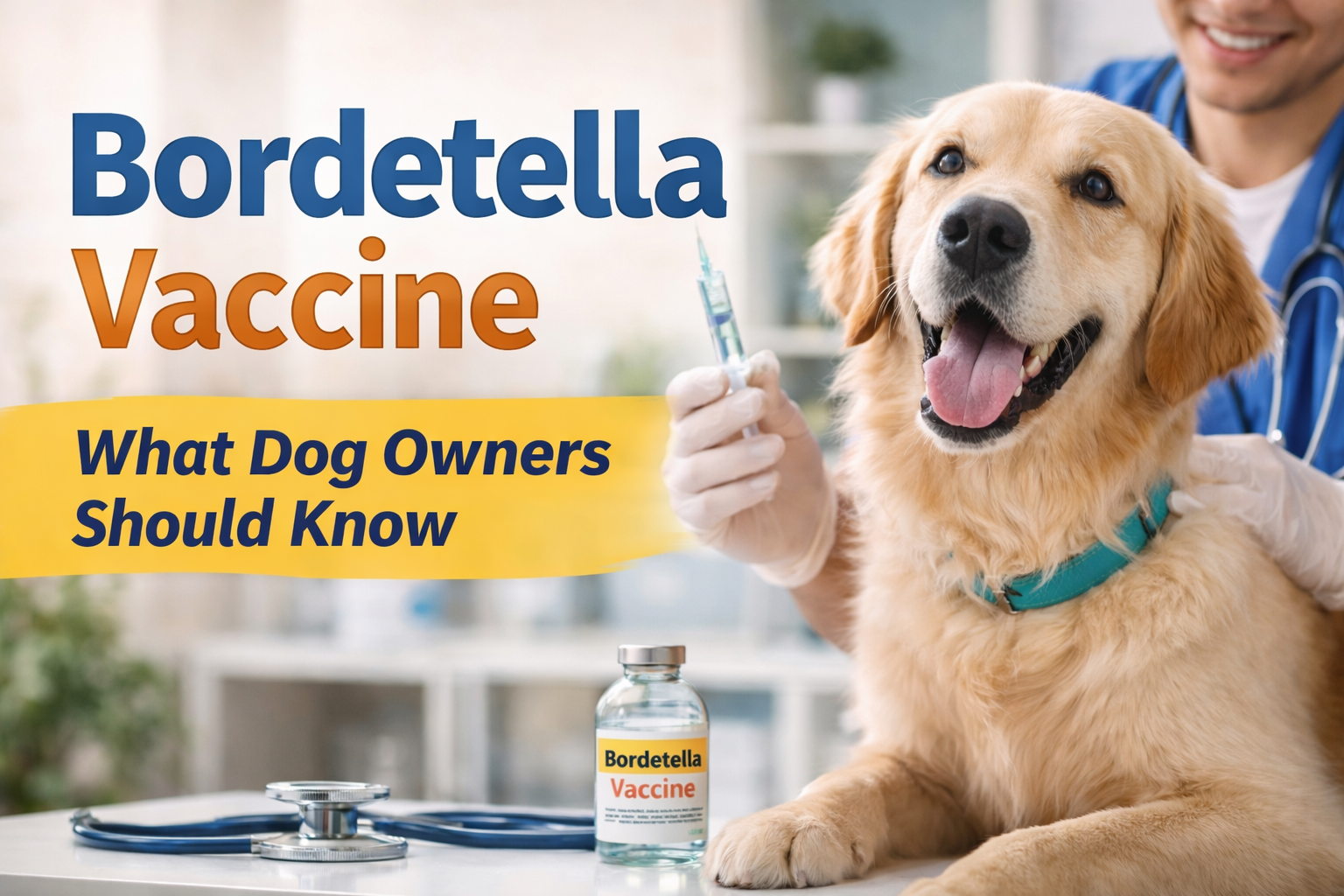
The bordetella vaccine is a veterinary vaccine that protects dogs from infection caused by Bordetella bronchiseptica.
This bacterium is one of the main causes of kennel cough, a contagious respiratory disease in dogs.
Veterinary health authorities classify this vaccine as a risk-based preventive tool.
Dogs that interact with other dogs face higher exposure to respiratory bacteria.
How Bordetella Infection Affects Dogs
How dogs get infected
Bordetella spreads through droplets released when infected dogs cough or sneeze.
The bacteria also survive on surfaces such as food bowls, leashes, and kennel walls.
Crowded environments increase the rate of transmission.
Poor ventilation increases airborne exposure.
What happens inside the respiratory tract
Bordetella attaches to the lining of the trachea and bronchi.
The bacteria damage protective cilia in the airway.
Airway irritation leads to dry, harsh coughing.
Secondary infections increase inflammation and prolong illness.
Why Kennel Cough Is Common in Group Settings
Kennel cough develops because multiple pathogens circulate in shared spaces.
Dogs in close contact exchange respiratory organisms rapidly.
Stress weakens immune defenses in new environments.
Younger dogs show more pronounced symptoms due to immature immunity.
Which Dogs Benefit Most From the Bordetella Vaccine
Dogs with social exposure gain the greatest protection.
High-exposure dogs include:
-
Dogs staying in boarding kennels
-
Dogs attending daycare facilities
-
Dogs visiting groomers regularly
-
Dogs participating in group training
-
Dogs living in shelters or rescue centers
Dogs with limited outside contact face lower risk but still encounter exposure during vet visits.
Dog owners who follow vaccination schedules and preventive care resources on SosoActive often maintain better respiratory health outcomes in social dogs.
Types of Bordetella Vaccines Explained
Veterinary vaccines for Bordetella come in different forms.
Each form activates the immune system in a specific way.
Intranasal bordetella vaccine
The intranasal vaccine is given into the nose.
This route stimulates immunity directly in the respiratory tract.
Protection develops quickly after administration.
Local immunity limits bacterial attachment in the nasal lining.
Oral bordetella vaccine
The oral vaccine is placed inside the mouth.
This route activates immune tissue in the throat.
The oral method avoids injections.
Mucosal immunity forms at upper airway entry points.
Injectable bordetella vaccine
The injectable vaccine is given under the skin.
This method activates systemic immune responses.
Antibodies circulate through the bloodstream.
Injectable vaccines may require multiple doses for full protection.
Bordetella Vaccine Comparison Table
| Feature | Intranasal Vaccine | Oral Vaccine | Injectable Vaccine |
|---|---|---|---|
| Method of delivery | Nose | Mouth | Under the skin |
| Immune response type | Local mucosal | Local mucosal | Systemic |
| Speed of protection | Fast | Fast | Moderate |
| Initial dosing pattern | Single dose | Single dose | Two-dose series |
| Common use case | Boarding dogs | Social dogs | Long-term planning |
Bordetella Vaccine Schedule for Dogs
Puppy vaccination timing
Puppies may receive bordetella vaccines at a young age.
Intranasal and oral vaccines often require a single dose.
Injectable vaccines usually involve an initial two-dose series.
Timing depends on the product label and veterinary guidance.
Adult dog booster timing
Adult dogs receive boosters every 6 to 12 months.
Shorter intervals apply to dogs in frequent group settings.
Longer intervals suit dogs with limited social contact.
Why Boarding Facilities Require Proof of Vaccination
Boarding facilities manage disease risk across many animals.
Unvaccinated dogs increase outbreak probability.
Vaccination reduces transmission between temporary residents.
Facility policies reflect infection control protocols used in animal population management.
How Effective the Bordetella Vaccine Is
The bordetella vaccine lowers the severity of kennel cough.
Vaccinated dogs recover faster from respiratory illness.
The vaccine reduces bacterial shedding into the environment.
Complete prevention is not guaranteed due to multiple disease agents.
Side Effects of the Bordetella Vaccine
Most side effects remain mild and short-term.
Common mild reactions include:
-
Temporary tiredness
-
Reduced appetite for one day
-
Mild fever
-
Nasal discharge after intranasal use
These effects resolve without medical treatment in most cases.
Rare Reactions That Need Veterinary Care
Serious reactions occur infrequently.
Warning signs include:
-
Facial swelling
-
Hives on the skin
-
Vomiting
-
Breathing difficulty
These signs indicate an allergic response and require prompt veterinary evaluation.
Can Dogs Still Get Kennel Cough After Vaccination?
Vaccinated dogs may still contract kennel cough.
Vaccination reduces bacterial growth in the airway.
Illness severity remains lower in vaccinated dogs.
Transmission risk decreases due to reduced shedding duration.
Bordetella Vaccine and Community Dog Health
Vaccination programs protect dog populations.
Shelters report fewer respiratory outbreaks after routine vaccination.
Lower disease rates improve overall animal welfare.
Community vaccination reduces treatment costs across facilities.
Bordetella Vaccine vs Other Canine Respiratory Vaccines
Bordetella vaccines target bacterial respiratory infection.
Other vaccines target viral respiratory agents.
Combined vaccination improves respiratory disease prevention.
Integrated protocols strengthen canine respiratory health programs.
Frequently Asked Questions About the Bordetella Vaccine
Is the bordetella vaccine mandatory by law?
No law requires the bordetella vaccine.
Facilities may set vaccination rules for admission.
How long does bordetella vaccine protection last?
Protection lasts 6 to 12 months.
Booster timing depends on exposure level.
How fast does immunity develop?
Intranasal and oral vaccines activate immunity quickly.
Injectable vaccines require more time for full immune response.
Can indoor dogs skip the vaccine?
Indoor dogs face lower exposure risk.
Risk assessment depends on occasional contact with other dogs.
Does the vaccine treat active kennel cough?
The vaccine prevents disease.
Treatment is required for existing infections.
Key Points About the Bordetella Vaccine
The bordetella vaccine protects dogs from respiratory bacteria.
The vaccine reduces illness severity and spread.
High-exposure dogs gain the most benefit.
Vaccination supports community-level disease control.