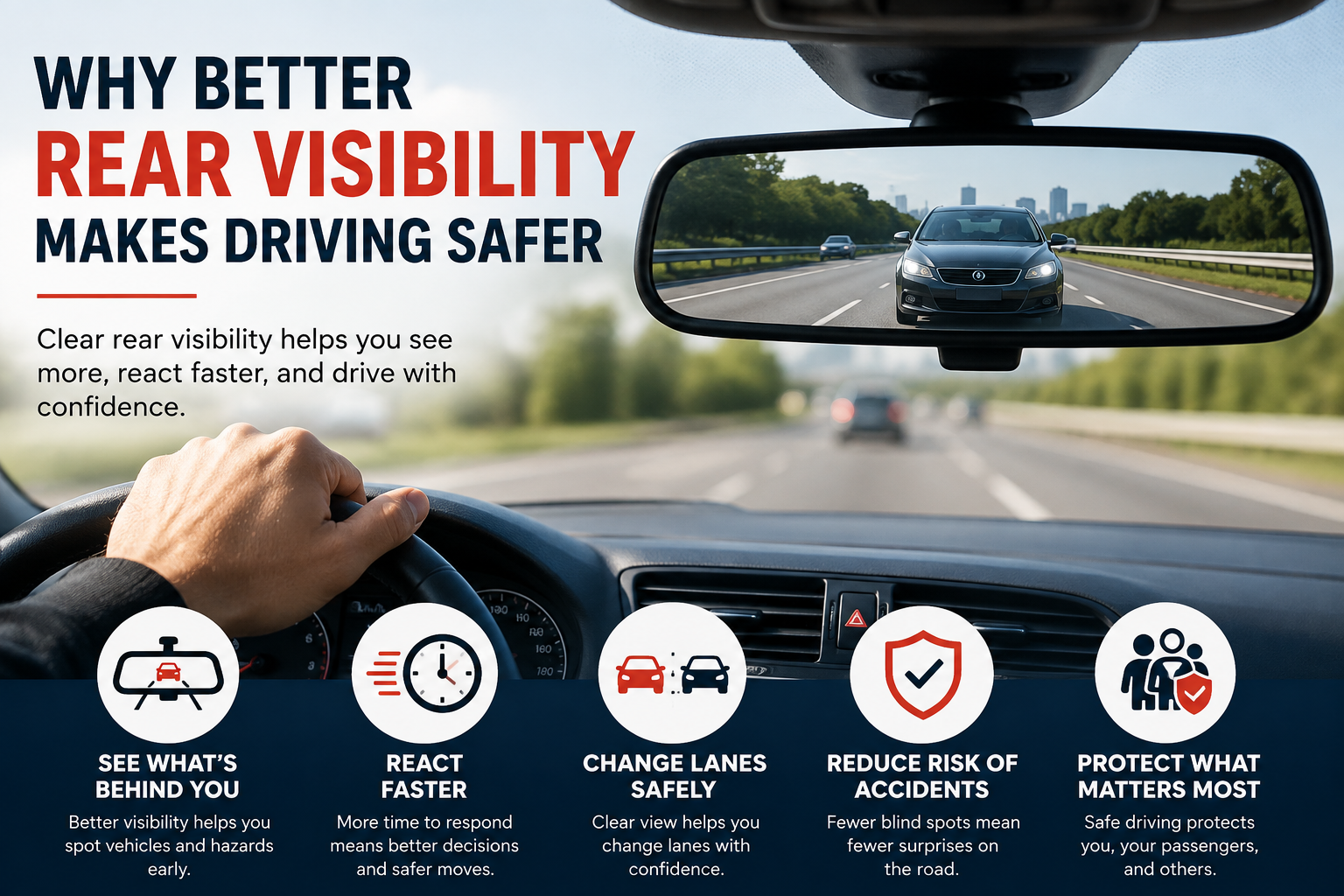
Driving safely requires more than watching the road ahead. Drivers also need to understand what is happening beside and behind their vehicles. Unfortunately, the rear of a vehicle can contain large blind spots that are difficult to see through mirrors alone. Small children, pets, bicycles, low objects, and even other vehicles may be hidden from view. Better rear visibility gives drivers more information before they reverse, park, or leave a busy area. Many drivers searching for backup cameras want a practical way to improve awareness and reduce uncertainty behind the wheel. A clear camera view can support safer driving in parking lots, driveways, residential streets, and other areas where space may be limited.
Rear Blind Spots Can Be Larger Than Expected
Every vehicle has areas that the driver cannot see clearly from the front seat. Rear blind spots may be especially wide in trucks, sport utility vehicles, vans, and vehicles with small back windows. Headrests, passengers, cargo, and the vehicle’s design can also block the driver’s view. Looking over your shoulder and checking the mirrors are still important safety habits. However, mirrors may not show objects located directly behind the bumper. A child, shopping cart, bicycle, parking barrier, or low wall could be completely hidden. A rearview camera provides an additional visual angle that can help drivers notice objects that would otherwise remain out of sight. This added information is particularly useful before the vehicle begins moving backward. Better visibility helps drivers make more careful decisions instead of relying on guesswork.
Backup Cameras Support Safer Reversing
Reversing is a common part of daily driving, but it can also be one of the most stressful situations. Drivers may need to back out of a narrow driveway, leave a crowded parking space, or maneuver around other vehicles. These situations become more difficult when pedestrians or traffic are moving nearby. A backup camera displays the area behind the vehicle on a screen inside the cabin. Depending on the system, the display may also include parking guidelines that help show the vehicle’s expected direction. These guides can make it easier to judge distance and understand how much space is available. Drivers should still check mirrors and look around the vehicle before moving. The camera is designed to provide extra support rather than replace normal safety checks. When used correctly, it can improve awareness and make reversing feel more controlled.
Better Visibility Can Help Protect Children and Pets
Children and pets can move quickly and may not understand the danger of standing near a vehicle. Their smaller size also makes them difficult to see through a rear window or side mirrors. Driveways, school areas, neighborhood streets, and parking lots can be especially risky when young children are nearby. Before reversing, drivers should walk around the vehicle when possible and make sure the path is clear. A camera can then provide another view of the area immediately behind the vehicle. If a child, pet, toy, or other object enters the camera’s field of view, the driver may have more time to stop. This additional layer of vehicle safety can be valuable for families and drivers who frequently travel through busy residential areas. Careful observation remains essential every time the vehicle is placed in reverse.
Parking Becomes Easier and More Accurate
Parking can be difficult when spaces are narrow or when surrounding vehicles are parked close together. Drivers must estimate the distance between their vehicle and nearby cars, curbs, walls, posts, or other obstacles. Poor visibility can lead to scratches, dents, or more serious damage. A backup camera can serve as a useful form of parking assistance. The screen helps the driver see how close the rear bumper is to an object. This can make parallel parking, reverse parking, and backing into a garage easier to manage. Improved parking accuracy may also reduce the need for repeated adjustments. Drivers can position the vehicle more carefully while maintaining a better understanding of the available space. A clearer rear view supports smoother and more confident parking.
Rear Visibility Is Helpful in Busy Parking Lots
Parking lots can be unpredictable. Pedestrians may walk between vehicles, shopping carts may roll into driving paths, and other drivers may reverse at the same time. Large vehicles parked beside a smaller car can also block the driver’s view of approaching traffic. A camera can help the driver check the immediate area behind the vehicle before backing out. However, it may not show vehicles approaching from far to the side. Drivers should continue checking both directions, using their mirrors, and reversing slowly. Drivers may experience crowded shopping centers, school parking areas, event locations, and narrow residential spaces. Better rear visibility can make these everyday environments easier to navigate, especially when combined with patient and attentive driving.
Clear Camera Quality Matters
Not every camera provides the same level of visibility. Image quality, camera angle, screen placement, and lighting performance can affect how useful the system is. A clear image makes it easier to recognize obstacles, while a blurry or poorly positioned camera may provide limited help. The camera lens should be kept clean because dust, mud, rain, snow, and road debris can block the image. Drivers should also test the system regularly to make sure the display activates properly when the vehicle is placed in reverse. Professional car camera installation can help ensure that the camera is positioned correctly and connected securely. Proper placement is important because the driver needs a useful view of the rear bumper and the surrounding area. A dependable system should provide consistent visibility during normal driving conditions.
Cameras Should Support Safe Driving Habits
Backup cameras are helpful tools, but they cannot detect every possible danger. The screen may have a limited field of view, and objects can still approach from the sides. Weather, darkness, dirt, glare, and damaged equipment may also affect camera performance. Drivers should always follow a complete reversing routine. Check the area around the vehicle, look through the windows, use the mirrors, review the camera display, and move slowly. Avoid distractions such as phones, conversations, or adjusting controls while reversing. A camera works best when it is combined with careful observation and responsible driving habits. Technology provides useful support, but the driver remains responsible for controlling the vehicle safely.
Better Awareness Can Build Driver Confidence
Some drivers feel nervous when backing into a parking space or reversing near obstacles. Limited visibility may cause hesitation, especially for new drivers or people operating a larger vehicle than they are used to. A clearer rear view can improve confidence because the driver has more information before making a movement. Parking guidelines and a visible bumper area may also help drivers learn how their vehicle responds while turning in reverse. Confidence should never lead to rushing or reduced attention. The goal is to help drivers feel more prepared while continuing to follow safe driving practices. Calm and careful decisions are more likely when drivers can clearly see the space behind them.
A Clearer View Supports Safer Everyday Travel
Better rear visibility can help drivers identify blind spots, avoid obstacles, protect pedestrians, and park more accurately. It is especially useful in driveways, parking lots, garages, school zones, and other places where people or objects may be difficult to see. Drivers considering backup camera services in Utah should choose a system that provides a clear image and reliable performance. The camera should be treated as one part of a complete safety routine that includes checking mirrors, looking over the shoulder, moving slowly, and staying fully attentive. A better view behind the vehicle can reduce uncertainty and support safer decisions. When drivers combine helpful technology with responsible habits, everyday reversing and parking can become more controlled, comfortable, and secure.