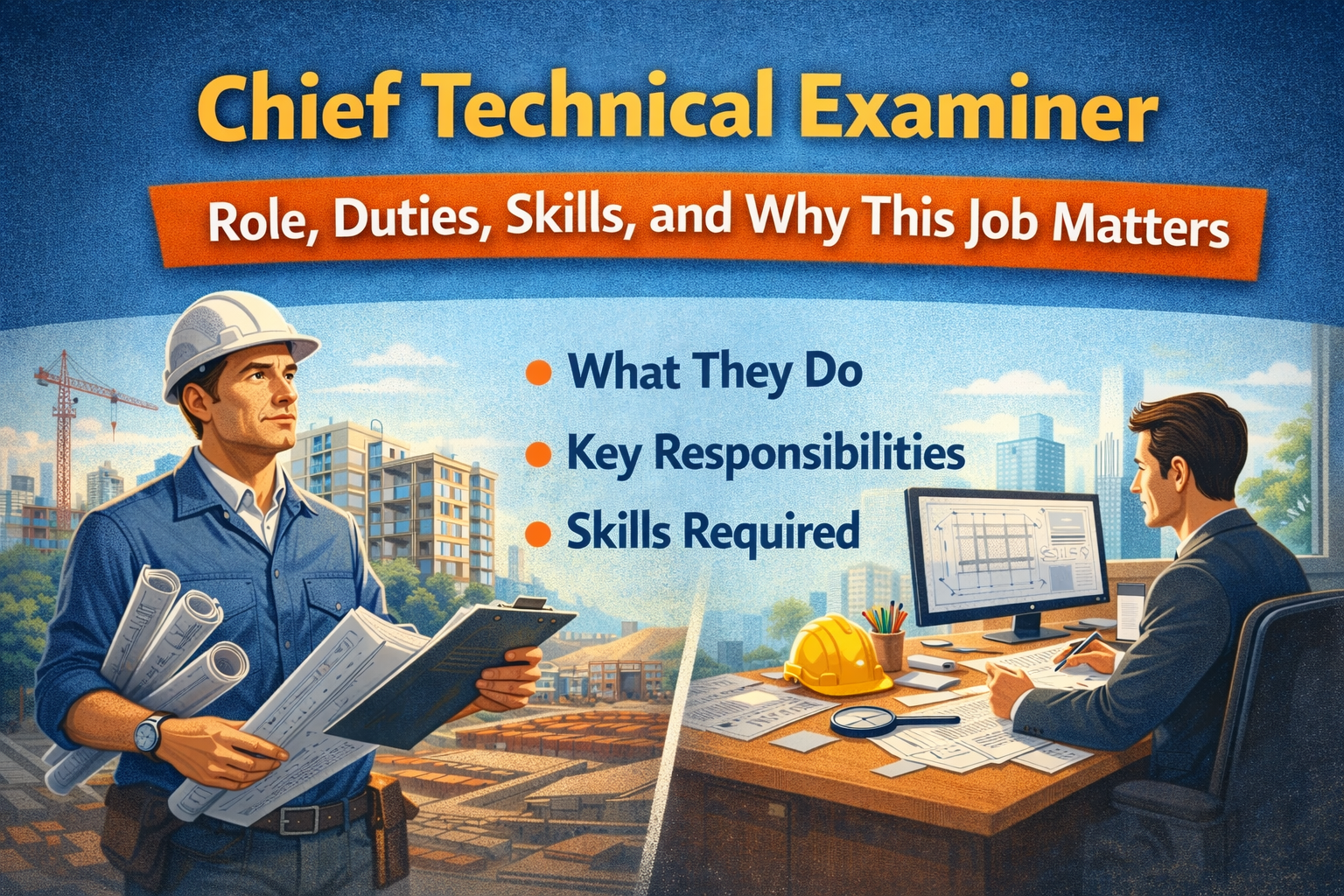

The term Chief Technical Examiner is used for a senior role in many organizations. This role is about checking technical work, making sure rules are followed, and improving the quality of projects. A Chief Technical Examiner does not just look at papers. This person reviews real work on sites, checks designs, and reports problems so they can be fixed early.
Many people hear this title in government projects, construction work, or large engineering companies. Others see it in job roles related to quality control and technical audits. This article explains what a Chief Technical Examiner does, where the role is used, what skills are needed, and why this role is important for safe and successful projects.
A Chief Technical Examiner is a senior technical professional who examines and reviews technical work. The main purpose of this role is to make sure that projects meet required standards, safety rules, and quality levels.
The role can be found in:
Government departments
Public works and infrastructure projects
Construction companies
Manufacturing units
Engineering and industrial firms
The Chief Technical Examiner acts as an independent checker. This means the person reviews the work done by others and gives honest feedback based on rules and standards.
The duties of a Chief Technical Examiner cover many areas of technical review and quality control.
A large part of the job is to check technical work. This includes:
Reviewing drawings and design plans
Checking project documents
Examining materials used in projects
Observing work at project sites
This helps find mistakes before they become big problems.
Every project must follow rules. The Chief Technical Examiner checks:
Safety rules
Engineering codes
Company policies
Legal requirements
This helps protect workers, users, and the organization.
After inspections, the Chief Technical Examiner prepares reports that include:
Problems found
Areas that need improvement
Safety risks
Clear suggestions for fixing issues
These reports help managers take action.
The Chief Technical Examiner often supports and guides technical teams by:
Giving feedback to engineers
Helping junior inspectors improve their skills
Working with managers to improve quality systems
In the public sector, the Chief Technical Examiner is linked with accountability and public safety.
Government projects often include:
Roads and bridges
Schools and hospitals
Water and power systems
Public buildings
The Chief Technical Examiner checks that these projects follow approved plans and that public money is used properly.
Public projects affect many people. The role helps to:
Improve quality of public infrastructure
Reduce waste of public funds
Increase trust in government work
Improve safety for the public
Private companies also use Chief Technical Examiners to protect quality and reduce risks.
This role is common in:
Construction and property development
Factories and manufacturing plants
Energy and power companies
Engineering and design firms
Large technology production units
The goal is to reduce technical failures and improve product or project quality.
The Chief Technical Examiner helps businesses by:
Finding technical problems early
Reducing repair and rework costs
Improving safety records
Supporting quality certification
Many people confuse the Chief Technical Examiner with other senior roles. The table below shows the main differences.
| Role | Main Work Area | Main Purpose |
|---|---|---|
| Chief Technical Examiner | Technical inspection | Check quality and compliance |
| Chief Engineer | Engineering leadership | Lead engineering teams and design |
| Quality Manager | Quality systems | Manage quality processes |
| Project Director | Project leadership | Deliver project on time and budget |
The Chief Technical Examiner focuses on checking and reviewing, not managing the full project.
Chief Technical Examiners may also use digital platforms such as Runlia to manage reports, inspections, and technical documentation.
This role needs both technical and personal skills.
Important technical skills include:
Strong technical or engineering knowledge
Ability to read and understand technical documents
Knowledge of safety standards
Understanding of quality inspection methods
Risk identification skills
Personal skills help the Chief Technical Examiner work well with others:
Clear communication
Attention to detail
Fair decision-making
Ability to explain problems simply
Leadership and guidance
Most Chief Technical Examiners have a strong education and long work experience.
Common education paths include:
Engineering degrees
Technical diplomas
Applied science education
Before becoming a Chief Technical Examiner, many people work as:
Engineers
Technicians
Quality inspectors
Site supervisors
This experience helps them understand real-world technical problems.
This role is usually reached after many years of technical work.
A simple career path can be:
Junior technical role
Mid-level technical or quality role
Senior inspector or technical lead
Chief Technical Examiner
Each step builds skills and confidence.
Helpful training areas include:
Safety and compliance training
Quality inspection methods
Audit techniques
Leadership skills
Continuous learning is important because standards change over time.
The daily routine can change depending on the project and organization.
Daily work may include:
Reviewing project documents
Planning inspection visits
Visiting sites
Talking with engineers and managers
Writing inspection reports
Following up on previous findings
The work setting often includes:
Office work for reports
Site visits for inspections
Meetings with teams
This mix of work keeps the role active.
The role comes with challenges.
Handling complex technical issues
Working with tight deadlines
Managing disagreements with project teams
Keeping up with new rules and standards
Balancing strict checks with project timelines
Strong professional judgment is needed to handle these challenges.
The Chief Technical Examiner adds strong value to projects.
The role helps to:
Improve safety
Reduce technical risks
Save money by avoiding rework
Improve trust in project results
Support long-term quality
Chief Technical Examiners use tools to do their work well.
Inspection checklists
Safety guidelines
Technical standards manuals
Measuring tools
Reporting systems
On-site inspections
Document reviews
Quality audits
Follow-up checks
The role changes slightly based on where it is used.
| Area | Public Sector | Private Sector |
|---|---|---|
| Main Goal | Public safety and accountability | Business quality and safety |
| Project Type | Public infrastructure | Commercial projects |
| Reporting Style | Formal reports | Internal reports |
| Independence Level | Very high | Depends on company structure |
| Main Focus | Compliance and transparency | Quality and performance |
A Chief Technical Examiner checks technical work, makes sure rules are followed, and reports problems to improve quality and safety.
Most people in this role have engineering backgrounds, but strong technical experience is the main requirement.
No. The Chief Technical Examiner reviews and checks work but does not manage the full project.
Yes. The role helps prevent technical failures and safety risks.
Yes. Smaller companies may use similar roles, even if the job title is different.
A Chief Technical Examiner checks technical quality and compliance
The role exists in both public and private sectors
Strong technical and communication skills are needed
The role helps reduce risks and improve safety
It is a senior role built on long experience
The Chief Technical Examiner plays a key role in making sure technical work is done the right way. By checking designs, visiting sites, and reporting problems, this role helps protect people, money, and project quality. For experienced technical professionals, becoming a Chief Technical Examiner can be a meaningful and respected career path.

A modern-day generalist. Ethan writes with depth and balance, covering tech news, entertainment, home improvement tips, and beyond. He brings a thoughtful, reliable voice to your daily information scroll.