
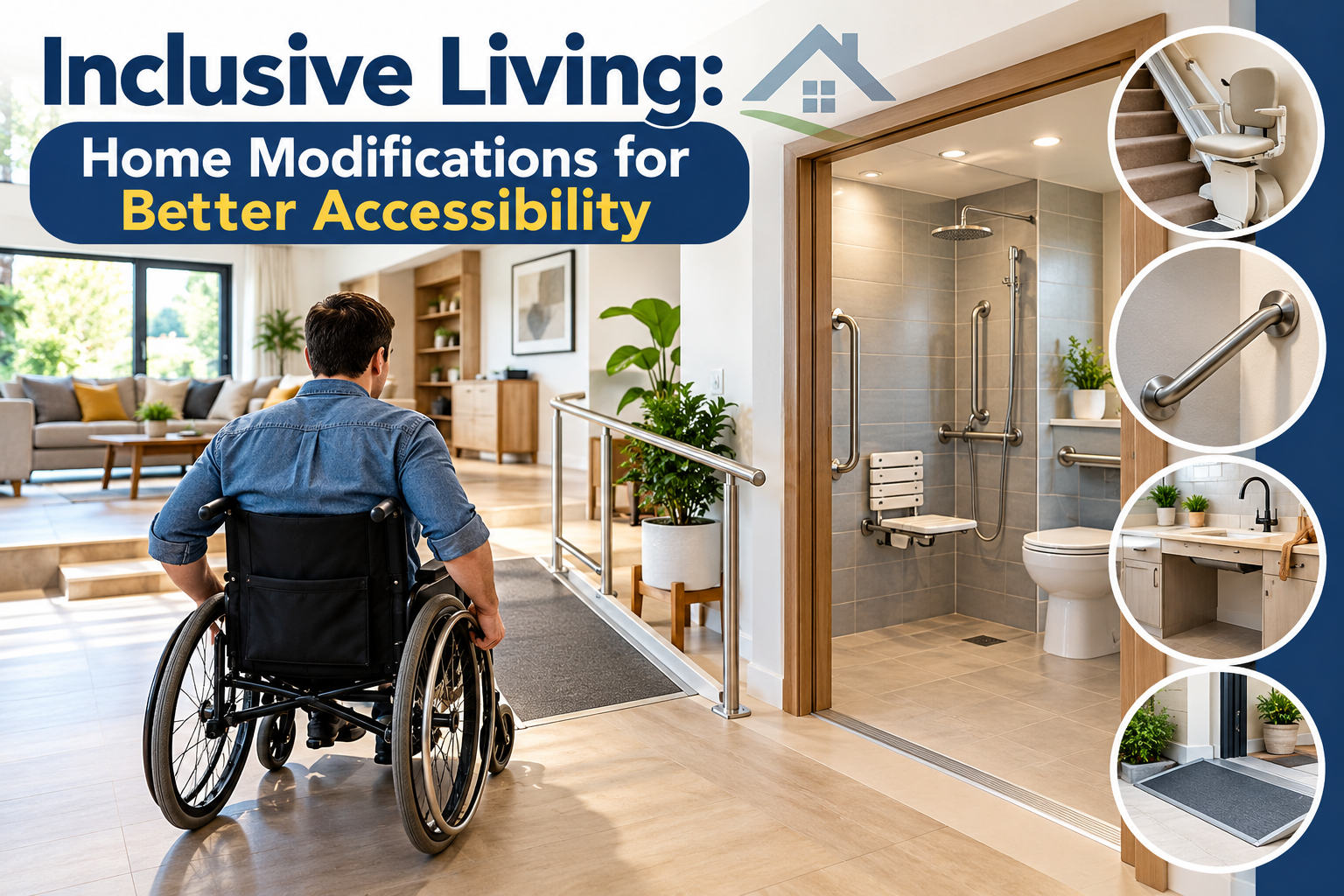
Creating an accessible home environment is essential for supporting aging family members, accommodating individuals with mobility challenges, and future-proofing your property for long-term living. Modern accessible home improvements seamlessly blend functional safety with stylish interior design, eliminating physical barriers without sacrificing aesthetic appeal. By making strategic modifications to entryways, multi-level transitions, bathrooms, kitchens, and daily living spaces, you can foster complete personal independence and enhance overall home comfort for everyone.
Create Barrier-Free Entryways and Smooth Thresholds
The primary entrance of a home sets the tone for accessibility and ease of movement. Traditional home designs frequently feature exterior steps, narrow doorways, and raised door thresholds that present immediate physical obstacles for individuals using wheelchairs, walkers, or mobility scooters. Modifying entryways establishes a welcoming, barrier-free transition from outdoor driveways to indoor living areas.
Installing gently sloped entrance ramps made of durable concrete, composite decking, or slip-resistant aluminum provides safe access for individuals with limited mobility. Ramps should adhere to standard safety slope ratios, featuring sturdy handrails and protective edge guards to prevent accidental slips. Integrating smooth, flush threshold transitions at front and back doors eliminates tripping hazards for ambulatory family members while allowing wheeled mobility devices to roll across doorways effortlessly.
Widening exterior and interior doorways to at least thirty-six inches provides ample clearance for mobility equipment and comfortable movement. Swapping traditional door hinges for specialized swing-away hinges adds up to two inches of clear opening space without requiring structural wall alterations. Installing smart keyless entry locks and automatic door openers further simplifies entry for individuals with limited hand strength.
Enhance Multi-Level Mobility with Vertical Transport Options
Navigating multi-story homes presents significant mobility hurdles for individuals experiencing joint pain, balance issues, or permanent mobility impairments. Staircases are often the single largest physical barrier in a home, restricting access to upper-level bedrooms, bathrooms, and laundry facilities. Implementing vertical mobility solutions restores full access to every floor plate of your residence.
Installing vertical platform lifts or residential elevator systems allows homeowners to move between floors safely without physical exertion. Modern engineering advances have made affordable home elevators, like those in Boise, ID, an increasingly practical retrofit option for multi-story residential properties. Compact pneumatic vacuum elevators and shaftless residential lifts require minimal architectural modifications, fitting neatly into closet spaces or room corners while providing quiet, reliable floor-to-floor transportation.
For homes where full elevator installation is impractical, stair lifts provide a reliable alternative. Curved or straight motorized stair lifts feature comfortable swivel seats, safety belts, and obstruction sensors, carrying riders along custom rail systems smoothly. Restoring multi-level movement allows homeowners to remain in their cherished family residences comfortably as mobility needs change over time.
Selecting Compact Shaftless Elevator Designs
Shaftless residential elevators utilize compact footprints that pass directly through ceiling cutouts, eliminating the need for dedicated machine rooms or deep pit excavation.
Compact elevator options preserve surrounding living space while offering safe vertical transport. Modern vertical lifts blend seamlessly with existing home architecture.
Maintaining Motorized Stair Lift Systems
Routine inspection of stair lift battery backups, drive tracks, and seat swivel mechanisms guarantees continuous operational safety during power outages.
Keeping track rails clean and lubricated ensures quiet, smooth travel along staircases. Reliable stair lifts preserve independent home access.
Modify Bathrooms for Safety, Comfort, and Independence
Bathrooms represent the most critical area for home accessibility modifications, as slick tiled surfaces, high tub walls, and narrow layout configurations present severe slip-and-fall risks. Transforming a standard bathroom into an accessible, universal design space fosters personal privacy, dignity, and physical safety during daily hygiene routines.
Replace traditional step-in bathtubs with curbless, zero-entry roll-in showers featuring slip-resistant floor tiles and linear drainage systems. Curbless showers eliminate step-over hazards, allowing easy transfer from wheelchairs or shower chairs. Incorporate wall-mounted fold-down shower benches, adjustable handheld shower heads, and strategically anchored ADA-compliant grab bars behind shower walls to provide steady support during bathing.
Install comfort-height toilets positioned seventeen to nineteen inches above the floor to make sitting down and standing up easier for individuals with knee or hip discomfort. Wall-mounted floating vanities with open knee clearance underneath allow wheelchair users to approach sinks comfortably. Lever-style or motion-sensor faucets replace traditional twist knobs, permitting effortless water control for users with arthritis or limited dexterity.
Installing Reinforced ADA-Compliant Support Bars
Anchoring heavy-duty grab bars directly into solid wall studs ensures they can support substantial weight during transfers near toilets and showers.
Modern grab bars feature stylish brushed metal finishes and integrated towel rack designs that complement luxury bathroom aesthetics. Secure support bars prevent dangerous bathroom slips.
Designing Curbless Zero-Entry Shower Enclosures
Zero-entry showers utilize gently sloped subfloors and seamless glass partitions to create spacious, barrier-free bathing zones.
Eliminating shower curbs prevents tripping accidents and simplifies daily bathroom cleaning. Curbless showers combine high safety standards with contemporary design.
Optimize Kitchen Layouts and Appliance Accessibility
The kitchen serves as the functional center of daily home life, yet standard cabinet heights, deep counter depths, and high microwave placements create significant accessibility barriers. Adapting kitchen layouts to universal design principles ensures meal preparation, cooking, and cleanup remain safe, enjoyable, and independent for all household members.
Lower a portion of primary kitchen countertops to thirty-two to thirty-four inches above the floor, leaving open knee space underneath to accommodate seated meal preparation. Install motorized, height-adjustable countertop sections or pull-down upper-cabinet shelf systems that automatically bring spices, dishes, and canned goods down to comfortable reach. Replacing deep lower base cabinets with full-extension pull-out drawers puts pots, pans, and pantry goods within easy view and reach.
Select accessible kitchen appliances designed with front-mounted controls to eliminate the need to reach across hot cooktop burners. Side-opening wall ovens installed at counter height allow safe food transfer without awkward bending or lifting. Induction cooktops offer superior safety for accessible kitchens because magnetic heating elements keep glass surfaces cooler to the touch, drastically reducing accidental burn risks.
Utilizing Pull-Down Cabinet Storage Hardware
Installing mechanical or motorized pull-down shelf inserts inside upper wall cabinets brings upper storage bins down within easy reach for seated individuals.
Pull-down hardware maximizes vertical cabinet storage capacity without creating physical strain. Ergonomic cabinet accessories make kitchen storage completely accessible.
Choosing Touchless and Motion-Sensor Plumbing Fixtures
Touchless motion-sensor kitchen faucets allow users to activate water flow effortlessly with a simple wave of a hand, keeping handles clean and accessible.
Preset temperature limiters prevent accidental scalding from hot water lines during sink use. Smart plumbing fixtures enhance daily kitchen safety.
Adapt Flooring, Lighting, and Smart Home Technology
Broader environmental modifications across hallways, living rooms, and bedrooms play a crucial role in creating a safe, navigable, accessible home. Eliminating minor environmental hazards improves spatial navigation, reduces fatigue, and prevents accidental trips across all living areas.
Replace thick pile carpets and loose throw rugs with smooth, durable, hard-surface flooring materials such as luxury vinyl plank, hardwood, or low-sheen porcelain tile. Hard-surface flooring provides minimal rolling resistance for mobility devices while eliminating carpet bunching that can cause trips. Ensure hallways maintain clear, unencumbered traffic pathways of at least thirty-six to forty-two inches, free of clutter or protruding furniture.
Enhance residential lighting schemes by installing bright, non-glare LED illumination, motion-sensing nightlights along baseboards, and rocker-style light switches set at accessible heights. Integrating smart home automation technology allows residents to control lighting, interior climate, window blinds, and security locks using simple voice commands or smartphone applications. Automated home controls empower individuals with limited mobility to manage their living environment independently.
Replacing Loose Throw Rugs with Low-Profile Flooring
Removing decorative throw rugs and thick carpeting eliminates major tripping hazards for individuals using walkers or canes.
Smooth, low-profile flooring materials allow wheeled mobility devices to glide across living areas effortlessly. Durable hard surfaces simplify daily maintenance work.
Integrating Voice-Controlled Smart Home Automation
Voice-activated home assistants allow residents to adjust ambient lighting, lock exterior doors, and answer doorbells without standing up or walking across rooms.
Automated smart technology enhances personal security and daily convenience for residents with physical limitations. Smart home integration fosters complete living autonomy.
Conclusion
Making home improvements that increase accessibility is a transformative investment that protects personal safety, fosters independent living, and enhances long-term property equity. By creating barrier-free entryways, installing vertical transport systems, modifying bathrooms, optimizing kitchen ergonomics, and integrating smart home technology, you create a safe, welcoming sanctuary. Thoughtful accessibility modifications empower individuals of all age groups and physical abilities to live comfortably, safely, and independently in the homes they love.