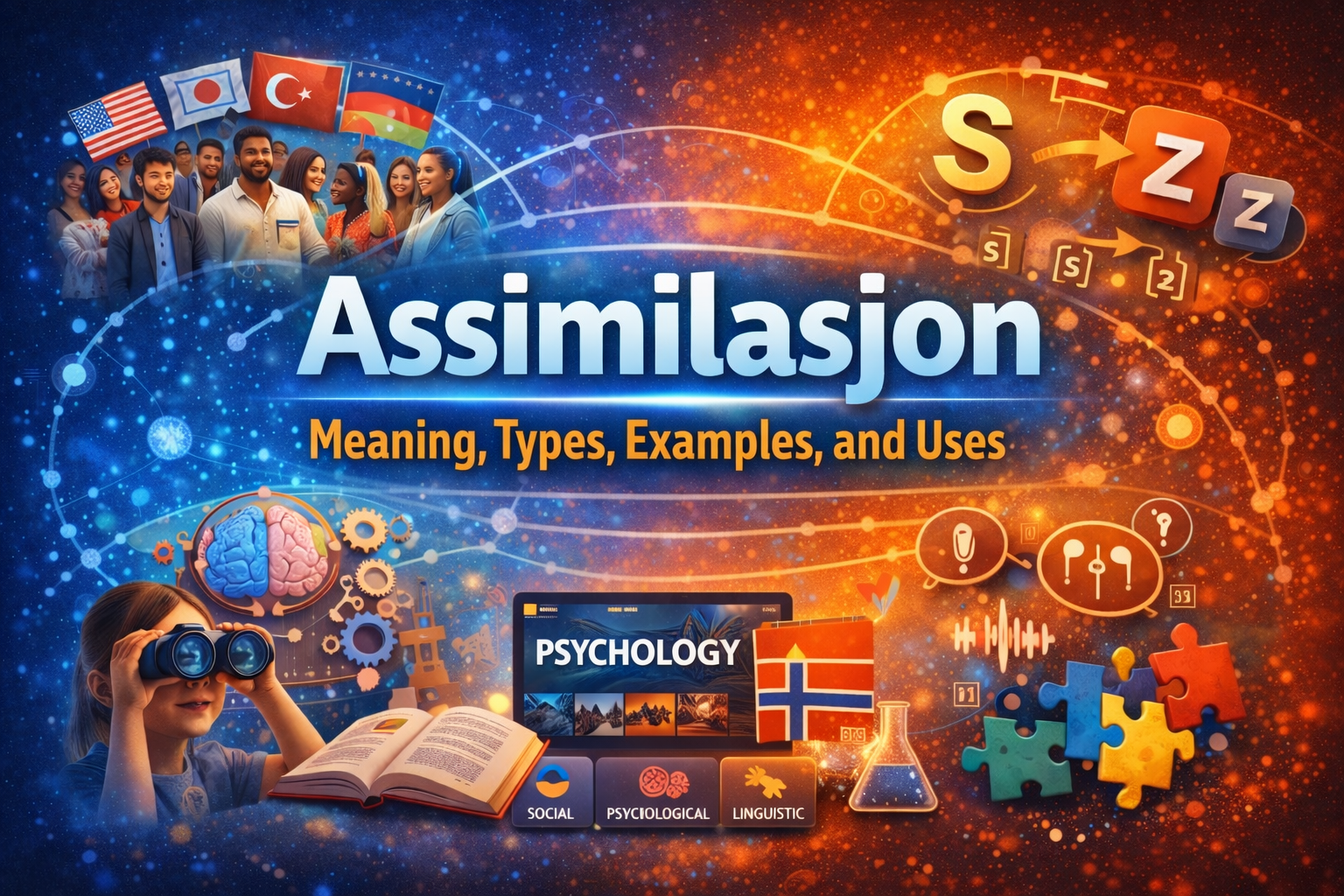
Assimilasjon is a word that describes a process of becoming similar or adapting to something else. It is used in many subjects such as society, psychology, language, and science. Even though the contexts are different, the core idea stays the same—adjusting and blending into an existing system.
In simple words:
- It means to adapt
- It means to fit in
- It means to become similar
Assimilasjon is a natural process that happens in everyday life. People, ideas, and even sounds change over time to match their surroundings.
Why Assimilasjon Is Important
Assimilasjon plays an important role in how people learn, communicate, and live together.
Key Reasons
- Helps people adjust to new environments
- Makes learning easier
- Improves communication
- Supports social harmony
Without assimilasjon, it would be difficult for individuals or groups to adapt to change.
Main Types of Assimilasjon
Assimilasjon is not limited to one area. It appears in different fields with slightly different meanings.
Social Assimilasjon
Social assimilasjon happens when individuals or groups adopt the culture of another group, often the dominant one.
Features
- Learning a new language
- Following new traditions
- Adapting to social norms
Example
An immigrant moving to a new country may start speaking the local language and following local customs.
Psychological Assimilasjon
In psychology, assimilasjon is part of how people learn.
Key Idea
People understand new information by linking it to what they already know.
Example
A child who knows about dogs may call a wolf a dog because it looks similar. This is assimilasjon because the child is using existing knowledge.
Linguistic Assimilasjon
Linguistic assimilasjon happens in speech.
What Happens
- Sounds change
- Words become easier to pronounce
- Speech becomes smoother
Example
The word “handbag” may sound like “hambag” in fast speech.
Scientific Assimilasjon
Assimilasjon is also used in science fields like biology and geology.
Examples
- The body absorbing nutrients
- Plants converting simple substances into energy
- Rocks melting and mixing into magma
Table 1: Types of Assimilasjon
| Type | Description | Example |
|---|---|---|
| Social | Cultural adaptation | Immigrants adopting culture |
| Psychological | Learning using existing knowledge | Child recognizing objects |
| Linguistic | Sound change in speech | Words blending together |
| Biological | Absorbing nutrients | Body using food |
| Geological | Mixing materials | Rock merging into magma |
Assimilasjon in Society
Assimilasjon is often discussed in social and cultural contexts.
How It Happens
- Through education
- Through communication
- Through daily interaction
Types in Society
Voluntary Assimilasjon
- People choose to adapt
- Happens naturally over time
Forced Assimilasjon
- People are pressured to change
- Often linked to political or historical situations
Assimilasjon vs Integration
Assimilasjon and integration are often confused, but they are different.
Assimilasjon
- Focus on becoming similar
- May lead to loss of identity
- One-sided process
Integration
- Focus on coexistence
- Keeps original identity
- Two-way process
Table 2: Assimilasjon vs Integration
| Feature | Assimilasjon | Integration |
|---|---|---|
| Identity | Often reduced | Maintained |
| Process | One-way | Two-way |
| Culture | One dominant culture | Multiple cultures |
| Flexibility | Low | High |
| Outcome | Uniformity | Diversity |
Advantages of Assimilasjon
Assimilasjon has several benefits, especially in social and learning environments.
Benefits
- Easier communication
- Faster adaptation
- Better understanding
- Stronger social unity
Disadvantages of Assimilasjon
There are also some negative aspects.
Problems
- Loss of cultural identity
- Social pressure
- Emotional challenges
- Reduced diversity
Real-Life Examples of Assimilasjon
Assimilasjon can be seen in many parts of life.
In Daily Life
- Moving to a new city and adapting to local habits
- Learning workplace culture
In Education
- Students learning new concepts using old knowledge
- Adapting to teaching styles
In Language
- Changing pronunciation
- Adopting new accents
How Assimilasjon Affects Learning
Assimilasjon is a key part of education.
Learning Process
- New information is introduced
- Brain connects it to existing knowledge
- Understanding becomes easier
Why It Helps
- Saves time
- Reduces confusion
- Builds confidence
Challenges of Assimilasjon
Even though assimilasjon is useful, it can be difficult.
Common Challenges
- Language barriers
- Cultural differences
- Social pressure
- Identity conflicts
Tips to Handle Assimilasjon Better
If someone is going through assimilation, these tips can help:
- Learn step by step
- Keep your original identity
- Be open to change
- Ask questions
- Stay confident
Frequently Asked Questions
What does assimilasjon mean?
It means adapting or becoming similar to something else.
Where is assimilasjon used?
It is used in society, psychology, language, and science.
Is assimilasjon always good?
Not always. It has both benefits and drawbacks.
What is the difference between assimilasjon and integration?
Assimilasjon focuses on similarity, while integration focuses on balance.
Conclusion
Assimilasjon is a common and important concept that appears in many areas of life. It describes how people, ideas, and systems adjust and become similar to their surroundings. Whether it is used in society, learning, language, or science, the main idea remains the same—adapting and fitting into an existing structure. It helps people learn faster, communicate better, and live more easily in new environments. However, it can also create challenges such as loss of identity and social pressure. Understanding assimilasjon helps us better understand change, growth, and human behavior. By finding a balance between adapting and maintaining individuality, people can benefit from assimilasjon while still preserving their unique identity.